Department of Environmental and Occupational Health, Rutgers University School of Public Health, Piscataway, NJ, United States of America.
Department of Microbiology, Instituto Nacional de Enfermedades Respiratorias, México City, México.
PLoS One. 2019 Jul 11;14(7):e0219122. doi: 10.1371/journal.pone.0219122. eCollection 2019.
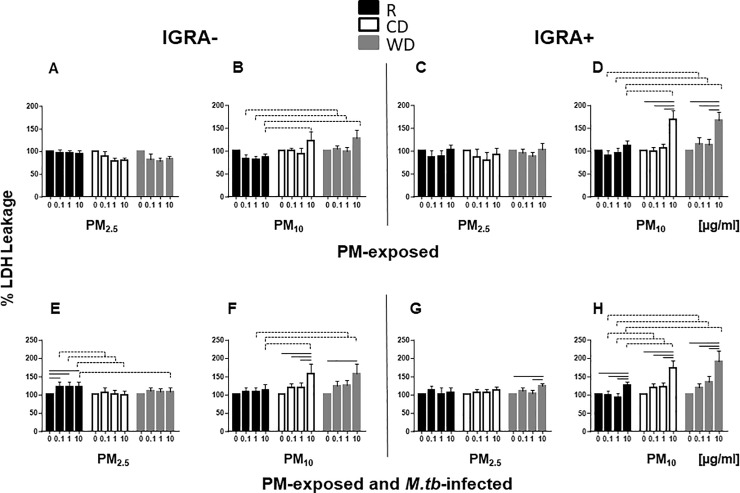
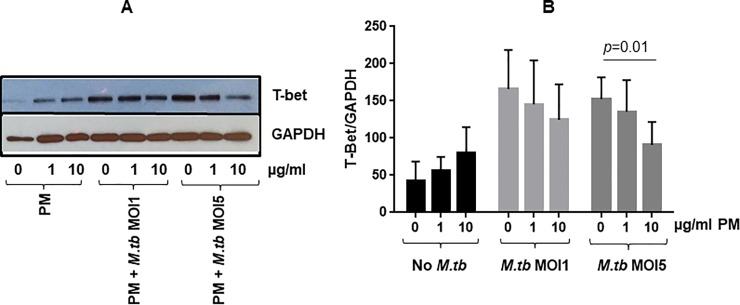
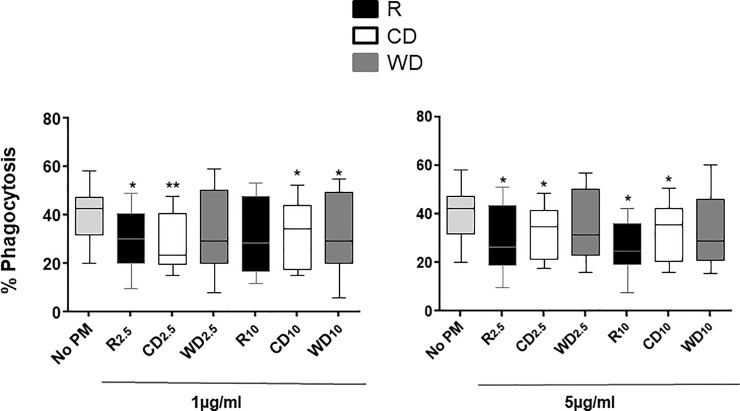
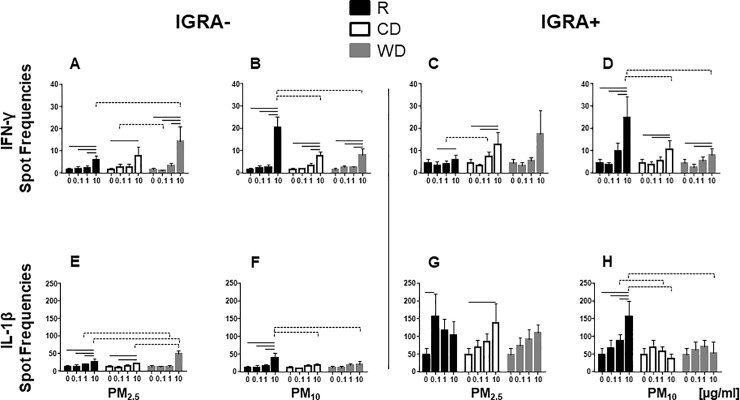
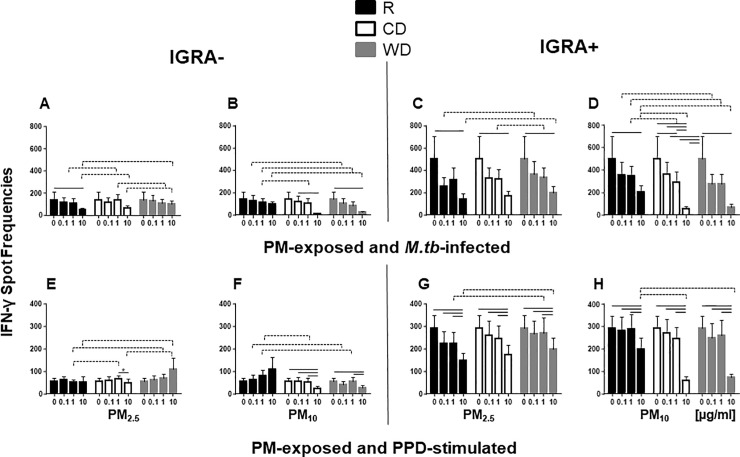
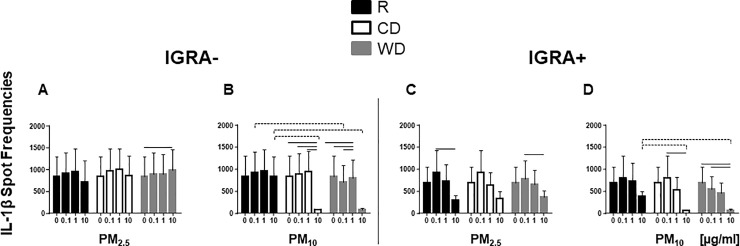
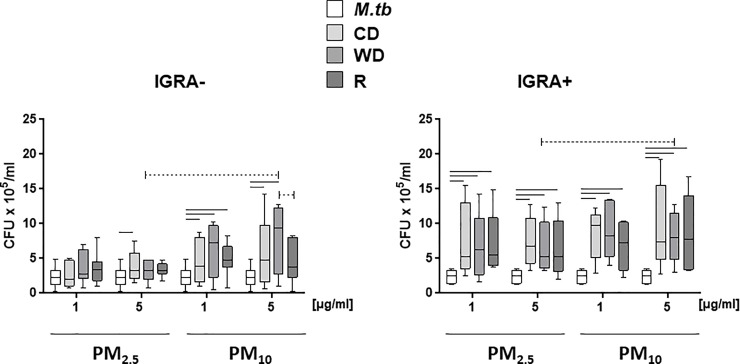
Exposure to air pollution particulate matter (PM) and tuberculosis (TB) are two of the leading global public health challenges affecting low and middle income countries. An estimated 4.26 million premature deaths are attributable to household air pollution and an additional 4.1 million to outdoor air pollution annually. Mycobacterium tuberculosis (M.tb) infects a large proportion of the world's population with the risk for TB development increasing during immunosuppressing conditions. There is strong evidence that such immunosuppressive conditions develop during household air pollution exposure, which increases rates of TB development. Exposure to urban air pollution has been shown to alter the outcome of TB therapy. Here we examined whether in vitro exposure to urban air pollution PM alters human immune responses to M.tb. PM2.5 and PM10 (aerodynamic diameters <2.5μm, <10μm) were collected monthly from rainy, cold-dry and warm-dry seasons in Iztapalapa, a highly populated TB-endemic municipality of Mexico City with elevated outdoor air pollution levels. We evaluated the effects of seasonality and size of PM on cytotoxicity and antimycobacterial host immunity in human peripheral blood mononuclear cells (PBMC) from interferon gamma (IFN-γ) release assay (IGRA)+ and IGRA- healthy study subjects. PM10 from cold-dry and warm-dry seasons induced the highest cytotoxicity in PBMC. With the exception of PM2.5 from the cold-dry season, pre-exposure to all seasonal PM reduced M.tb phagocytosis by PBMC. Furthermore, M.tb-induced IFN-γ production was suppressed in PM2.5 and PM10-pre-exposed PBMC from IGRA+ subjects. This observation coincides with the reduced expression of M.tb-induced T-bet, a transcription factor regulating IFN-γ expression in T cells. Pre-exposure to PM10 compared to PM2.5 led to greater loss of M.tb growth control. Exposure to PM2.5 and PM10 collected in different seasons differentially impairs M.tb-induced human host immunity, suggesting biological mechanisms underlying altered M.tb infection and TB treatment outcomes during air pollution exposures.
暴露于空气污染物(PM)和结核病(TB)是影响中低收入国家的两个主要全球公共卫生挑战。据估计,每年有 426 万人因家庭空气污染而导致过早死亡,另有 410 万人因户外空气污染而导致过早死亡。结核分枝杆菌(M.tb)感染了世界上很大一部分人口,在免疫抑制条件下,TB 发展的风险增加。有强有力的证据表明,在家庭空气污染暴露期间会出现这种免疫抑制状态,从而增加 TB 发展的比率。城市空气污染暴露已被证明会改变 TB 治疗的结果。在这里,我们研究了体外暴露于城市空气污染物 PM 是否会改变人类对 M.tb 的免疫反应。每月从墨西哥城高度流行的 TB 流行的伊萨帕拉帕的雨季、寒冷干燥和温暖干燥季节收集 PM2.5 和 PM10(空气动力学直径<2.5μm,<10μm)。我们评估了季节和 PM 大小对干扰素γ(IFN-γ)释放测定(IGRA)+和 IGRA-健康研究对象外周血单个核细胞(PBMC)细胞毒性和抗分枝杆菌宿主免疫的影响。寒冷干燥和温暖干燥季节的 PM10 诱导 PBMC 产生最高的细胞毒性。除了寒冷干燥季节的 PM2.5 之外,所有季节性 PM 的预暴露均降低了 PBMC 对 M.tb 的吞噬作用。此外,在 IGRA+ 研究对象的 PM2.5 和 PM10 预暴露 PBMC 中,M.tb 诱导的 IFN-γ 产生受到抑制。这种观察结果与 M.tb 诱导的 T 细胞因子表达调节因子 T-bet 的表达降低一致。与 PM2.5 相比,PM10 的预暴露导致 M.tb 生长控制的丧失更大。暴露于不同季节收集的 PM2.5 和 PM10 会不同程度地损害 M.tb 诱导的人体宿主免疫,这表明空气污染暴露期间改变 M.tb 感染和 TB 治疗结果的生物学机制。