Department of Electrical and Computer Engineering, AU MRI Research Center, Auburn University, Auburn, Alabama.
Department of Psychological Sciences, University of California, Merced, California.
Brain Behav. 2019 Aug;9(8):e01341. doi: 10.1002/brb3.1341. Epub 2019 Jul 11.
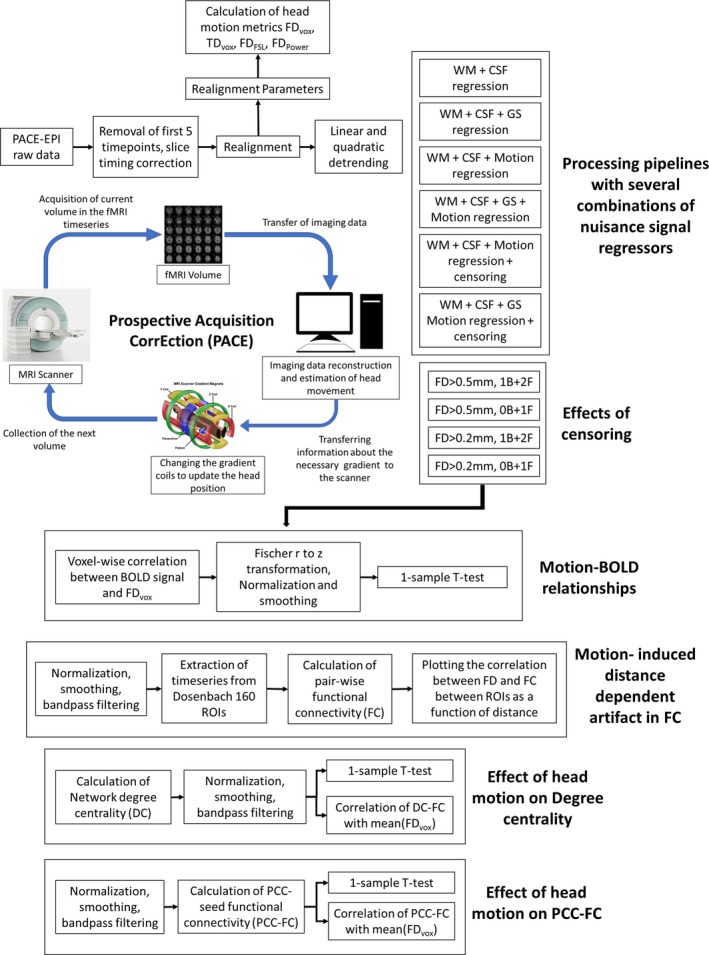
Head movement in the scanner causes spurious signal changes in the blood-oxygen-level-dependent (BOLD) signal, confounding resting state functional connectivity (RSFC) estimates obtained from functional magnetic resonance imaging (fMRI). We examined the effectiveness of Prospective Acquisition CorrEction (PACE) in reducing motion artifacts in BOLD data.
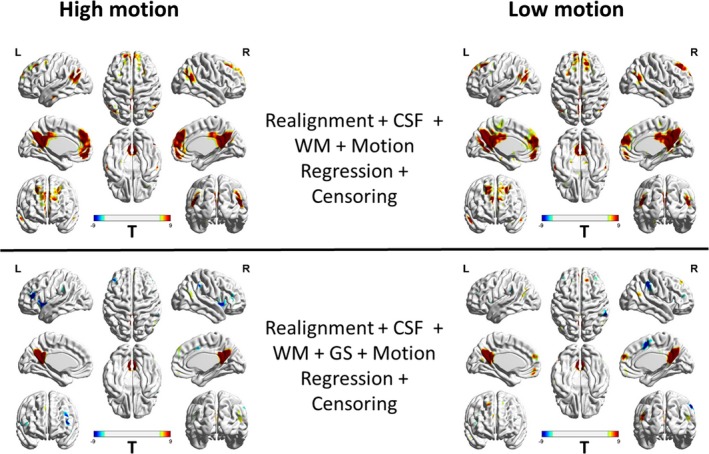
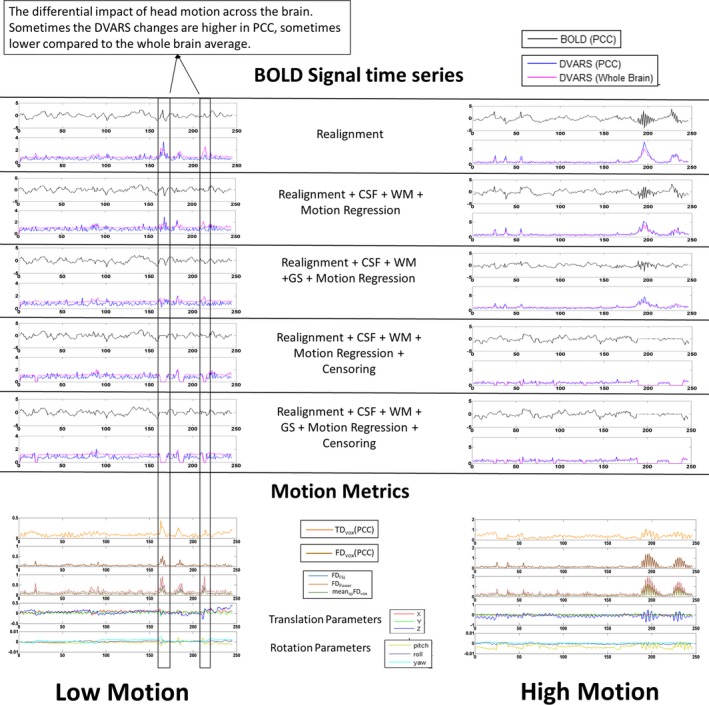
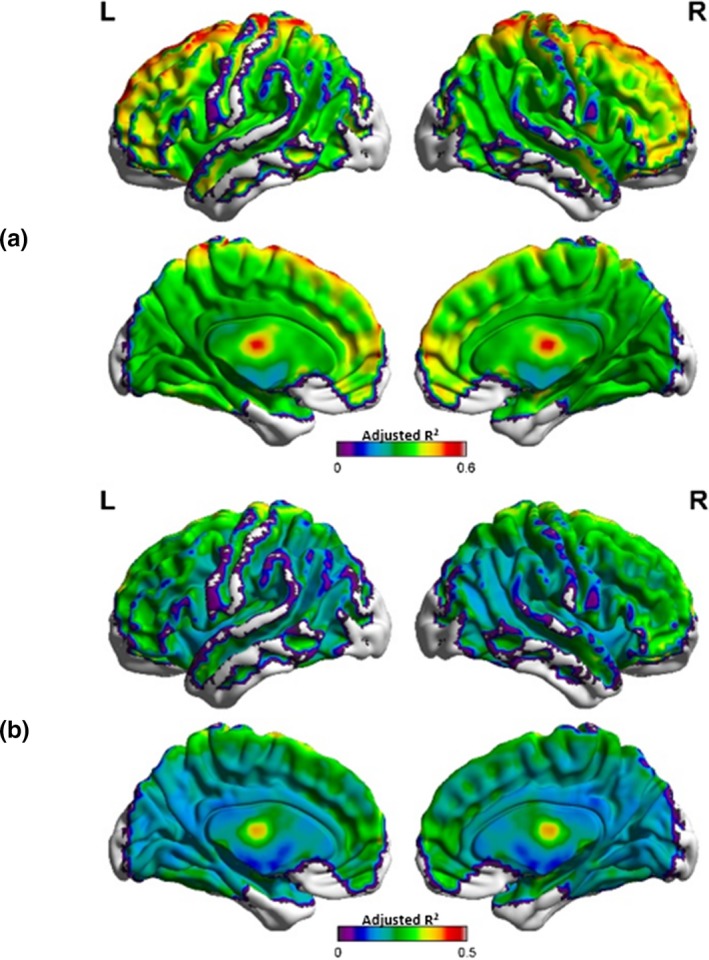
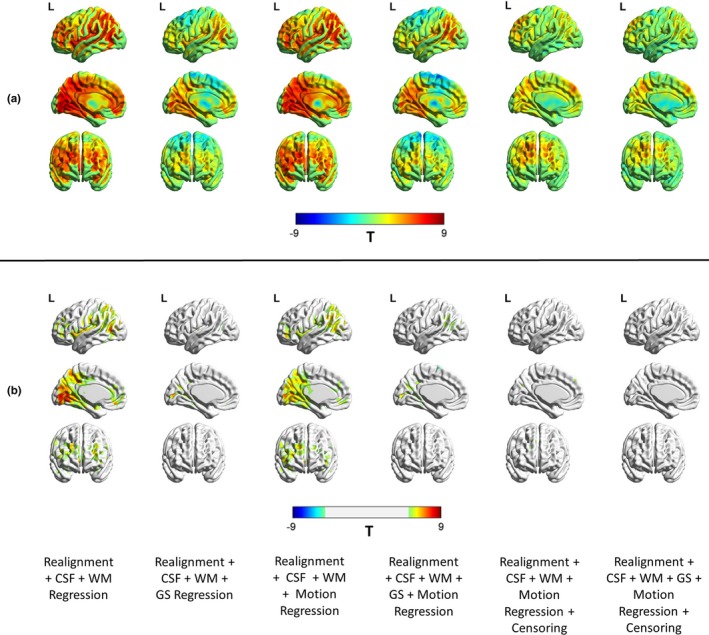
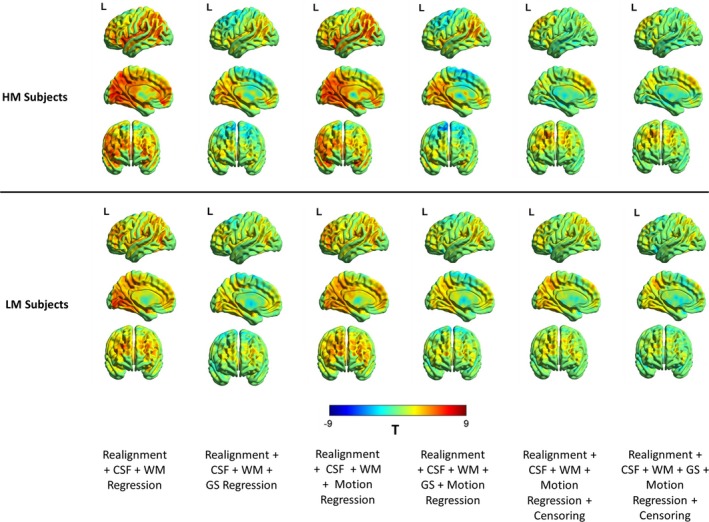
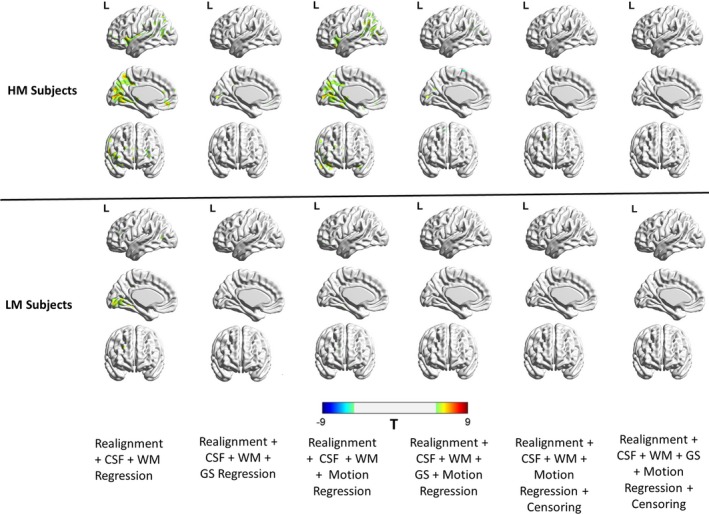
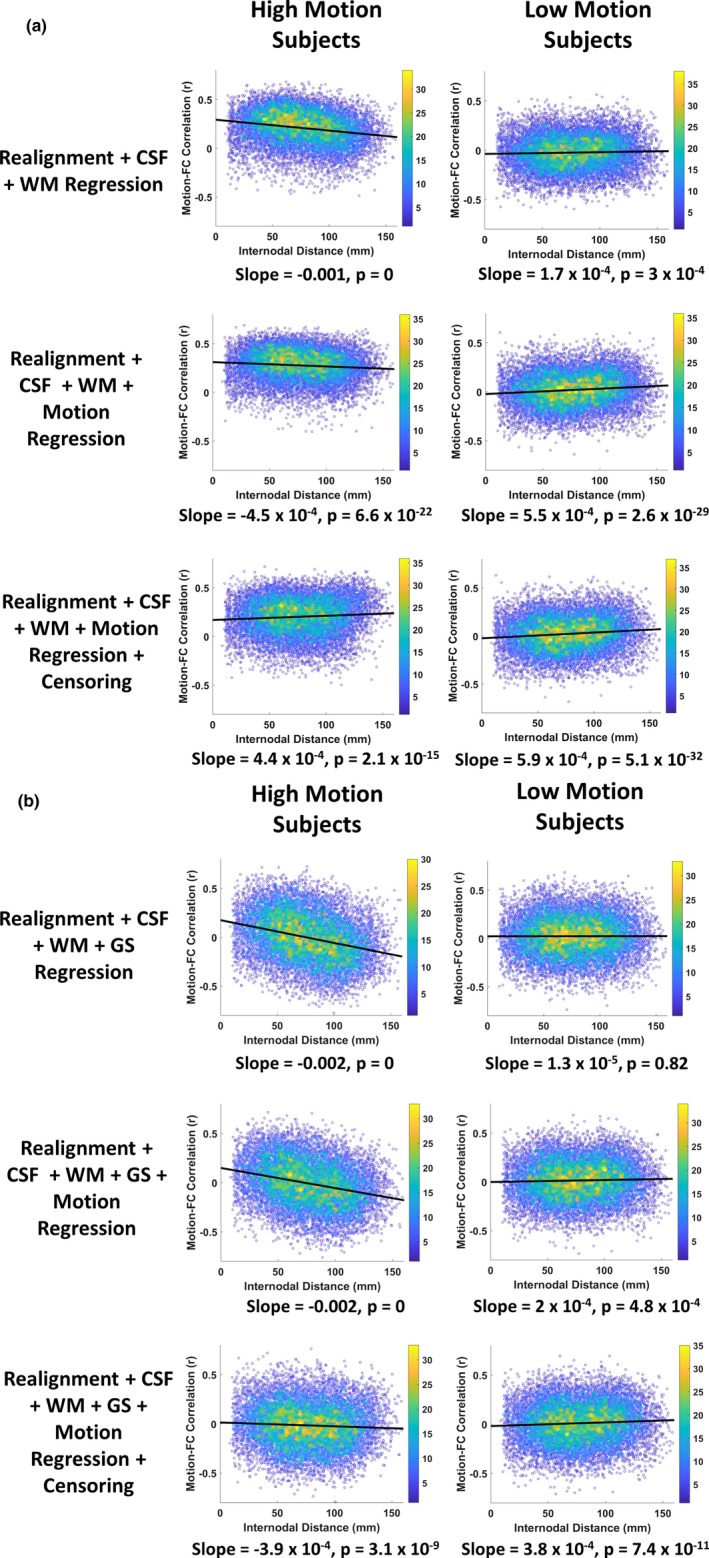
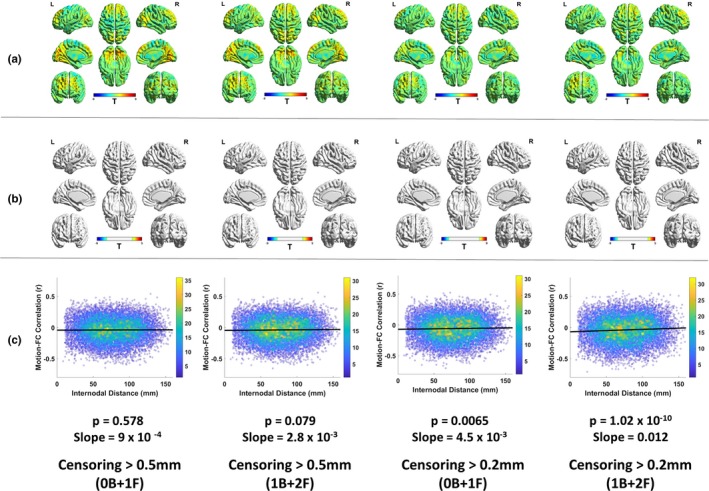
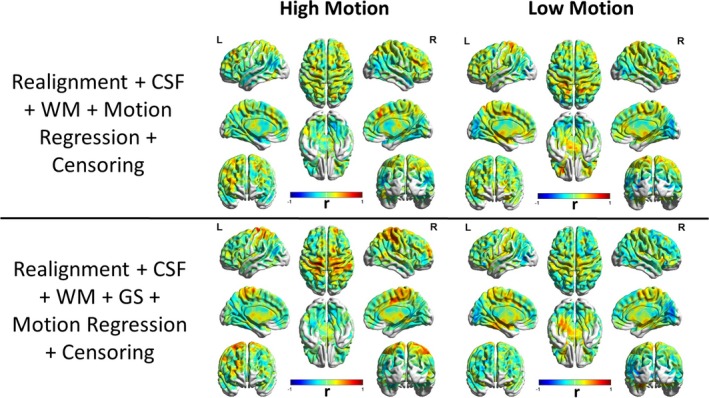
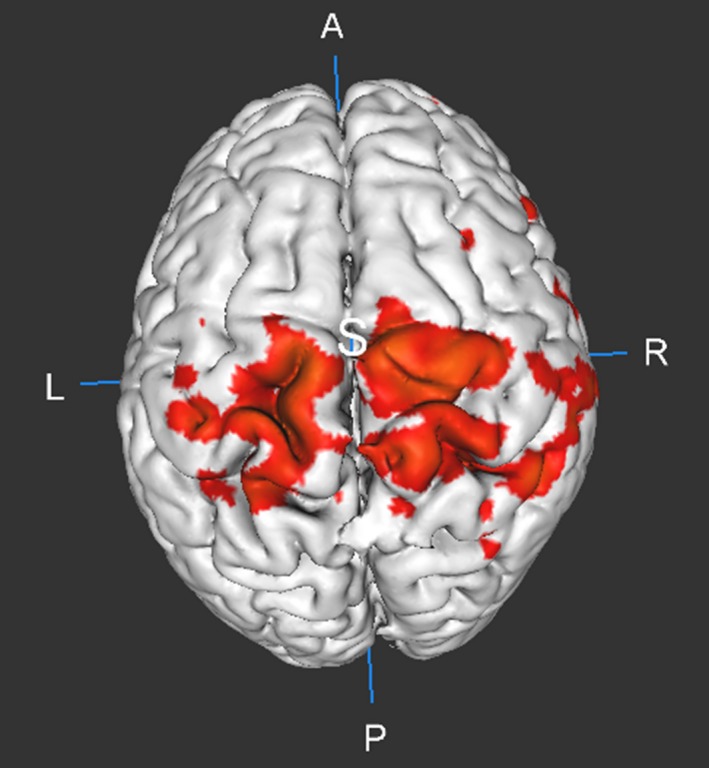
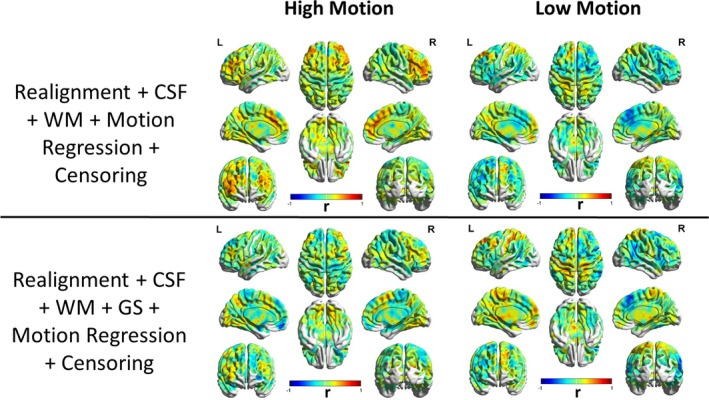
Using PACE-corrected RS-fMRI data obtained from 44 subjects and subdividing them into low- and high-motion cohorts, we investigated voxel-wise motion-BOLD relationships, the distance-dependent functional connectivity artifact and the correlation between head motion and connectivity metrics such as posterior cingulate seed-based connectivity and network degree centrality.
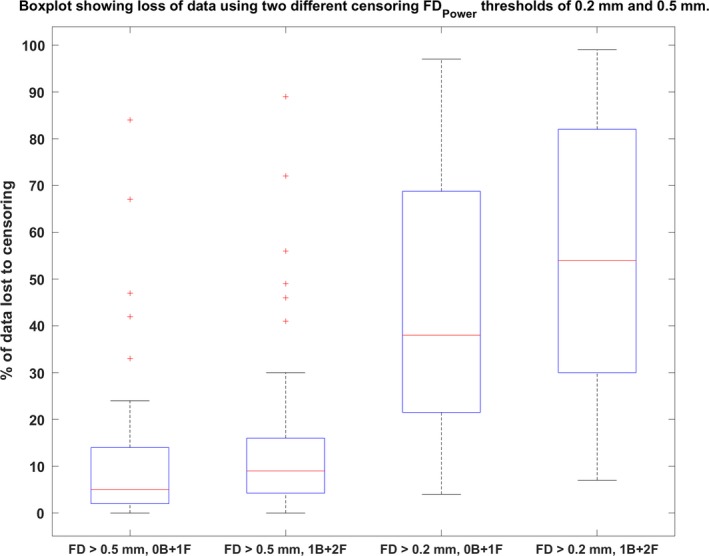
Our results indicate that, when PACE is used in combination with standard retrospective motion correction strategies, it provides two principal advantages over conventional echo-planar imaging (EPI) RS-fMRI data: (a) PACE was effective in eliminating significant negative motion-BOLD relationships, shown to be associated with signal dropouts caused by head motion, and (b) Censoring with a lower threshold (framewise displacement >0.5 mm) and a smaller window around the motion corrupted time point provided qualitatively equivalent reductions in the motion artifact with PACE when compared to a more conservative threshold of 0.2 mm required with conventional EPI data.
PACE when used in conjunction with retrospective motion correction methods including nuisance signal and motion parameter regression, and censoring, did prove effective in almost eliminating head motion artifacts, even with a lower censoring threshold. Use of a lower censoring threshold could provide substantial savings in data that would otherwise be lost to censoring. Three-dimensional PACE has negligible overhead in terms of scan time, sequence modifications or additional and hence presents an attractive option for head motion correction in high-throughput resting-state BOLD imaging.
在扫描仪中头部运动会导致血氧水平依赖(BOLD)信号中的虚假信号变化,从而干扰从功能磁共振成像(fMRI)获得的静息状态功能连接(RSFC)估计。我们研究了前瞻性采集校正(PACE)在减少 BOLD 数据中的运动伪影的有效性。
使用从 44 名受试者获得的经过 PACE 校正的 RS-fMRI 数据,并将它们分为低运动和高运动队列,我们研究了体素级别的运动-BOLD 关系、距离相关的功能连接伪影以及头部运动与连接度指标(如后扣带回种子连接和网络度中心性)之间的相关性。
我们的结果表明,当 PACE 与标准的回顾性运动校正策略结合使用时,它相对于传统的回波平面成像(EPI)RS-fMRI 数据具有两个主要优势:(a)PACE 有效地消除了显著的负运动-BOLD 关系,这些关系与由头部运动引起的信号丢失有关;(b)用较低的阈值(帧位移>0.5mm)和围绕运动污染时间点的较小窗口进行屏蔽,与使用传统 EPI 数据所需的更保守的 0.2mm 阈值相比,使用 PACE 时可以等效地减少运动伪影。
PACE 与包括杂讯信号和运动参数回归以及屏蔽在内的回顾性运动校正方法结合使用,即使在使用较低的屏蔽阈值时,也确实可以有效地消除头部运动伪影。使用较低的屏蔽阈值可以节省大量因屏蔽而丢失的数据。三维 PACE 在扫描时间、序列修改或额外的方面几乎没有开销,因此在高吞吐量的静息状态 BOLD 成像中校正头部运动是一个有吸引力的选择。