Tien Chia-Ping, Chen Chia-Hung, Lin Wen-Yuan, Liu Chiu-Shong, Liu Ko-Jiunn, Hsiao Michael, Chang Yu-Chan, Hung Shih-Chieh
Ph.D. Program for Aging, College of Medicine, China Medical University, Taichung, Taiwan.
Division of Community and Family Medicine, China Medical University Hospital, Taichung, Taiwan.
Aging (Albany NY). 2019 Jul 12;11(13):4654-4671. doi: 10.18632/aging.102077.
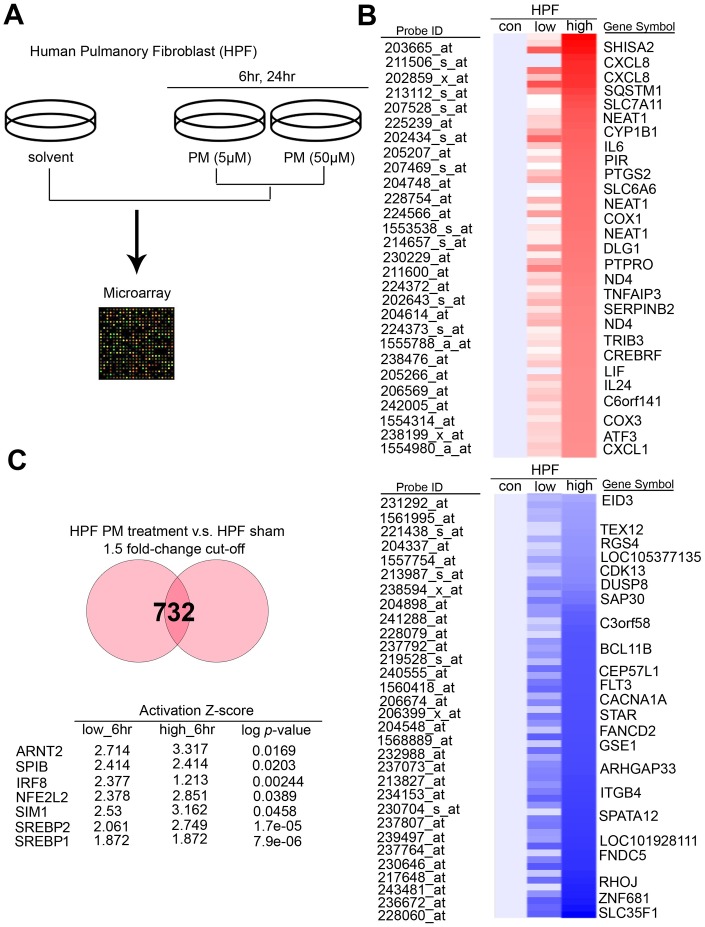
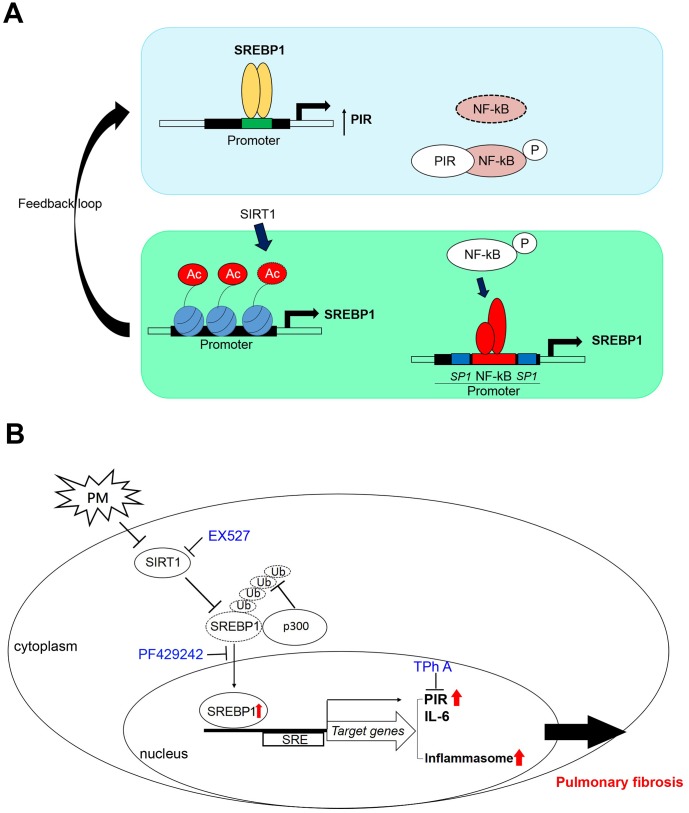
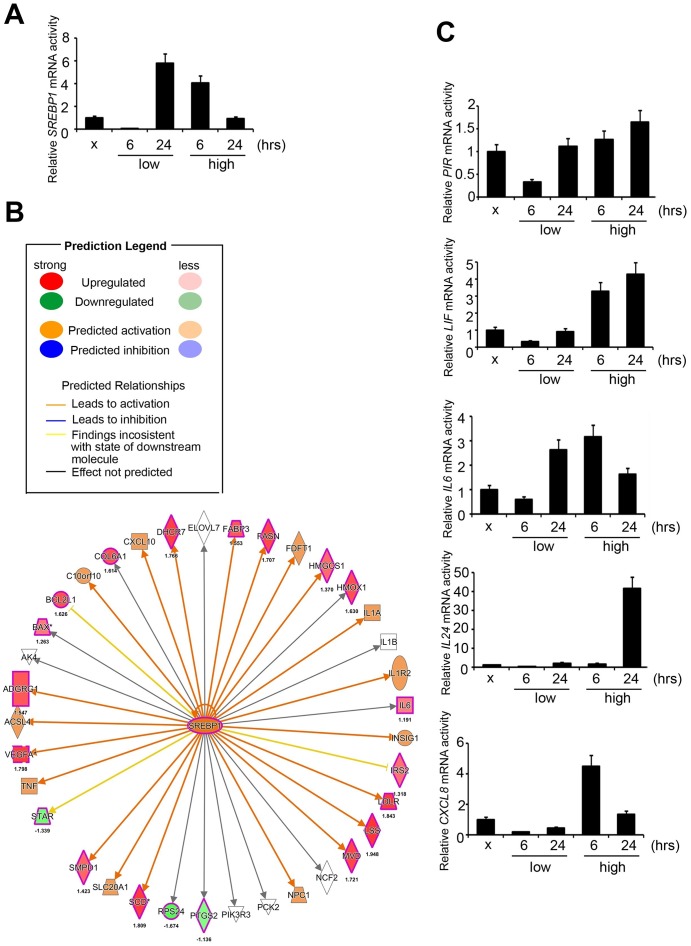
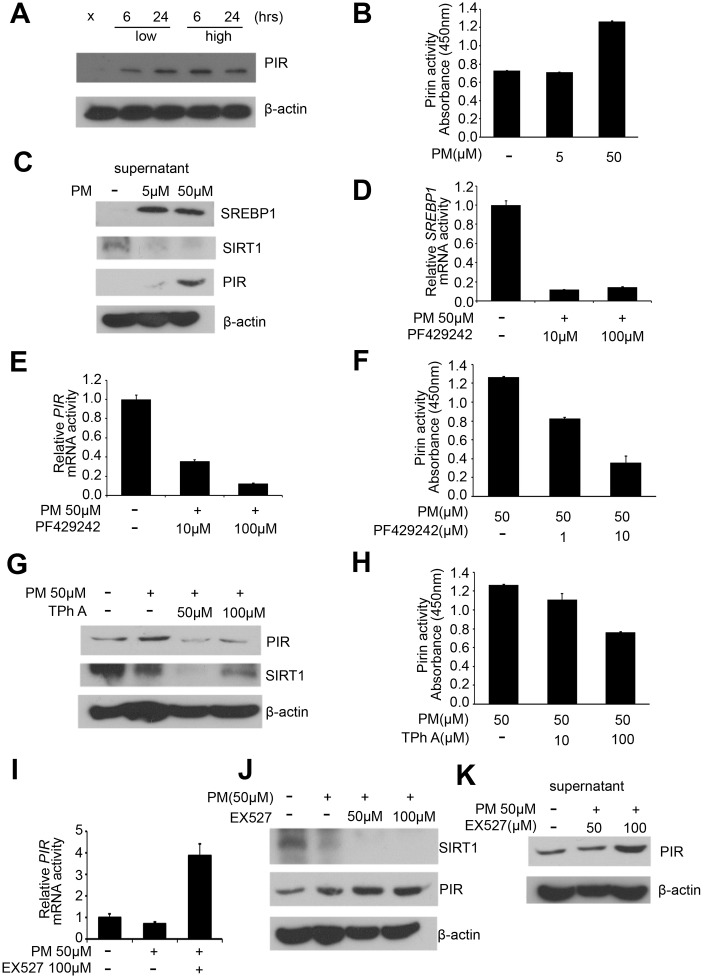
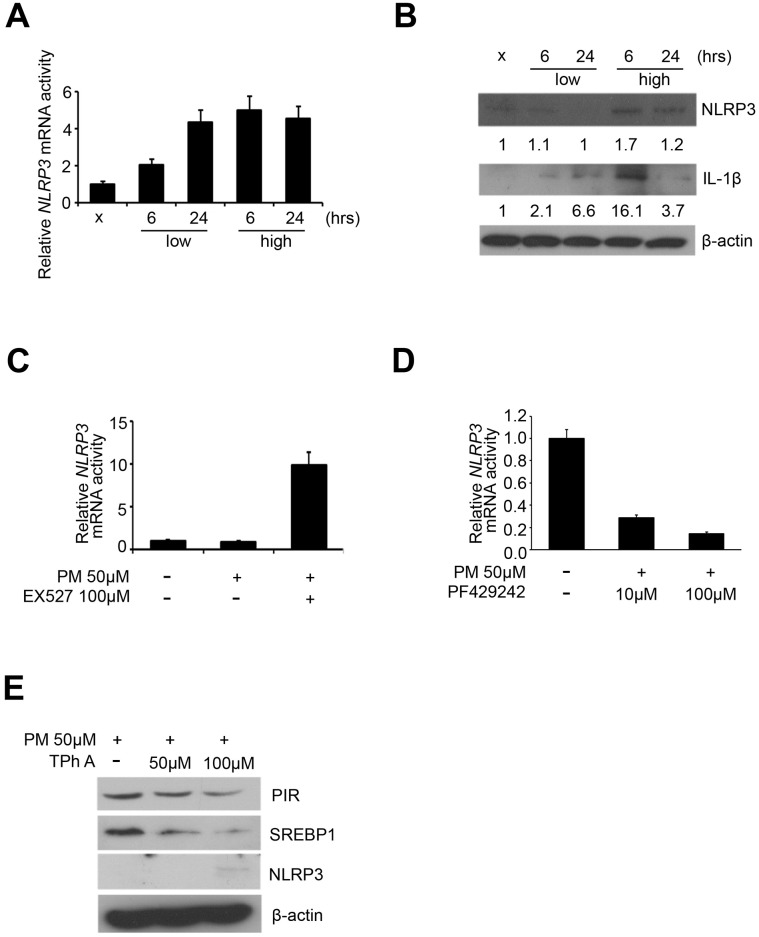
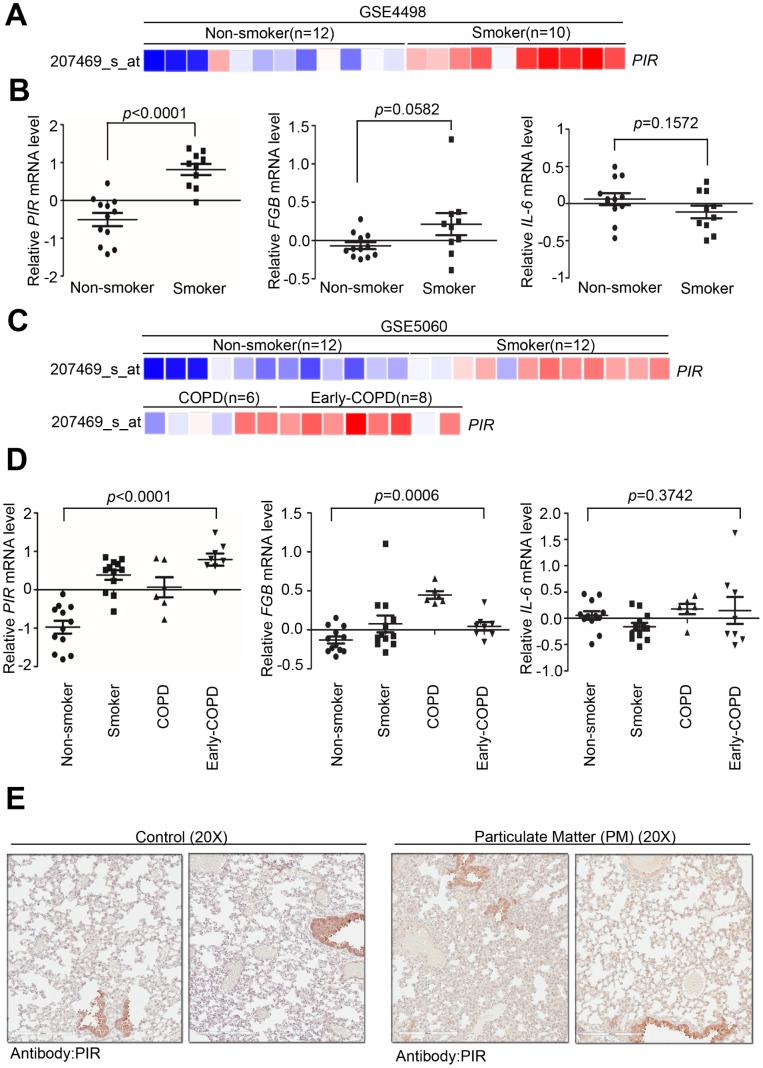
Evidences have shown a strong link between particulate matter (PM) and increased risk in human mortality and morbidity, including asthma, chronic obstructive pulmonary disease (COPD), respiratory infection, and lung cancer. However, the underlying toxicologic mechanisms remain largely unknown. Utilizing PM-treated human pulmonary fibroblasts (HPF) models, we analyzed gene expression microarray data and Ingenuity Pathway Analysis (IPA) to identify that the transcription factor was the main downstream regulator of () Quantitative PCR and western blot results showed that SIRT1 inhibited SREBP1 and further downregulated Pirin (PIR) and Nod-like receptor protein 3 (NLRP3) inflammasome after PM exposure. Inhibitors of SIRT1, SREBP1, and PIR could reverse PM-induced inflammation. An analysis revealed that PIR correlated with smoke exposure and early COPD. Immunohistochemical analysis of tissue microarrays from PM-fed mouse models was used to determine the association of PIR with PM. These data demonstrate that the SIRT1-SREBP1-PIR/ NLRP3 inflammasome axis may be associated with PM-induced adverse health issues. SIRT1 functions as a protector from PM exposure, whereas PIR acts as a predictor of PM-induced pulmonary disease. The SIRT1-SREBP1-PIR/ NLRP3 inflammasome axis may present several potential therapeutic targets for PM-related adverse health events.
证据表明,颗粒物(PM)与人类死亡率和发病率增加之间存在紧密联系,包括哮喘、慢性阻塞性肺疾病(COPD)、呼吸道感染和肺癌。然而,其潜在的毒理学机制在很大程度上仍不清楚。利用经PM处理的人肺成纤维细胞(HPF)模型,我们分析了基因表达微阵列数据和 Ingenuity 通路分析(IPA),以确定转录因子是()的主要下游调节因子。定量PCR和蛋白质印迹结果表明,SIRT1抑制SREBP1,并在PM暴露后进一步下调pirin(PIR)和Nod样受体蛋白3(NLRP3)炎性小体。SIRT1、SREBP1和PIR的抑制剂可逆转PM诱导的炎症。一项分析显示,PIR与烟雾暴露和早期COPD相关。对来自PM喂养小鼠模型的组织微阵列进行免疫组织化学分析,以确定PIR与PM的关联。这些数据表明,SIRT1-SREBP1-PIR/NLRP3炎性小体轴可能与PM诱导的不良健康问题有关。SIRT1作为一种免受PM暴露影响的保护因子发挥作用,而PIR则作为PM诱导的肺部疾病的预测因子。SIRT1-SREBP1-PIR/NLRP3炎性小体轴可能为与PM相关的不良健康事件提供几个潜在的治疗靶点。