Kasai Yoshiyuki, Morino Tsunetaro, Kikuchi Shun, Mitsuyoshi Ryoto, Takahashi Masahiro, Yamamoto Kazuhisa, Yaguchi Yuichiro, Yamato Masayuki, Kojima Hiromi
Department of Otorhinolaryngology, Jikei University School of Medicine, 3-25-8 Nishi-shinbashi, Minato-ku, Tokyo 105-8461, Japan.
Institute of Advanced Biomedical Engineering and Science, Tokyo Women's Medical University, 8-1 Kawada-Cho, Shinjuku-ku, Tokyo 162-8666, Japan.
Regen Ther. 2019 Jun 27;11:88-94. doi: 10.1016/j.reth.2019.05.001. eCollection 2019 Dec.
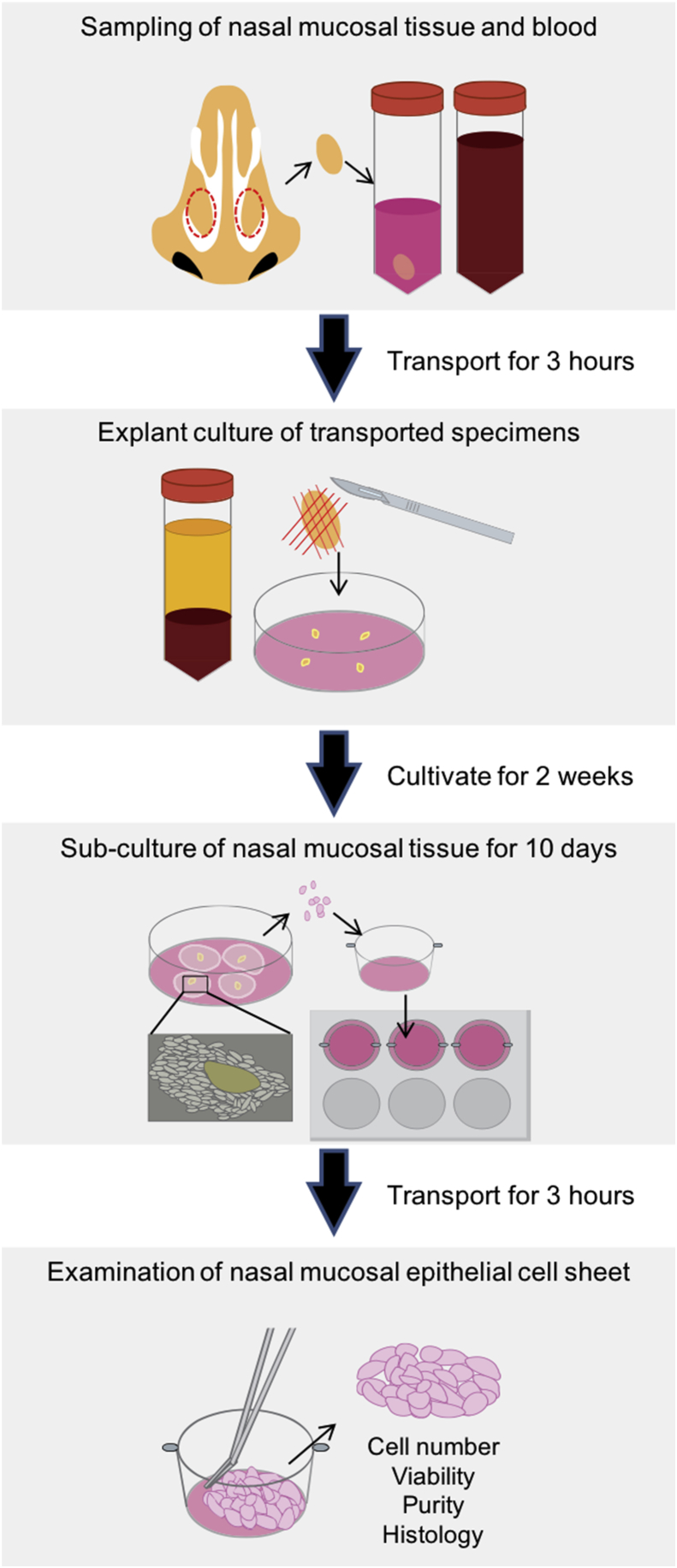
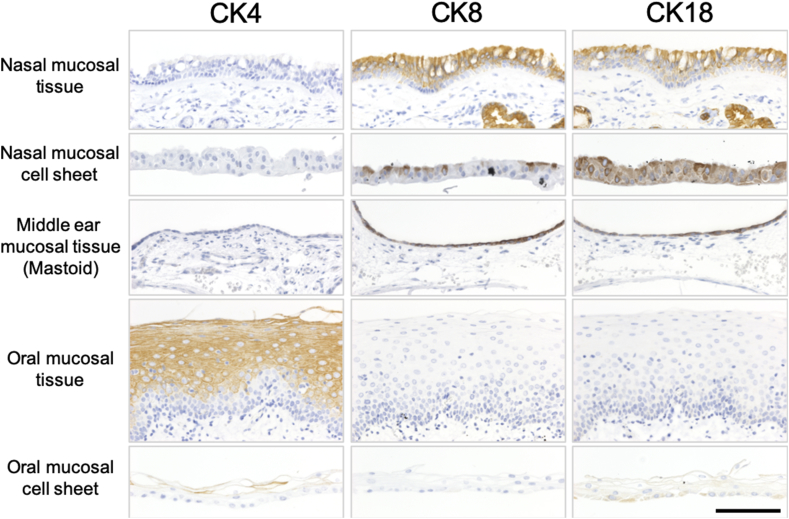
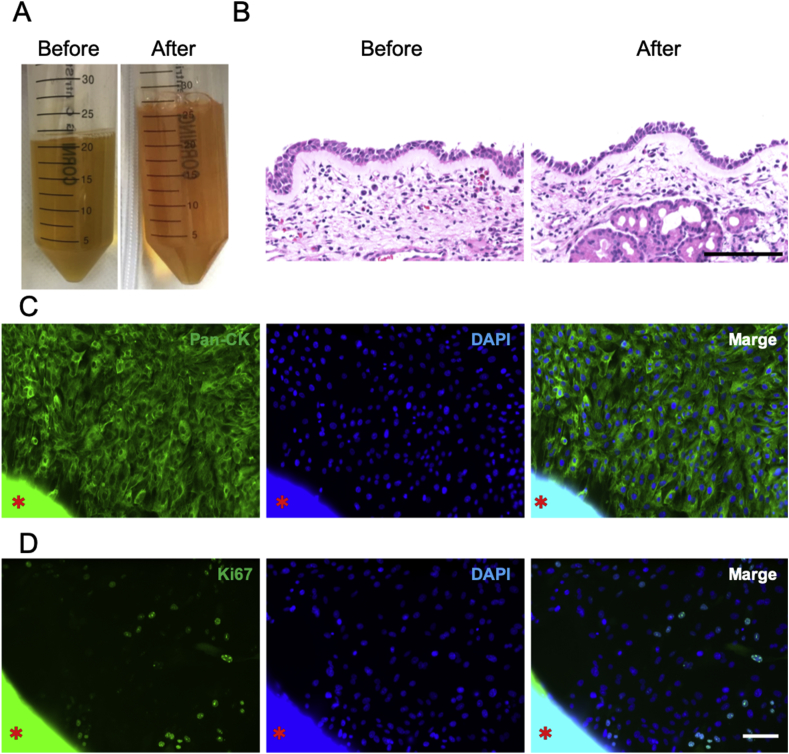
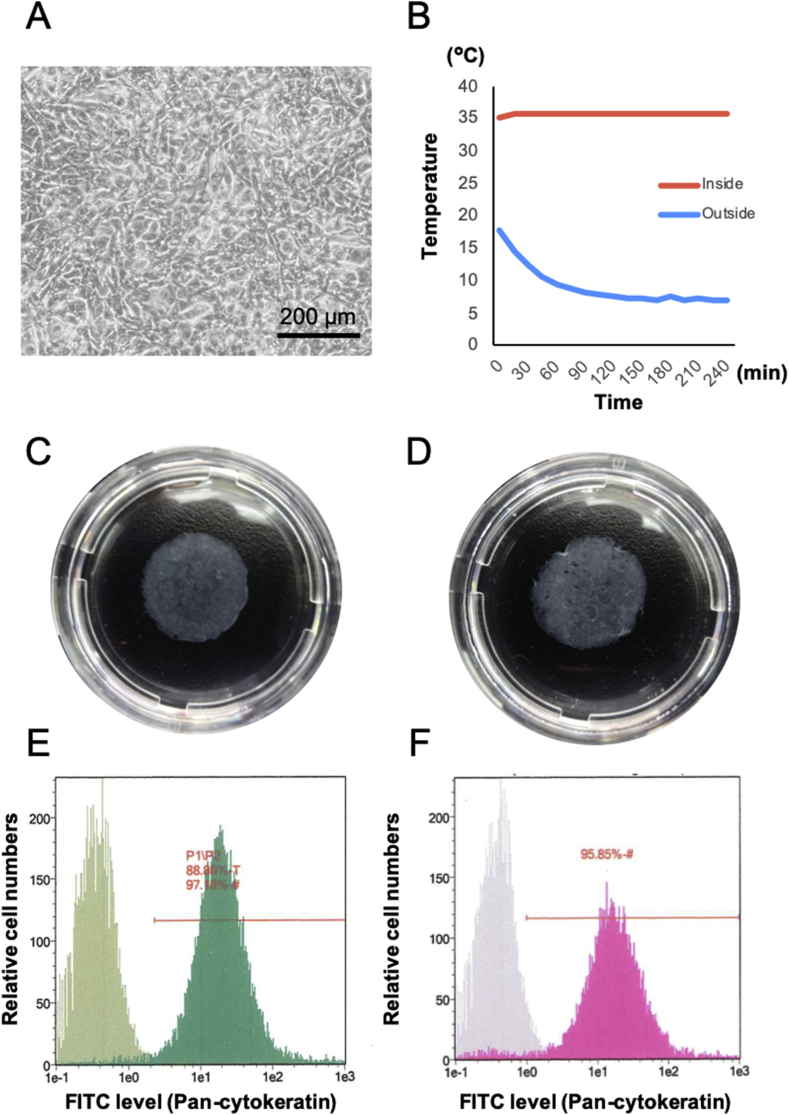
Previously, we succeeded in transplanting autologous nasal mucosal cell sheets in the middle ears of 5 patients, who underwent cholesteatoma resection, which prevents recurrence of cholesteatoma in clinical settings. Current good manufacturing practice (GMP) standards for human cell cultivation requires the establishment of cell processing centers (CPC) which act as germ-free facilities. However, due to practical difficulties involved in establishing and maintaining such facilities at each individual hospital, a functional transport system is felt to be needed for the continuation of effective regenerative therapy. In the current study, nasal mucosal tissue and autologous blood obtained from 3 human volunteers were transported for over 3 h. Disinfected nasal tissues were cultured using keratinocyte culture medium, which included autologous serum prepared from blood. After 24 d, cultured nasal mucosal cells were transported for over 3 h and subsequently assessed for cell number, viability and purity. Moreover, CK4, CK8, and CK18 were analyzed the suitability of these nasal mucosal cell sheets for middle ear regenerative therapy. Overall, we confirmed that nasal mucosal cell sheets can be fabricated using transported nasal mucosal tissue and blood. This study would be contribute to establish a new regenerative therapy for clinical application, accompanied with transportation between companies and hospitals.
此前,我们成功地在5例接受胆脂瘤切除术的患者中耳移植了自体鼻黏膜细胞片,这在临床环境中可防止胆脂瘤复发。当前人类细胞培养的良好生产规范(GMP)标准要求建立作为无菌设施的细胞处理中心(CPC)。然而,由于在每家医院建立和维护此类设施存在实际困难,人们认为需要一个功能性的运输系统来持续进行有效的再生治疗。在本研究中,从3名人类志愿者获取的鼻黏膜组织和自体血液被运输了3个多小时。对经过消毒的鼻组织使用角质形成细胞培养基进行培养,该培养基包含从血液中制备的自体血清。24天后,将培养的鼻黏膜细胞运输3个多小时,随后评估细胞数量、活力和纯度。此外,分析了细胞角蛋白4(CK4)、细胞角蛋白8(CK8)和细胞角蛋白18(CK18),以确定这些鼻黏膜细胞片用于中耳再生治疗的适用性。总体而言,我们证实可以使用运输来的鼻黏膜组织和血液制作鼻黏膜细胞片。本研究将有助于建立一种新的临床应用再生疗法,并伴随着公司与医院之间的运输。