Department of Neurosurgery, University of Maryland School of Medicine, Baltimore, Maryland.
R. Adams Cowley Shock Trauma Center, University of Maryland School of Medicine, Baltimore, Maryland.
J Neurotrauma. 2020 Feb 1;37(3):448-457. doi: 10.1089/neu.2019.6606. Epub 2019 Aug 1.
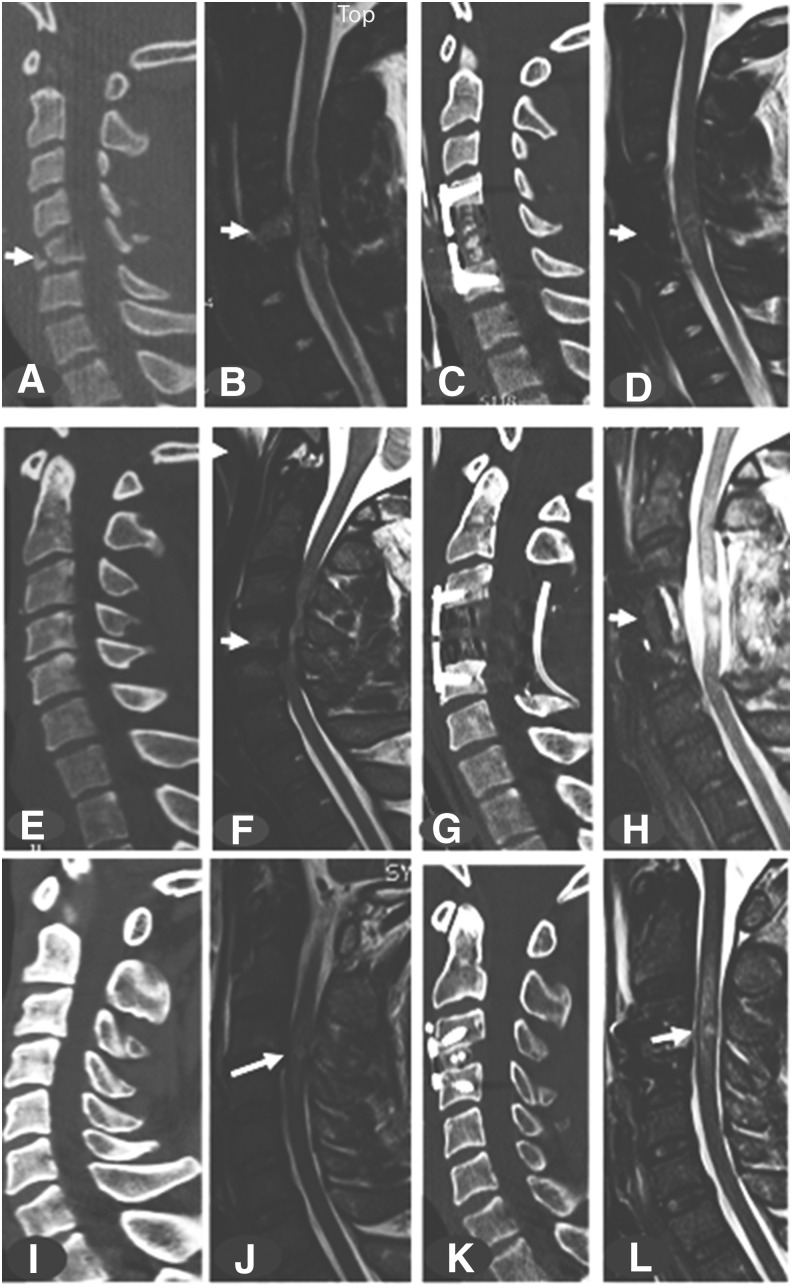
In cervical traumatic spinal cord injury (TSCI), the therapeutic effect of timing of surgery on neurological recovery remains uncertain. Additionally, the relationship between extent of decompression, imaging biomarker evidence of injury severity, and outcome is incompletely understood. We investigated the effect of timing of decompression on long-term neurological outcome in patients with complete spinal cord decompression confirmed on postoperative magnetic resonance imaging (MRI). American Spinal Injury Association (ASIA) Impairment Scale (AIS) grade conversion was determined in 72 AIS grades A, B, and C patients 6 months after confirmed decompression. Thirty-two patients underwent decompressive surgery ultra-early (< 12 h), 25 underwent decompressive surgery early (12-24 h), and 15 underwent decompressive surgery late (> 24-138.5 h) after injury. Age, gender, injury mechanism, intramedullary lesion length (IMLL) on MRI, admission ASIA motor score, and surgical technique were not statistically different among groups. Motor complete patients ( = 0.009) and those with fracture dislocations ( = 0.01) tended to be operated on earlier. Improvement of one grade or more was present in 55.6% of AIS grade A, 60.9% of AIS grade B, and 86.4% of AIS grade C patients. Admission AIS motor score ( = 0.0004) and pre-operative IMLL ( = 0.00001) were the strongest predictors of neurological outcome. AIS grade improvement occurred in 65.6%, 60%, and 80% of patients who underwent decompression ultra-early, early, and late, respectively ( = 0.424). Multiple regression analysis revealed that IMLL was the only significant variable predictive of AIS grade conversion to a better grade (odds ratio, 0.908; confidence interval [CI], 0.862-0.957; < 0.001). We conclude that in patients with post-operative MRI confirmation of complete decompression following cervical TSCI, pre-operative IMLL, not the timing of surgery, determines long-term neurological outcome.
在颈外伤性脊髓损伤(TSCI)中,手术时机对神经恢复的治疗效果尚不确定。此外,减压的程度、损伤严重程度的影像学生物标志物证据与结果之间的关系也不完全清楚。我们研究了减压时机对术后磁共振成像(MRI)证实完全减压的患者长期神经预后的影响。在确认减压后 6 个月,72 例 ASIA 损伤分级 A、B 和 C 患者的美国脊髓损伤协会(ASIA)损伤分级(AIS)进行了转换。32 例患者在损伤后超早期(<12 小时)行减压手术,25 例行早期(12-24 小时)减压手术,15 例行晚期(>24-138.5 小时)减压手术。年龄、性别、损伤机制、MRI 上的脊髓内病变长度(IMLL)、入院时 ASIA 运动评分和手术技术在各组间无统计学差异。完全运动患者( = 0.009)和骨折脱位患者( = 0.01)倾向于较早手术。AIS 分级 A 患者中有 55.6%、AIS 分级 B 患者中有 60.9%和 AIS 分级 C 患者中有 86.4%的患者改善了一个或多个等级。入院时 ASIA 运动评分( = 0.0004)和术前 IMLL( = 0.00001)是神经预后的最强预测指标。减压超早期、早期和晚期的患者 AIS 分级改善分别为 65.6%、60%和 80%( = 0.424)。多变量回归分析显示,IMLL 是预测 AIS 分级向更好分级转换的唯一显著变量(优势比,0.908;置信区间 [CI],0.862-0.957; < 0.001)。我们的结论是,在颈外伤性脊髓损伤患者中,术后 MRI 证实完全减压后,术前 IMLL 而不是手术时机决定了长期神经预后。