Institute of Immunopharmacology and Immunotherapy, School of Pharmaceutical Sciences, Shandong University, Jinan, 250012, Shandong, China.
Institute of Diagnostics, School of Medicine, Shandong University, Jinan, 250012, Shandong, China.
Stem Cell Res Ther. 2019 Jul 16;10(1):210. doi: 10.1186/s13287-019-1311-0.
The paradigm of hematopoietic stem and progenitor cells (HSPCs) has become accepted ever since the discovery of adult mouse liver hematopoietic stem cells and their multipotent characteristics that give rise to all blood cells. However, differences between bone marrow (BM) and liver hematopoietic stem cells and the hematopoietic microenvironment remain poorly understood. In addition, the regulation of the liver hematopoietic system remains unknown.
Clone formation assays were used to confirm that the proliferation of adult mouse liver and bone marrow HSPCs. Model mice with different interferon gamma (IFN-γ) levels and a co-culture system were used to detect the differentiation of liver HSPCs. The γ-secretase inhibitor (GSI) and the JAK/STAT inhibitor ruxolitinib and cell culture assays were used to explore the molecular mechanism by which IFN-γ impairs HSPC proliferation and differentiation.
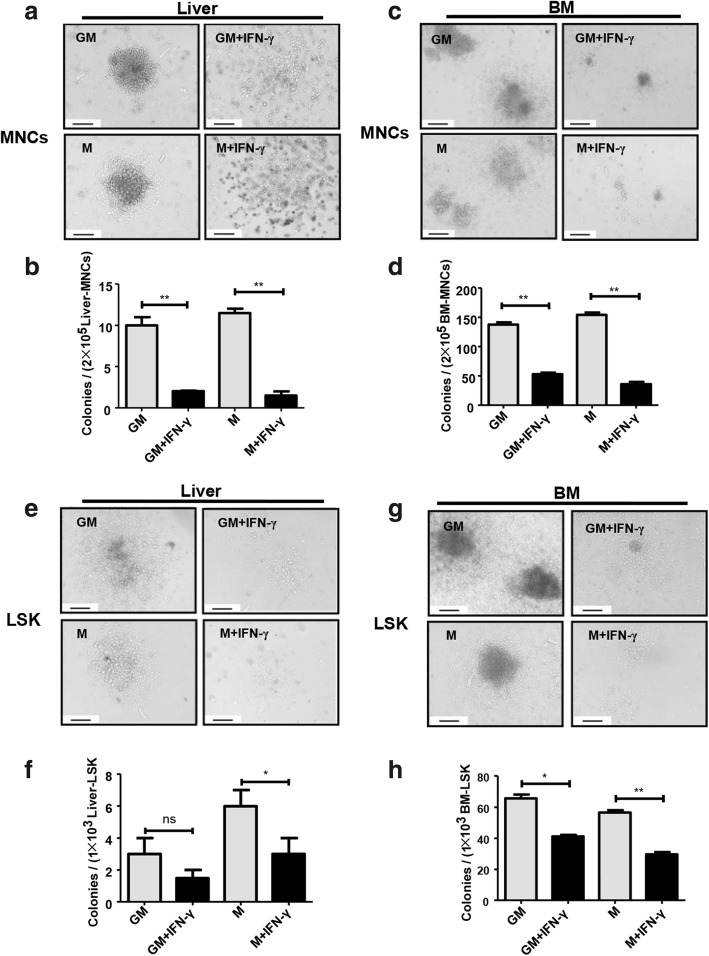
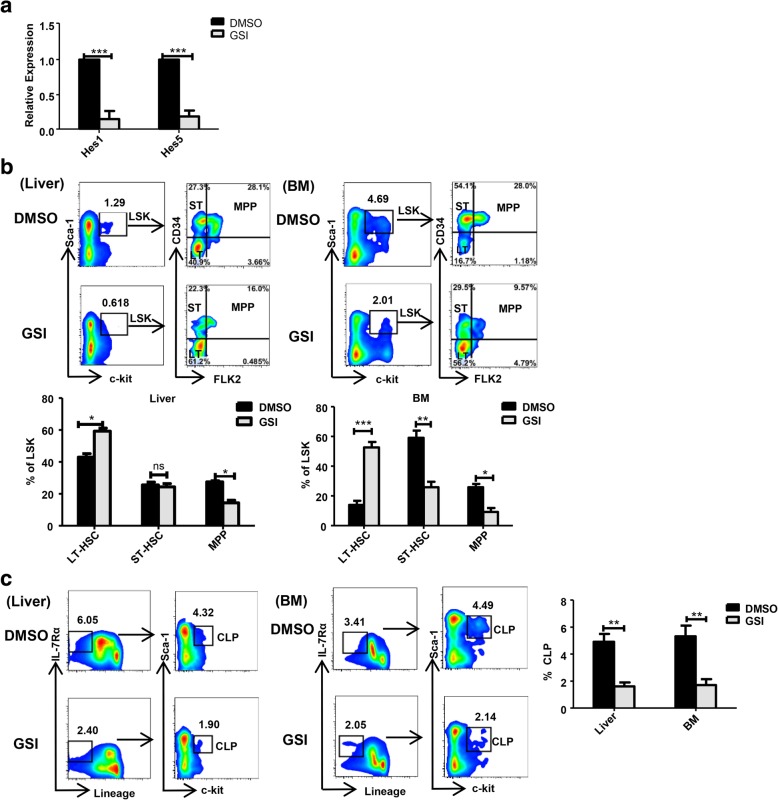
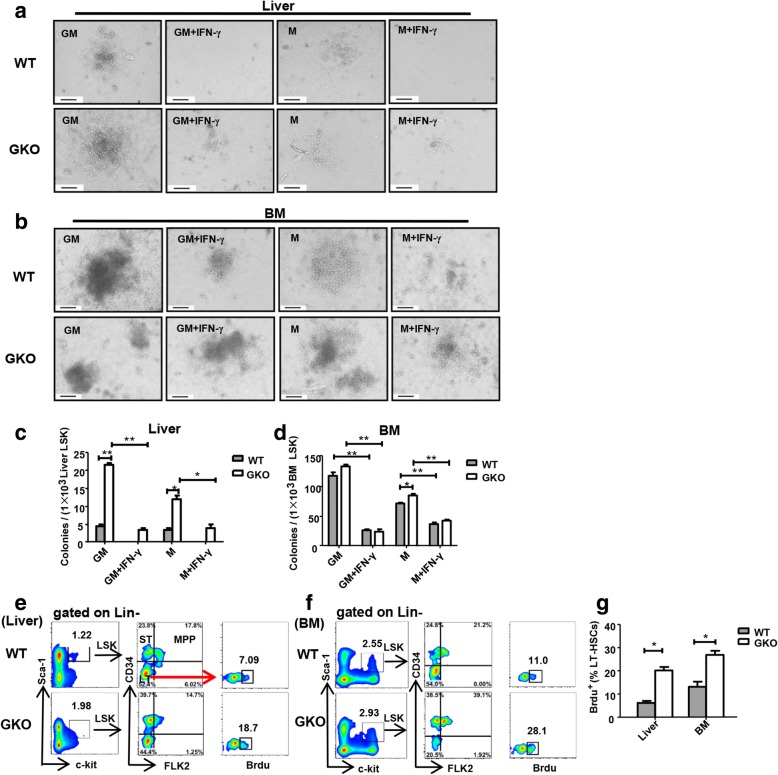
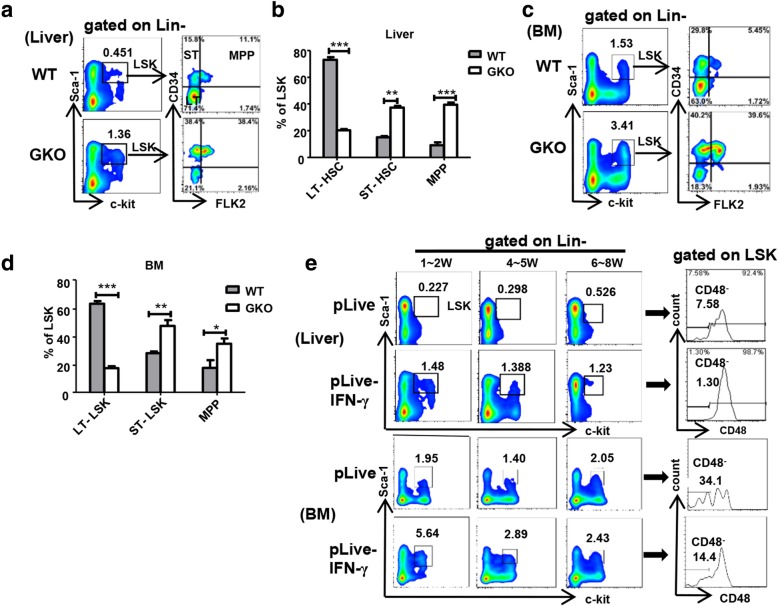
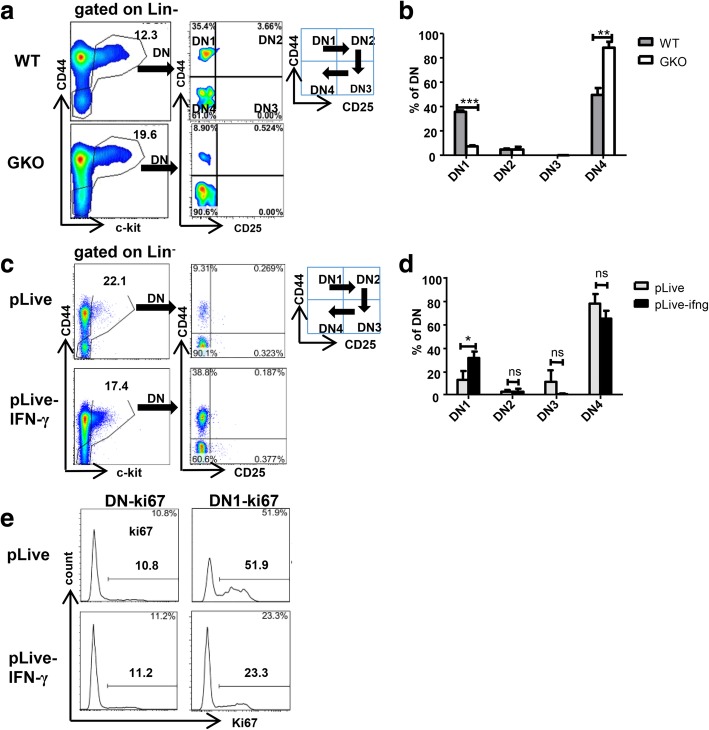
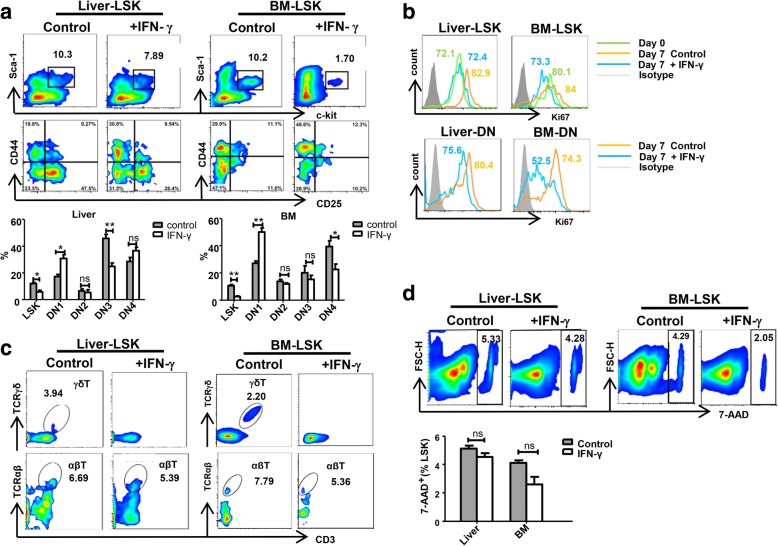
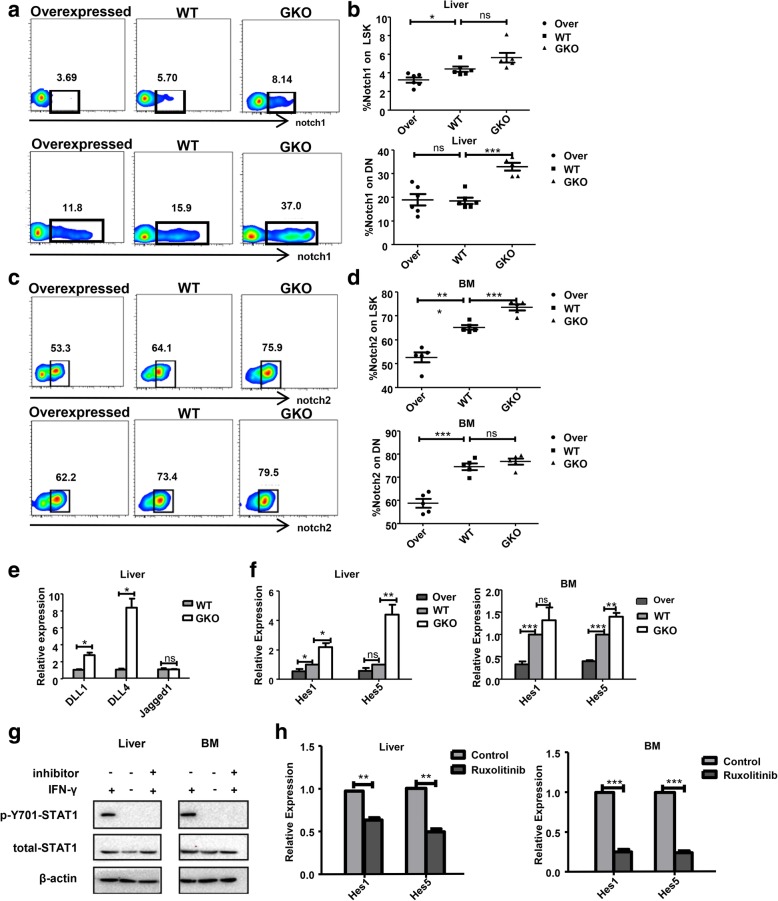
The colony-forming activity of liver and bone marrow HSPCs was inhibited by IFN-γ. Model mice with different IFN-γ levels showed that the differentiation of liver HSPCs was impaired by IFN-γ. Using a co-culture system comprising liver HSPCs, we found that IFN-γ inhibited the development of liver hematopoietic stem cells into γδT cells. We then demonstrated that IFN-γ might impair liver HSPC differentiation by inhibiting the activation of the notch signaling via the JAK/STAT signaling pathway.
IFN-γ inhibited the proliferation of liver-derived HSPCs. IFN-γ also impaired the differentiation of long-term hematopoietic stem cells (LT-HSCs) into short-term hematopoietic stem cells (ST-HSCs) and multipotent progenitors (MPPs) and the process from LSK (LineageSca-1c-Kit) cells to γδT cells. Importantly, we proposed that IFN-γ might inhibit the activation of notch signaling through the JAK/STAT signaling pathway and thus impair the differentiation process of mouse adult liver and BM hematopoietic stem cells.
自从发现成年小鼠肝脏造血干细胞及其多能特性,能够产生所有血细胞以来,造血干细胞和祖细胞(HSPCs)的范式已被接受。然而,骨髓(BM)和肝脏 HSPCs 之间以及造血微环境之间的差异仍知之甚少。此外,肝脏造血系统的调节仍不清楚。
采用克隆形成实验证实了成年小鼠肝脏和骨髓 HSPCs 的增殖。使用不同干扰素γ(IFN-γ)水平的模型小鼠和共培养系统检测肝脏 HSPCs 的分化。使用γ-分泌酶抑制剂(GSI)和 JAK/STAT 抑制剂鲁索替尼以及细胞培养实验来探索 IFN-γ损害 HSPC 增殖和分化的分子机制。
IFN-γ抑制肝脏和骨髓 HSPC 的集落形成活性。具有不同 IFN-γ水平的模型小鼠表明 IFN-γ损害了肝脏 HSPC 的分化。使用包含肝脏 HSPC 的共培养系统,我们发现 IFN-γ通过抑制 notch 信号通路的活化来抑制肝脏造血干细胞向 γδT 细胞的发育。然后我们证明,IFN-γ可能通过 JAK/STAT 信号通路抑制 notch 信号的激活,从而损害肝脏 HSPC 的分化。
IFN-γ抑制肝脏来源的 HSPC 的增殖。IFN-γ还损害了长期造血干细胞(LT-HSCs)向短期造血干细胞(ST-HSCs)和多能祖细胞(MPPs)的分化以及从 LSK(LinageSca-1c-Kit)细胞向 γδT 细胞的分化过程。重要的是,我们提出 IFN-γ可能通过 JAK/STAT 信号通路抑制 notch 信号的激活,从而损害成年小鼠肝脏和 BM 造血干细胞的分化过程。