Hamilton Jamie A G, Henry Curtis J
Department of Pediatrics, Emory University School of Medicine, Atlanta, Georgia, USA.
Aflac Cancer and Blood Disorders Center, Children's Healthcare of Atlanta, Atlanta, Georgia, USA.
Aging Cancer. 2020 Dec;1(1-4):30-44. doi: 10.1002/aac2.12014. Epub 2020 Sep 30.
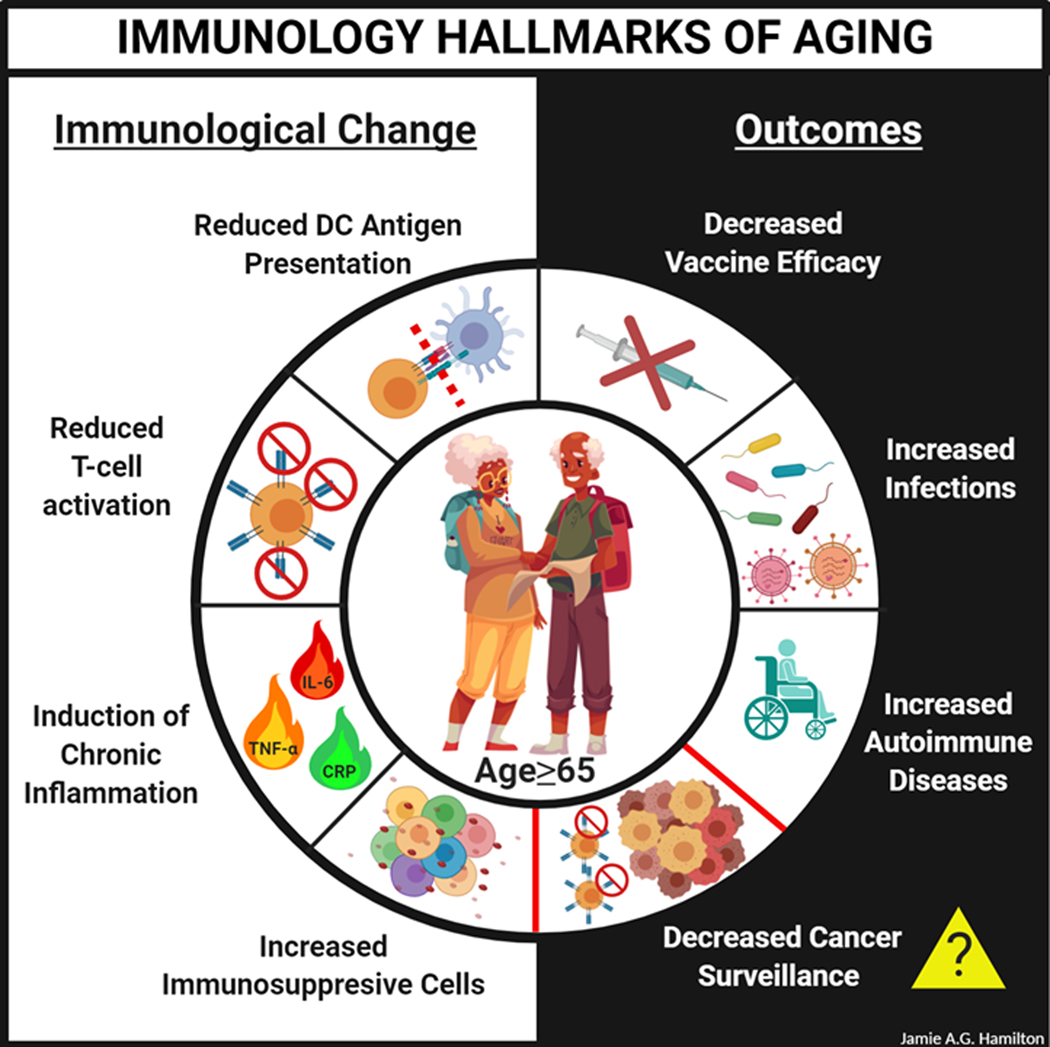
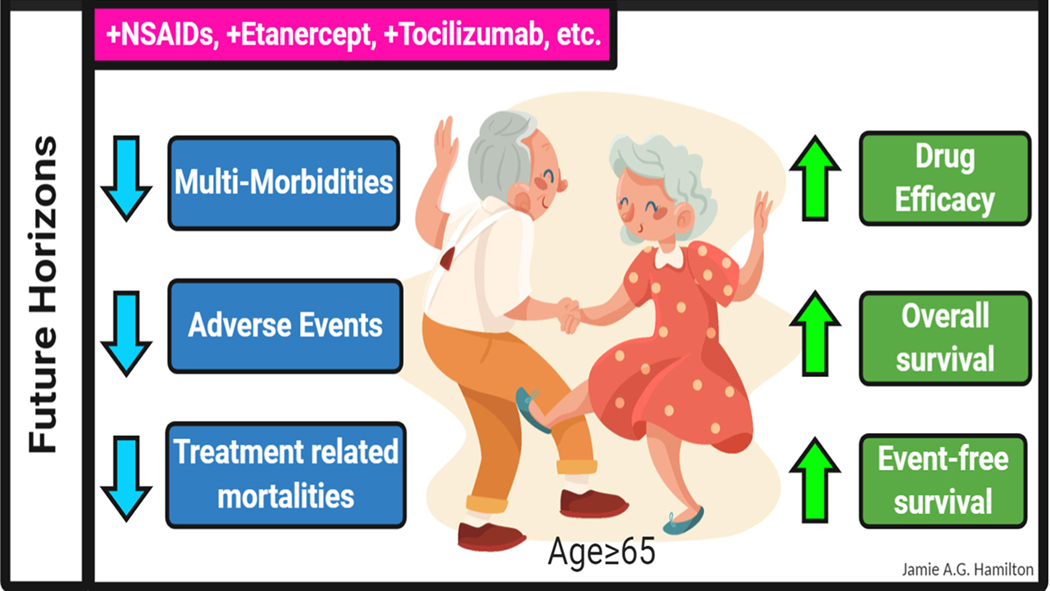
The life expectancy of the world's elderly population (65 and older) continues to reach new milestones with older individuals currently comprising greater than 8.5% (617 million) of the world's population. This percentage is predicted to approach 20% of the world's population by 2050 (representing 1.6 billion people). Despite this amazing feat, many healthcare systems are not equipped to handle the multitude of diseases that commonly manifest with age, including most types of cancers. As the world's aging population grows, cancer treatments continue to evolve. Immunotherapies are a new drug class that has revolutionized our ability to treat previously intractable cancers; however, their efficacy in patients with compromised immune systems remains unclear. In this review, we will discuss how aging-associated losses in immune homeostasis impact the efficacy and safety of immunotherapy treatment in preclinical models of aging. We will also discuss how these findings translate to elderly patients receiving immunotherapy treatment for refractory and relapsed cancers, as well as, strategies that could be explored to improve the efficacy of immunotherapies in aged patients.
全球老年人口(65岁及以上)的预期寿命不断达到新的里程碑,目前老年人口占全球人口的比例超过8.5%(6.17亿)。预计到2050年,这一比例将接近全球人口的20%(即16亿人)。尽管取得了这一惊人成就,但许多医疗保健系统仍无法应对随着年龄增长而常见的多种疾病,包括大多数类型的癌症。随着全球老年人口的增加,癌症治疗也在不断发展。免疫疗法是一类新型药物,彻底改变了我们治疗以前难以治疗的癌症的能力;然而,它们在免疫系统受损患者中的疗效仍不明确。在这篇综述中,我们将讨论免疫稳态中与衰老相关的损失如何影响衰老临床前模型中免疫治疗的疗效和安全性。我们还将讨论这些发现如何转化为老年患者接受免疫治疗以治疗难治性和复发性癌症,以及可以探索哪些策略来提高免疫疗法在老年患者中的疗效。