Children's Hospital of Philadelphia, Philadelphia, PA.
University of Pennsylvania, Philadelphia, PA.
J Exp Med. 2019 Sep 2;216(9):2170-2183. doi: 10.1084/jem.20181953. Epub 2019 Jul 16.
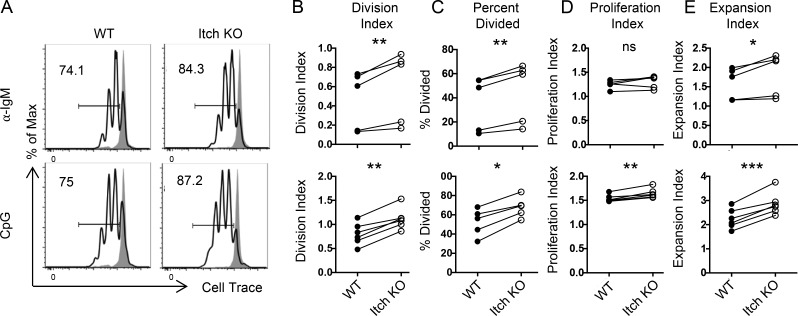
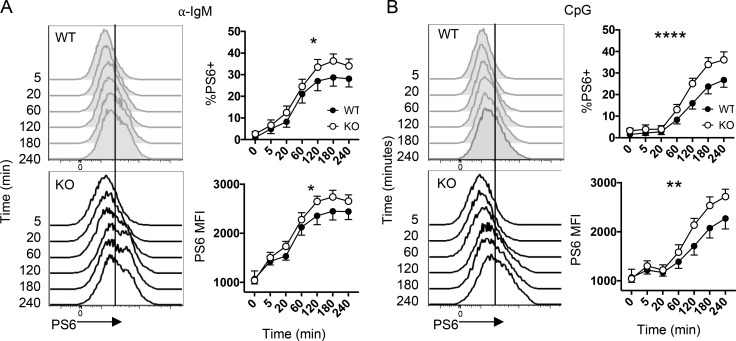
The E3 ubiquitin ligase Itch regulates antibody levels and prevents autoimmune disease in humans and mice, yet how Itch regulates B cell fate or function is unknown. We now show that Itch directly limits B cell activity. While Itch-deficient mice displayed normal numbers of preimmune B cell populations, they showed elevated numbers of antigen-experienced B cells. Mixed bone marrow chimeras revealed that Itch acts within B cells to limit naive and, to a greater extent, germinal center (GC) B cell numbers. B cells lacking Itch exhibited increased proliferation, glycolytic capacity, and mTORC1 activation. Moreover, stimulation of these cells in vivo by WT T cells resulted in elevated numbers of GC B cells, PCs, and serum IgG. These results support a novel role for Itch in limiting B cell metabolism and proliferation to suppress antigen-driven B cell responses.
E3 泛素连接酶 Itch 调节人类和小鼠的抗体水平并预防自身免疫性疾病,但 Itch 如何调节 B 细胞命运或功能尚不清楚。我们现在表明,Itch 直接限制 B 细胞活性。虽然缺乏 Itch 的小鼠显示出正常数量的未成熟 B 细胞群体,但它们显示出更多的抗原经历的 B 细胞。混合骨髓嵌合体显示,Itch 在 B 细胞内起作用以限制幼稚 B 细胞,并且在更大程度上限制生发中心 (GC) B 细胞数量。缺乏 Itch 的 B 细胞表现出增加的增殖、糖酵解能力和 mTORC1 激活。此外,体内用 WT T 细胞刺激这些细胞导致 GC B 细胞、PC 和血清 IgG 的数量增加。这些结果支持 Itch 在限制 B 细胞代谢和增殖以抑制抗原驱动的 B 细胞反应中发挥新的作用。