O'Brien Flora J M, Almaraz Maya, Foster Melissa A, Hill Alice F, Huber David P, King Elizabeth K, Langford Harry, Lowe Mary-Anne, Mickan Bede S, Miller Valerie S, Moore Oliver W, Mathes Falko, Gleeson Deirdre, Leopold Matthias
Biological Sciences, University of Southampton, Southampton, United Kingdom.
National Center for Ecological Analysis and Synthesis, University of California, Santa Barbara, Santa Barbara, CA, United States.
Front Microbiol. 2019 Jul 2;10:1486. doi: 10.3389/fmicb.2019.01486. eCollection 2019.
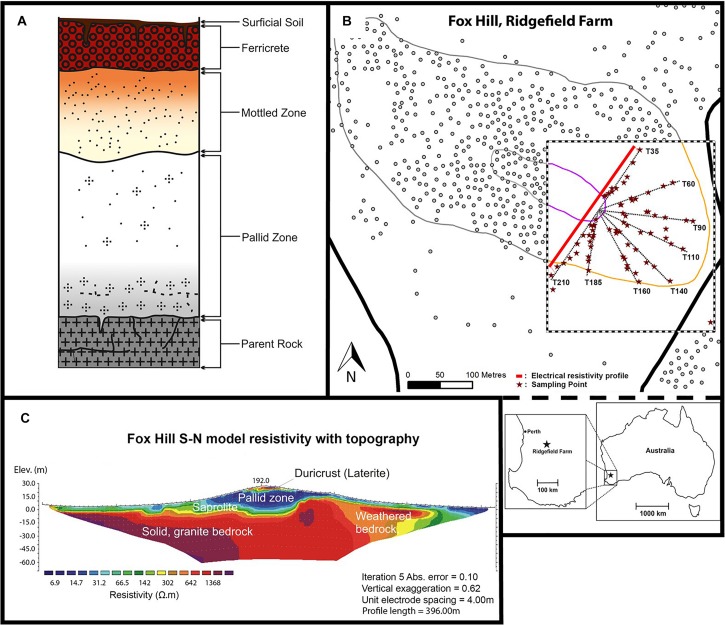
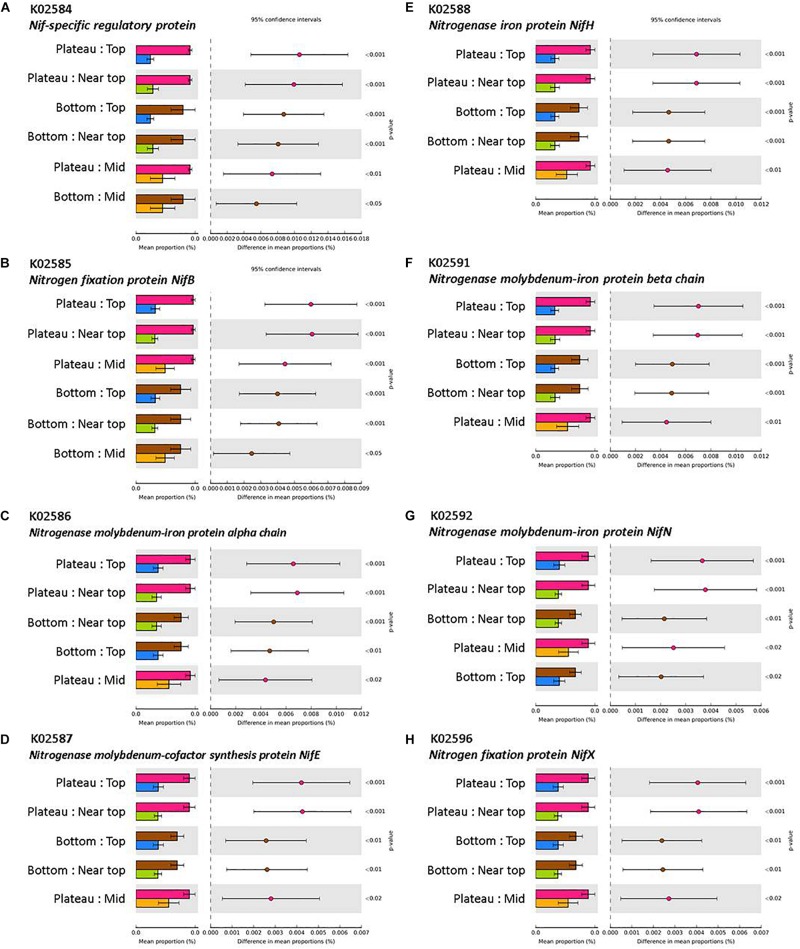
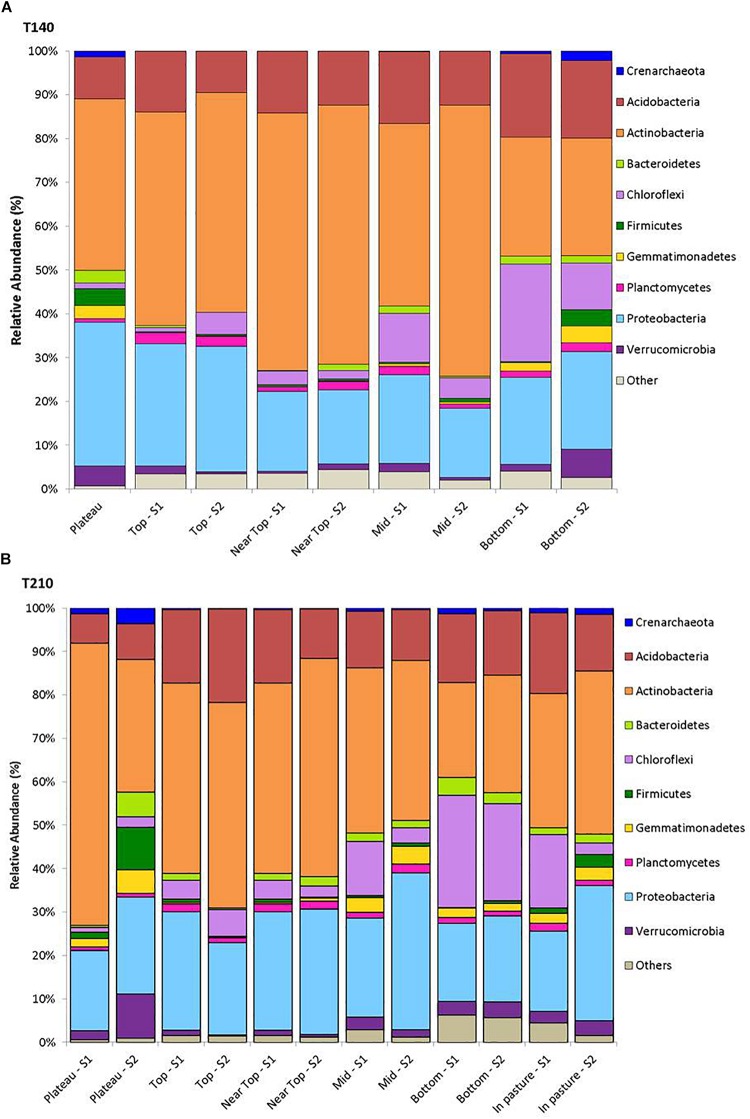
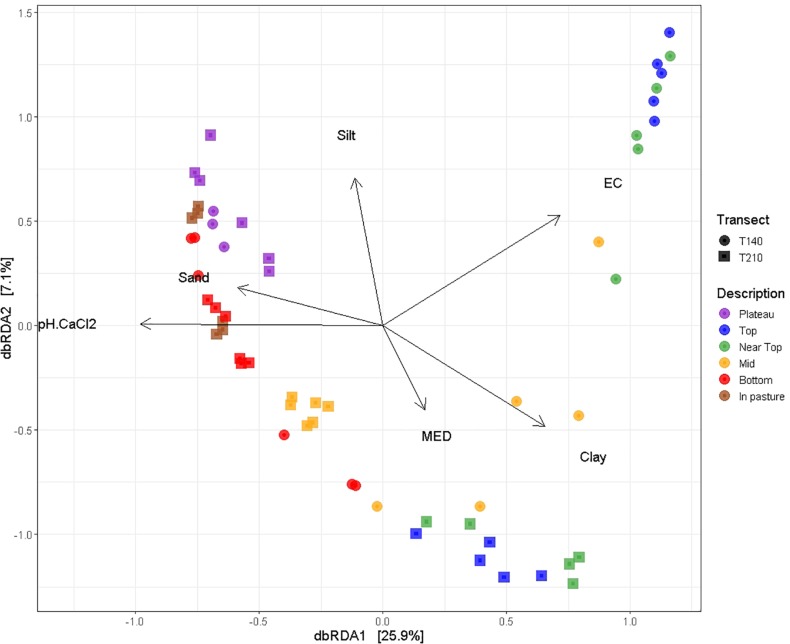
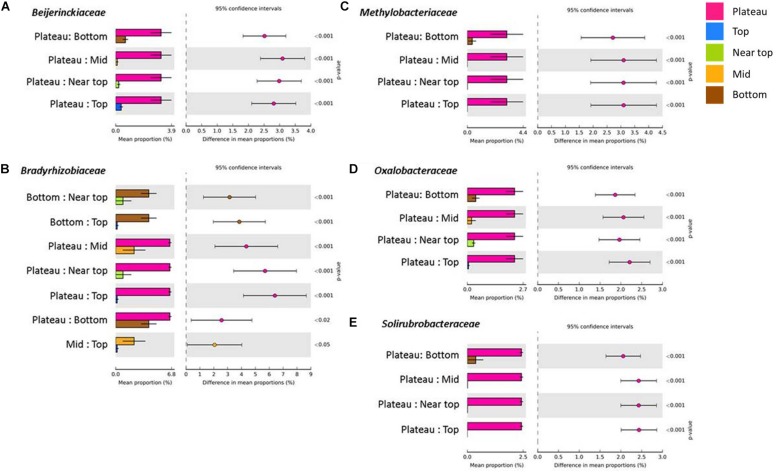
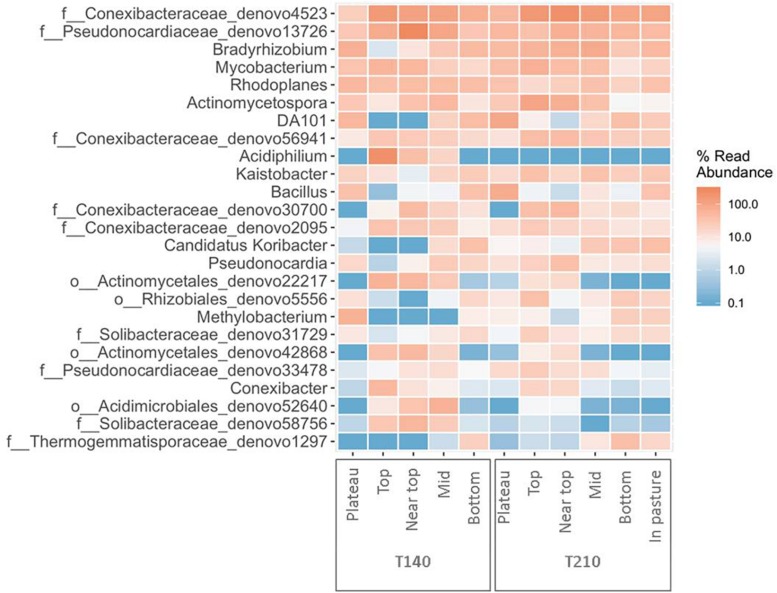
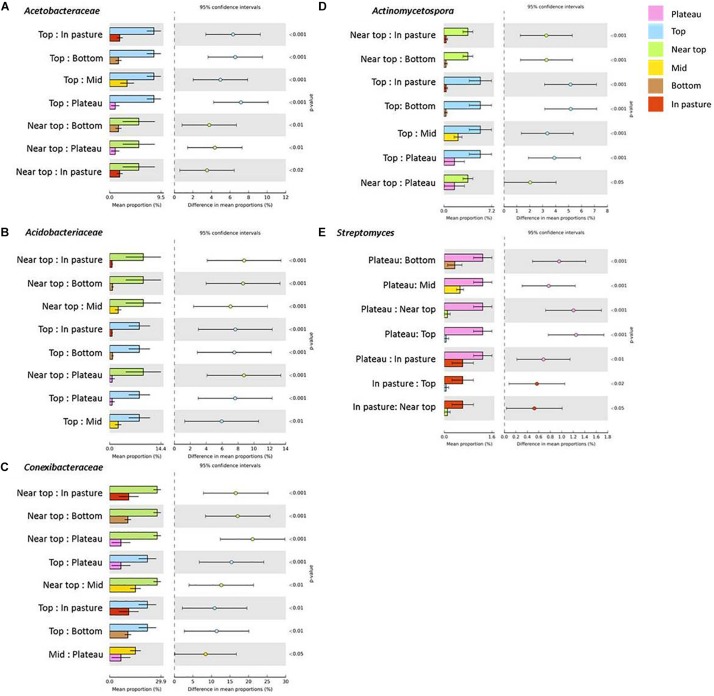
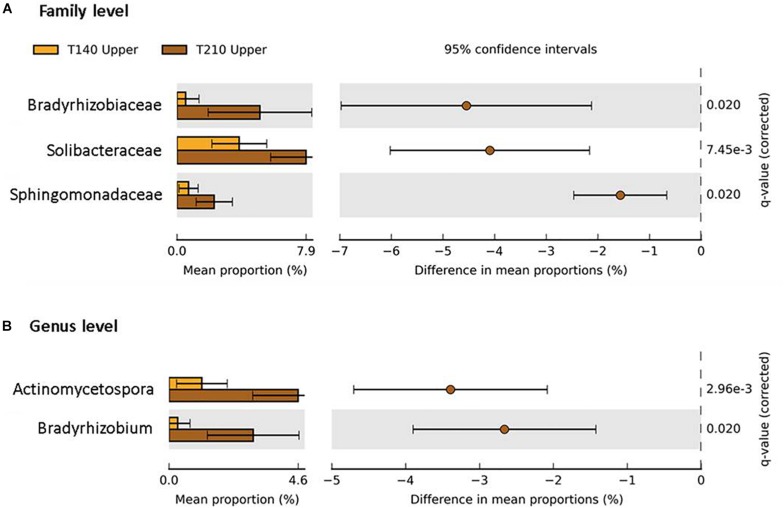
Soils are crucial in regulating ecosystem processes, such as nutrient cycling, and supporting plant growth. To a large extent, these functions are carried out by highly diverse and dynamic soil microbiomes that are in turn governed by numerous environmental factors including weathering profile and vegetation. In this study, we investigate geophysical and vegetation effects on the microbial communities of iron-rich lateritic soils in the highly weathered landscapes of Western Australia (WA). The study site was a lateritic hillslope in southwestern Australia, where gradual erosion of the duricrust has resulted in the exposure of the different weathering zones. High-throughput amplicon sequencing of the 16S rRNA gene was used to investigate soil bacterial community diversity, composition and functioning. We predicted that shifts in the microbial community would reflect variations in certain edaphic properties associated with the different layers of the lateritic profile and vegetation cover. Our results supported this hypothesis, with electrical conductivity, pH and clay content having the strongest correlation with beta diversity, and many of the differentially abundant taxa belonging to the phyla Actinobacteria and Proteobacteria. Soil water repellence, which is associated with vegetation, also affected beta diversity. This enhanced understanding of the natural system could help to improve future crop management in WA since the physicochemical properties of the agricultural soils in this region are inherited from laterites via the weathering and pedogenesis processes.
土壤在调节生态系统过程(如养分循环)和支持植物生长方面至关重要。在很大程度上,这些功能是由高度多样且动态的土壤微生物群落执行的,而这些微生物群落又受包括风化剖面和植被在内的众多环境因素的支配。在本研究中,我们调查了西澳大利亚(WA)高度风化景观中富铁红土土壤微生物群落的地球物理和植被效应。研究地点是澳大利亚西南部的一个红土山坡,在这里,硬壳的逐渐侵蚀导致了不同风化带的暴露。利用16S rRNA基因的高通量扩增子测序来研究土壤细菌群落的多样性、组成和功能。我们预测微生物群落的变化将反映与红土剖面不同层和植被覆盖相关的某些土壤性质的变化。我们的结果支持了这一假设,电导率、pH值和粘土含量与β多样性的相关性最强,许多差异丰富的分类群属于放线菌门和变形菌门。与植被相关的土壤斥水性也影响了β多样性。对自然系统的这种深入了解有助于改善西澳大利亚未来的作物管理,因为该地区农业土壤的物理化学性质是通过风化和成土过程从红土继承而来的。