1Molecular Biology, Cell Biology & Biochemistry Program, Boston University, Boston, MA 02215 USA.
2Biological Design Center, Boston University, Boston, MA 02215 USA.
Commun Biol. 2019 Jul 11;2:259. doi: 10.1038/s42003-019-0509-0. eCollection 2019.
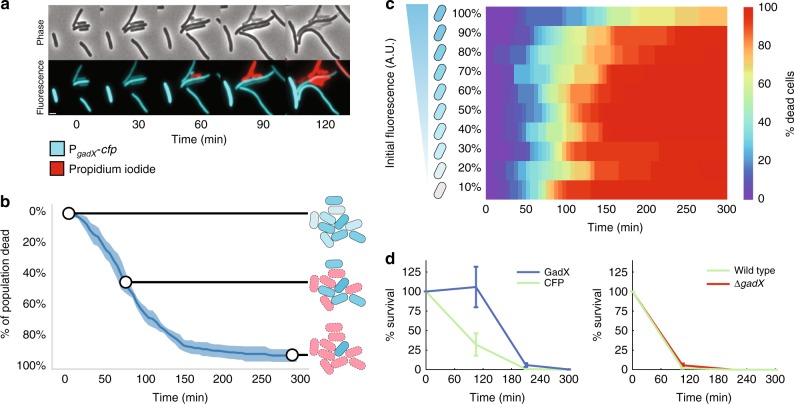
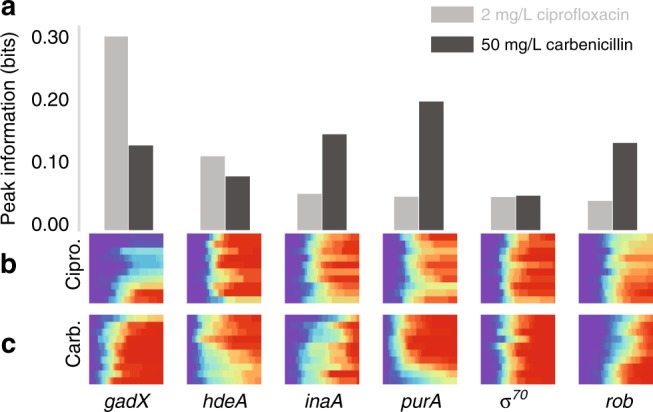
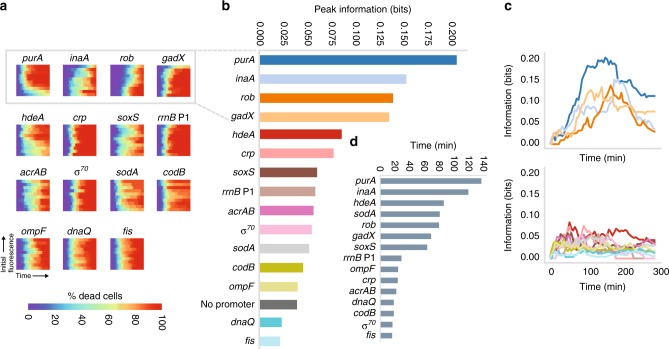
Antibiotic killing does not occur at a single, precise time for all cells within a population. Variability in time to death can be caused by stochastic expression of genes, resulting in differences in endogenous stress-resistance levels between individual cells in a population. Here we investigate whether single-cell differences in gene expression prior to antibiotic exposure are related to cell survival times after antibiotic exposure for a range of genes of diverse function. We quantified the time to death of single cells under antibiotic exposure in combination with expression of reporters. For some reporters, including genes involved in stress response and cellular processes like metabolism, the time to cell death had a strong relationship with the initial expression level of the genes. Our results highlight the single-cell level non-uniformity of antibiotic killing and also provide examples of key genes where cell-to-cell variation in expression is strongly linked to extended durations of antibiotic survival.
抗生素杀菌作用并非在同一精确时间内作用于群体中的所有细胞。死亡时间的可变性可能是由基因的随机表达引起的,导致群体中个体细胞之间内源性应激抗性水平的差异。在这里,我们研究了抗生素暴露前单细胞基因表达的差异是否与抗生素暴露后细胞存活时间有关,涉及多种功能的基因。我们结合报告基因的表达,定量检测了单细胞在抗生素暴露下的死亡时间。对于一些报告基因,包括参与应激反应和代谢等细胞过程的基因,细胞死亡时间与基因的初始表达水平有很强的关系。我们的结果突出了抗生素杀菌作用的单细胞水平非均一性,并且还提供了一些关键基因的例子,其中细胞间表达的变化与抗生素存活时间的延长密切相关。