Internal Medicine, Wayne State University School of Medicine, Detroit, Michigan, USA.
Division of Pulmonary Critical Care and Sleep Medicine, Department of Internal Medicine, Wayne State University School of Medicine, Detroit, Michigan, USA.
BMJ Open. 2019 Jul 17;9(7):e030559. doi: 10.1136/bmjopen-2019-030559.
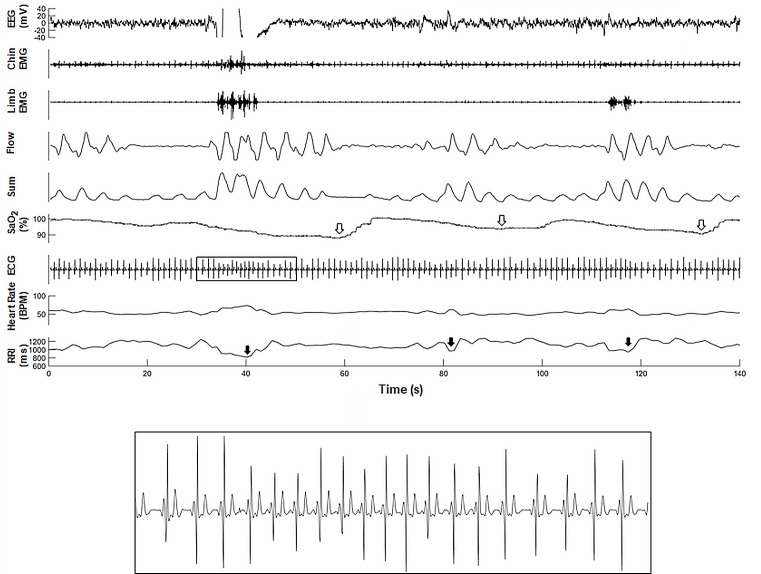
Sleep-disordered breathing (SDB) is strongly linked to adverse cardiovascular outcomes (cardiovascular diseases (CVD)). Whether heart rate changes measured by nocturnal R-R interval (RRI) dips (RRI dip index (RRDI)) adversely affect the CVD outcomes is unknown.
To test whether nocturnal RRDI predicts CVD incidence and mortality in the Wisconsin Sleep Cohort study (WSCS), independent of the known effects of SDB on beat-to-beat variability.
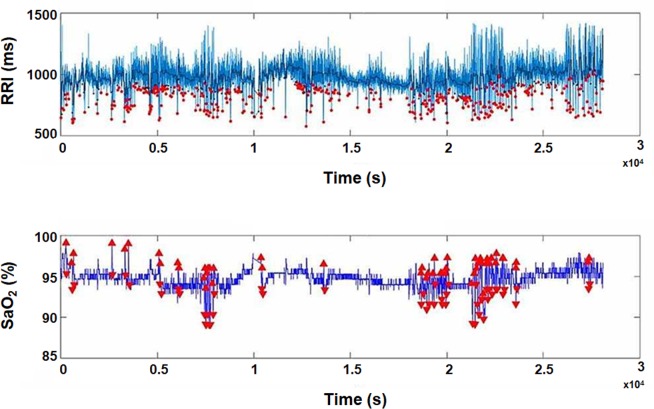
The study analysed electrocardiograph obtained from polysomnography study to assess the nocturnal total RRDI (the number of RRI dips divided by the total recording time) and sleep RRDI (the number of RRI dips divided by total sleep time). A composite CVD risk as a function of total and sleep RRDI was estimated by Cox proportional hazards in the WSCS.
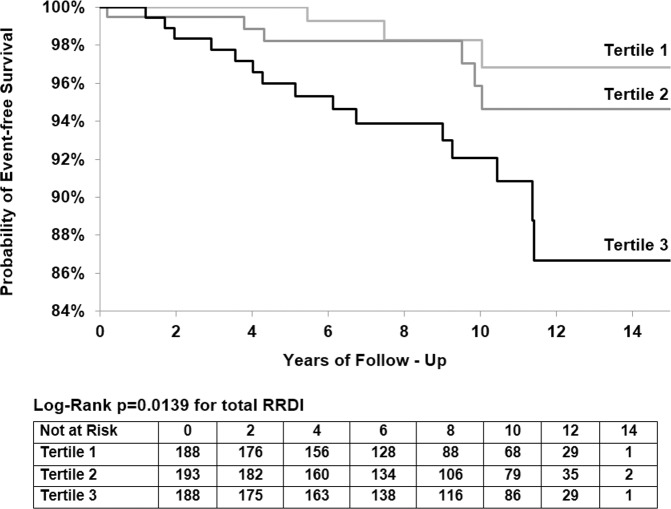
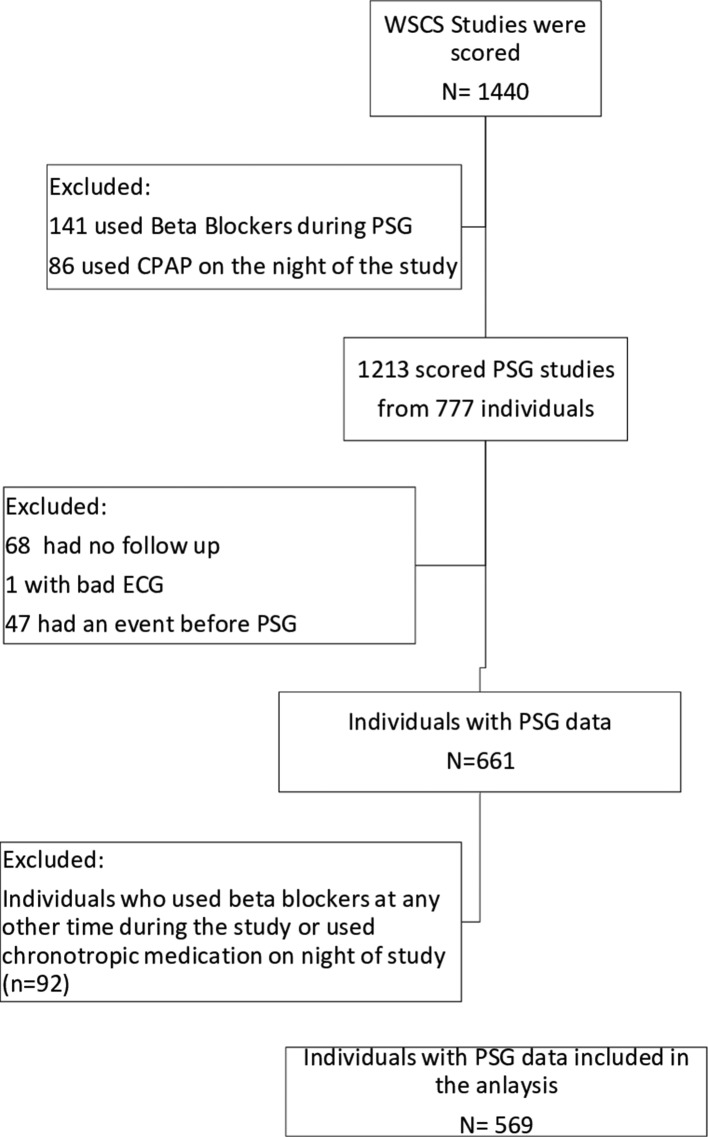
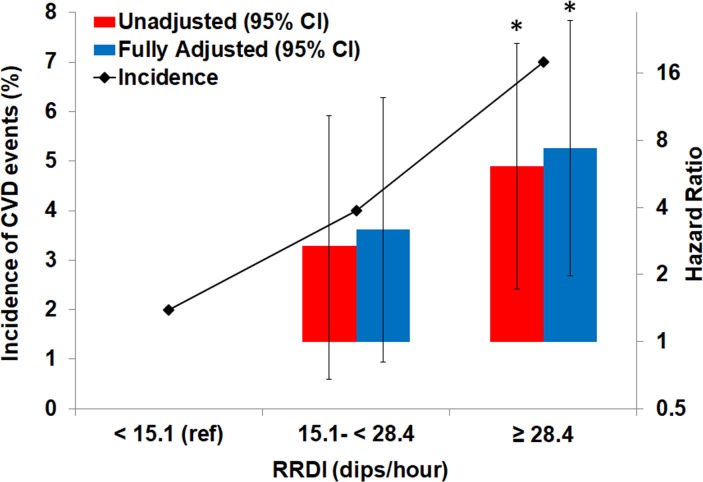
The study sample consisted of 569 participants from the WSCS with no prior CVD at baseline were followed up for up to 15 years. Nocturnal total RRDI (10-unit change) was associated with composite CVD event(s) (HR, 1.24 per 10-unit increment in RRDI (95% CI 1.10 to 1.39), p<0.001). After adjusting for demographic factors (age 58±8 years old; 53% male; and body mass index 31±7 kg/m), and apnoea-hypopnoea index (AHI 4%), individuals with highest total nocturnal RRDI category (≥28 vs<15 dips/hour) had a significant HR for increased incidence of CVD and mortality of 7.4(95% CI 1.97 to 27.7), p=0.003). Sleep RRDI was significantly associated with new-onset CVD event(s) (HR, 1.21 per 10-unit increment in RRDI (95% CI 1.09 to 1.35), p<0.001) which remained significant after adjusting for demographic factors, AHI 4%, hypoxemia and other comorbidities.
Increased nocturnal RRDI predicts cardiovascular mortality and morbidity, independent of the known effects of SDB on beat-to-beat variability. The frequency of RRDI is higher in men than in women, and is significantly associated with new-onset CVD event(s) in men but not in women.
睡眠呼吸障碍(SDB)与不良心血管结局(心血管疾病(CVD))密切相关。通过夜间 R-R 间期(RRI)下降(RRI 下降指数(RRDI))测量的心率变化是否对 CVD 结局产生不利影响尚不清楚。
在威斯康星州睡眠队列研究(WSCS)中,测试夜间 RRDI 是否可预测 CVD 发生率和死亡率,而不考虑 SDB 对逐搏变异性的已知影响。
该研究分析了多导睡眠图获得的心电图,以评估夜间总 RRDI(RRI 下降的次数除以总记录时间)和睡眠 RRDI(RRI 下降的次数除以总睡眠时间)。通过 Cox 比例风险模型在 WSCS 中估计了总 RRDI 和睡眠 RRDI 的复合 CVD 风险函数。
该研究样本由 WSCS 中的 569 名基线时无先前 CVD 的参与者组成,随访时间长达 15 年。夜间总 RRDI(每增加 10 个单位)与复合 CVD 事件(HR,RRDI 每增加 10 个单位的 1.24(95%CI 1.10 至 1.39),p<0.001)相关。在调整人口统计学因素(年龄 58±8 岁;53%为男性;体重指数 31±7kg/m)和呼吸暂停低通气指数(AHI 4%)后,RRDI 最高的总夜间 RRDI 类别(≥28 与<15 个/小时)的个体发生 CVD 和死亡率增加的 HR 显著为 7.4(95%CI 1.97 至 27.7),p=0.003)。睡眠 RRDI 与新发 CVD 事件(HR,RRDI 每增加 10 个单位的 1.21(95%CI 1.09 至 1.35),p<0.001)显著相关,在调整人口统计学因素、AHI 4%、低氧血症和其他合并症后,该相关性仍然显著。
夜间 RRDI 增加可预测心血管死亡率和发病率,而不考虑 SDB 对逐搏变异性的已知影响。RRDI 的频率在男性中高于女性,并且与男性中新发 CVD 事件显著相关,但与女性无关。