The Department of Anesthesiology, The Second Clinical Medical College (Shenzhen People's Hospital), Jinan University, No. 1017 Dongmen North Road, Shenzhen, People's Republic of China.
Integrated Chinese and Western Medicine Postdoctoral Research Station, Jinan University, Shipai, Guangzhou, People's Republic of China.
Cell Death Dis. 2019 Jul 17;10(8):542. doi: 10.1038/s41419-019-1761-4.
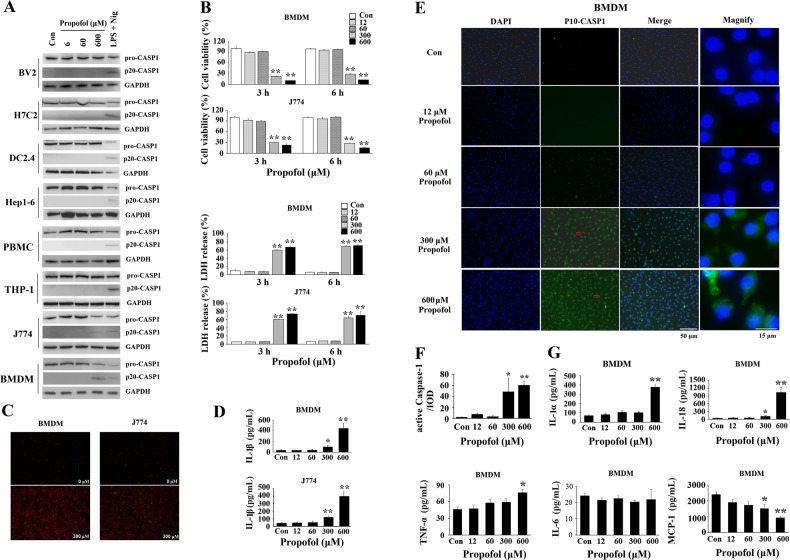
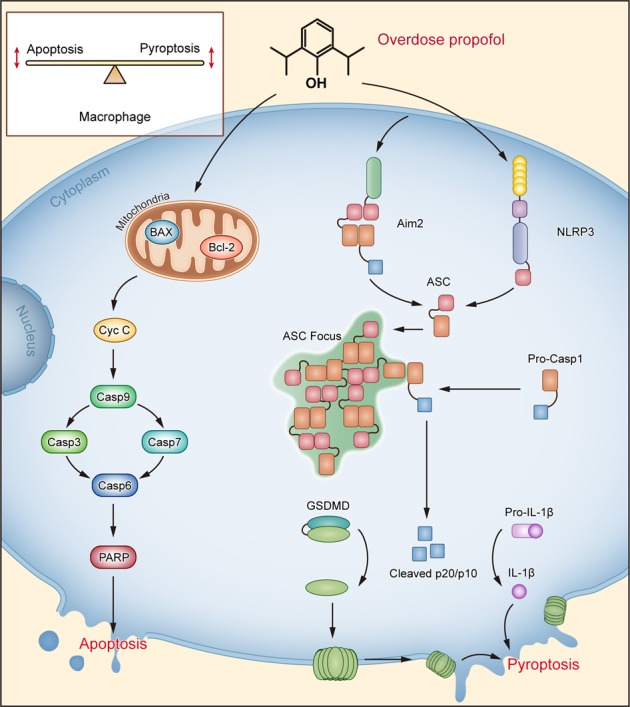
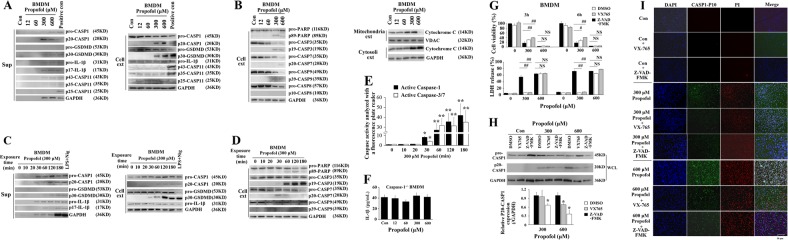
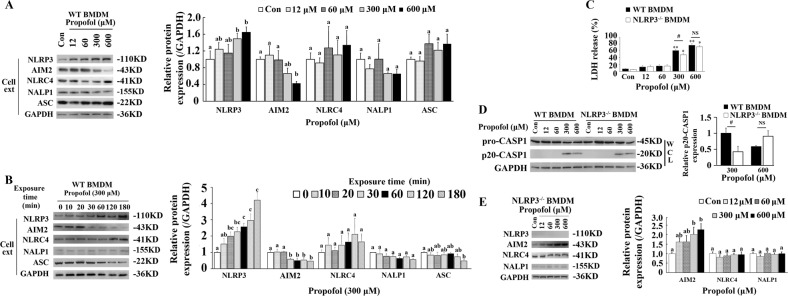
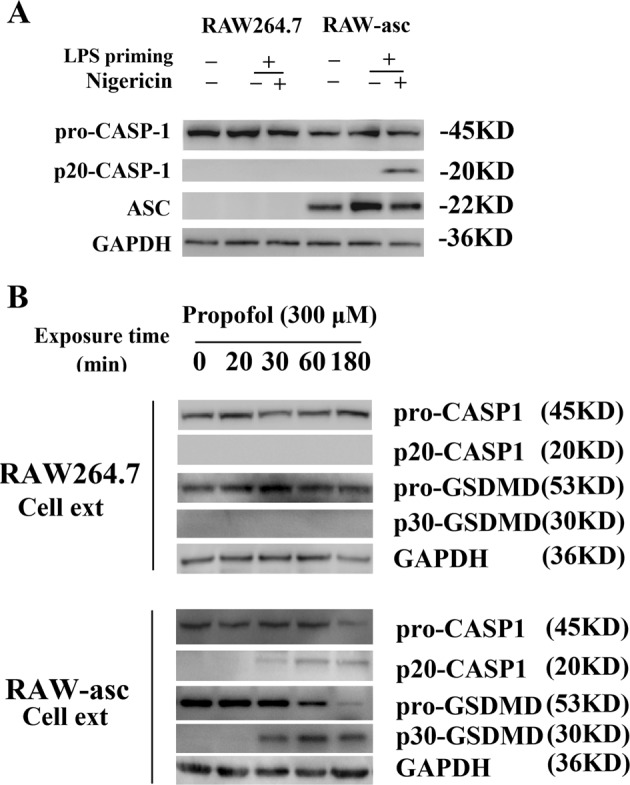
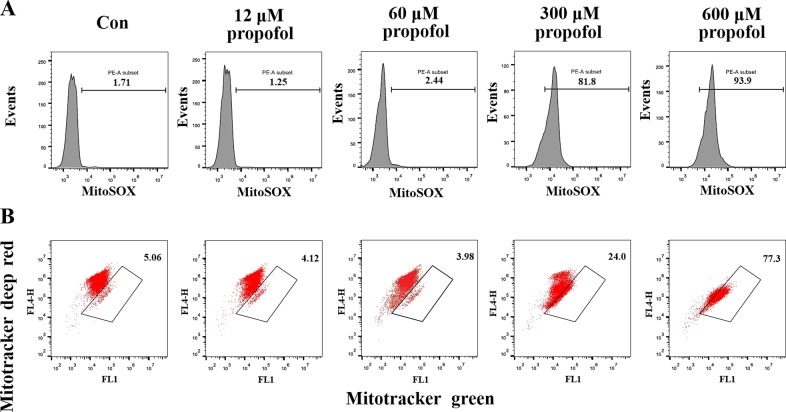
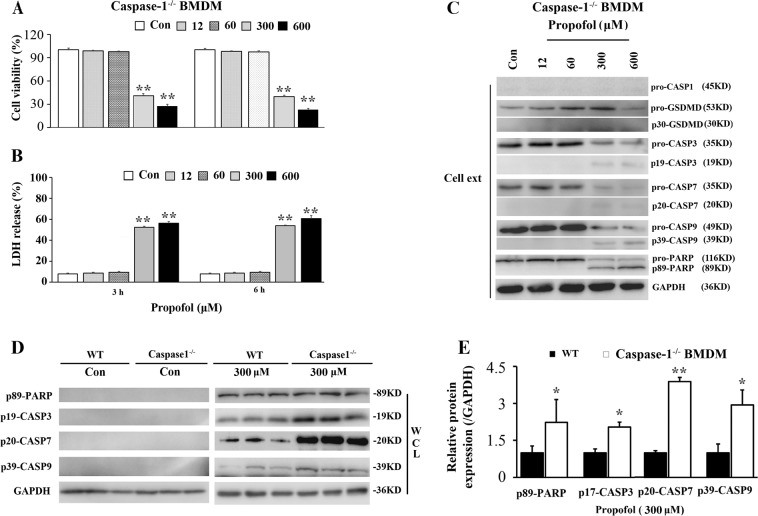
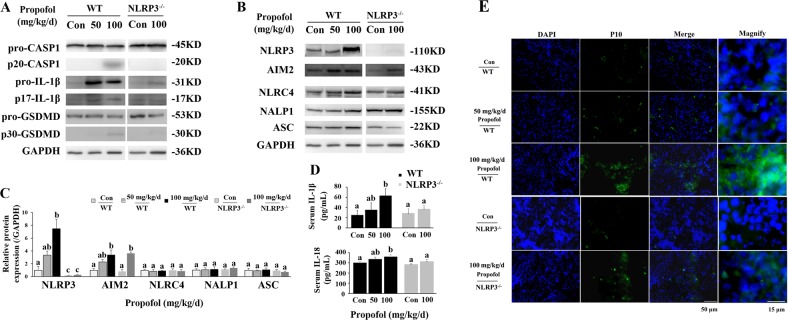
Propofol infusion syndrome (PRIS) is an uncommon life-threatening complication observed most often in patients receiving high-dose propofol. High-dose propofol treatment with a prolonged duration can damage the immune system. However, the associated molecular mechanisms remain unclear. An increasing number of clinical and experimental observations have demonstrated that tissue-resident macrophages play a critical role in immune regulation during anaesthesia and procedural sedation. Since the inflammatory response is essential for mediating propofol-induced cell death and proinflammatory reactions, we hypothesised that propofol overdose induces macrophage pyroptosis through inflammasomes. Using primary cultured bone marrow-derived macrophages, murine macrophage cell lines (RAW264.7, RAW-asc and J774) and a mouse model, we investigated the role of NLRP3 inflammasome activation and secondary pyroptosis in propofol-induced cell death. We found that high-dose propofol strongly cleaved caspase-1 but not caspase-11 and biosynthesis of downstream interleukin (IL)-1β and IL-18. Inhibition of caspase-1 activity blocks IL-1β production. Moreover, NLRP3 deletion moderately suppressed cleaved caspase-1 as well as the proportion of pyroptosis, while levels of AIM2 were increased, triggering a compensatory pathway to pyroptosis in NLRP3 macrophages. Here, we show that propofol-induced mitochondrial reactive oxygen species (ROS) can trigger NLRP3 inflammasome activation. Furthermore, apoptosis-associated speck-like protein (ASC) was found to mediate NLRP3 and AIM2 signalling and contribute to propofol-induced macrophage pyroptosis. In addition, our work shows that propofol-induced apoptotic initiator caspase (caspase-9) subsequently cleaved effector caspases (caspase-3 and 7), indicating that both apoptotic and pyroptotic cellular death pathways are activated after propofol exposure. Our studies suggest, for the first time, that propofol-induced pyroptosis might be restricted to macrophage through an NLRP3/ASC/caspase-1 pathway, which provides potential targets for limiting adverse reactions during propofol application. These findings demonstrate that propofol overdose can trigger cell death through caspase-1 activation and offer new insights into the use of anaesthetic drugs.
异丙酚输注综合征(PRIS)是一种罕见的危及生命的并发症,最常发生在接受高剂量异丙酚治疗的患者中。高剂量异丙酚治疗时间延长会损害免疫系统。然而,相关的分子机制尚不清楚。越来越多的临床和实验观察表明,组织驻留巨噬细胞在麻醉和程序性镇静期间的免疫调节中发挥着关键作用。由于炎症反应对于介导异丙酚诱导的细胞死亡和促炎反应至关重要,我们假设异丙酚过量通过炎性小体诱导巨噬细胞细胞焦亡。使用原代培养的骨髓来源巨噬细胞、小鼠巨噬细胞系(RAW264.7、RAW-asc 和 J774)和小鼠模型,我们研究了 NLRP3 炎性小体激活和继发细胞焦亡在异丙酚诱导的细胞死亡中的作用。我们发现高剂量异丙酚强烈切割半胱天冬酶-1,但不切割半胱天冬酶-11,并且下游白细胞介素(IL)-1β和 IL-18 的生物合成。半胱天冬酶-1 活性的抑制阻断了 IL-1β的产生。此外,NLRP3 缺失适度抑制了切割的半胱天冬酶-1以及细胞焦亡的比例,而 AIM2 的水平增加,触发了 NLRP3 巨噬细胞中的代偿性细胞焦亡途径。在这里,我们表明异丙酚诱导的线粒体活性氧(ROS)可以触发 NLRP3 炎性小体激活。此外,发现凋亡相关斑点样蛋白(ASC)介导 NLRP3 和 AIM2 信号传导,并有助于异丙酚诱导的巨噬细胞细胞焦亡。此外,我们的工作表明,异丙酚诱导的凋亡起始半胱天冬酶(半胱天冬酶-9)随后切割效应半胱天冬酶(半胱天冬酶-3 和 7),表明在暴露于异丙酚后激活了凋亡和细胞焦亡两种细胞死亡途径。我们的研究首次表明,通过 NLRP3/ASC/半胱天冬酶-1 途径,异丙酚诱导的细胞焦亡可能仅限于巨噬细胞,为限制异丙酚应用中的不良反应提供了潜在靶点。这些发现表明,异丙酚过量可以通过半胱天冬酶-1 的激活触发细胞死亡,并为麻醉药物的使用提供了新的见解。