Jeong Yunhee, Rachmadi Muhammad Febrian, Valdés-Hernández Maria Del C, Komura Taku
School of Informatics, University of Edinburgh, Edinburgh, United Kingdom.
Centre for Clinical Brain Sciences, University of Edinburgh, Edinburgh, United Kingdom.
Front Aging Neurosci. 2019 Jun 27;11:150. doi: 10.3389/fnagi.2019.00150. eCollection 2019.
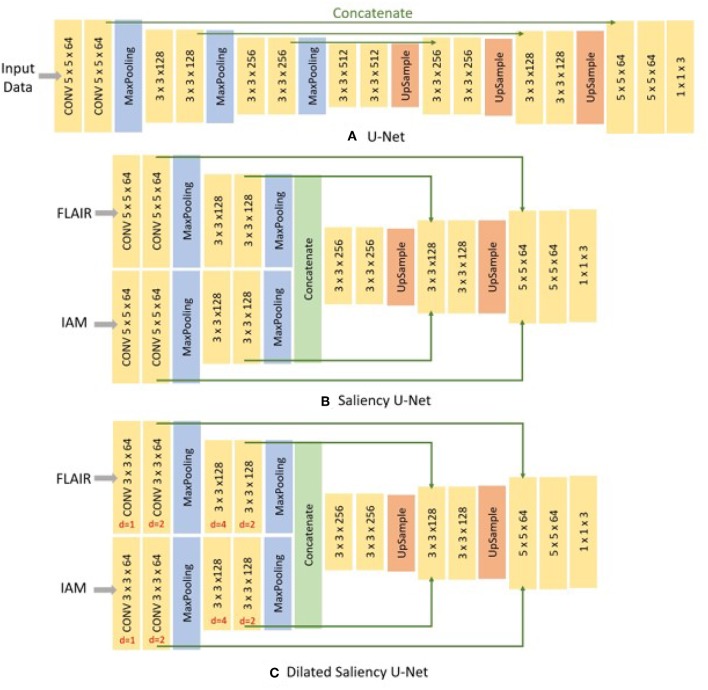
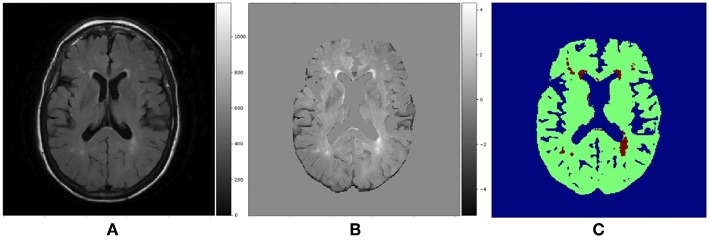
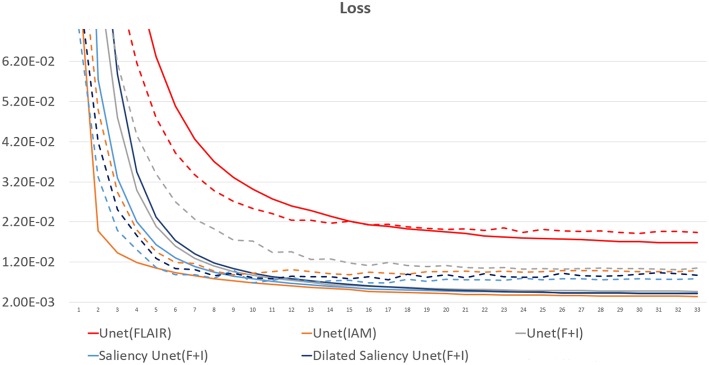
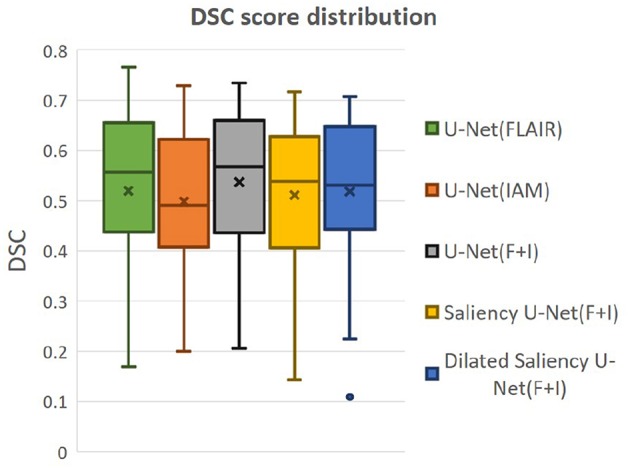
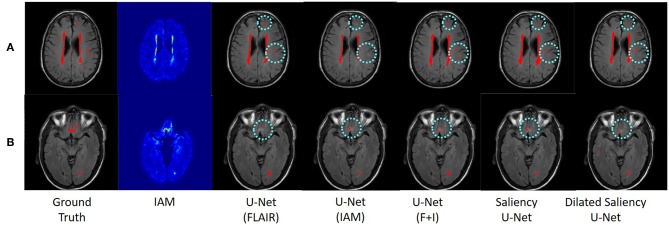
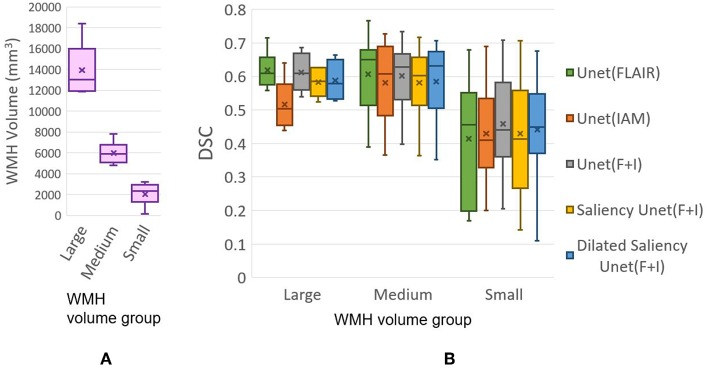
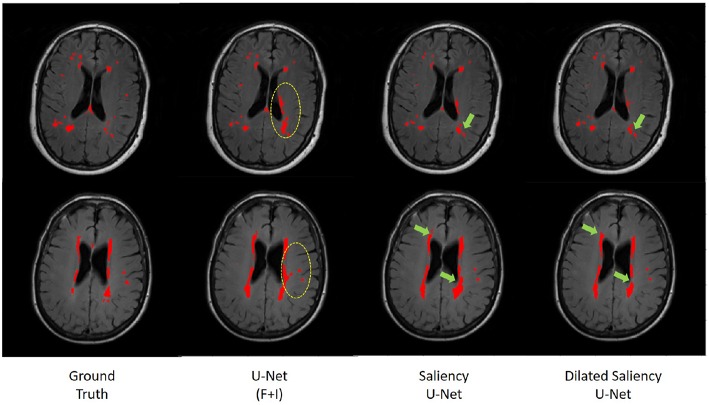
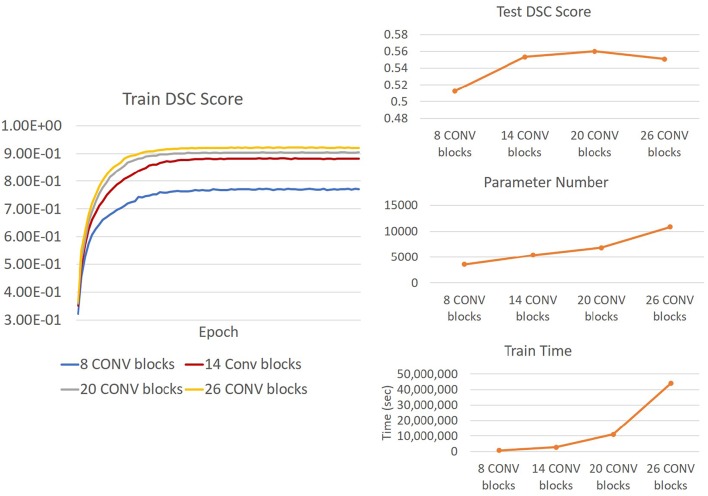
White matter hyperintensities (WMH) appear as regions of abnormally high signal intensity on T2-weighted magnetic resonance image (MRI) sequences. In particular, WMH have been noteworthy in age-related neuroscience for being a crucial biomarker for all types of dementia and brain aging processes. The automatic WMH segmentation is challenging because of their variable intensity range, size and shape. U-Net tackles this problem through the dense prediction and has shown competitive performances not only on WMH segmentation/detection but also on varied image segmentation tasks. However, its network architecture is high complex. In this study, we propose the use of Saliency U-Net and Irregularity map (IAM) to decrease the U-Net architectural complexity without performance loss. We trained Saliency U-Net using both: a T2-FLAIR MRI sequence and its correspondent IAM. Since IAM guides locating image intensity irregularities, in which WMH are possibly included, in the MRI slice, Saliency U-Net performs better than the original U-Net trained only using T2-FLAIR. The best performance was achieved with fewer parameters and shorter training time. Moreover, the application of dilated convolution enhanced Saliency U-Net by recognizing the shape of large WMH more accurately through multi-context learning. This network named Dilated Saliency U-Net improved Dice coefficient score to 0.5588 which was the best score among our experimental models, and recorded a relatively good sensitivity of 0.4747 with the shortest training time and the least number of parameters. In conclusion, based on our experimental results, incorporating IAM through Dilated Saliency U-Net resulted an appropriate approach for WMH segmentation.
白质高信号(WMH)在T2加权磁共振成像(MRI)序列上表现为异常高信号强度区域。特别是,WMH在与年龄相关的神经科学中一直备受关注,因为它是所有类型痴呆和脑老化过程的关键生物标志物。由于WMH的强度范围、大小和形状各不相同,自动WMH分割具有挑战性。U-Net通过密集预测解决了这个问题,并且不仅在WMH分割/检测方面,而且在各种图像分割任务中都表现出了有竞争力的性能。然而,其网络架构非常复杂。在本研究中,我们提出使用显著性U-Net和不规则性图(IAM)来降低U-Net的架构复杂性,同时不损失性能。我们使用T2-FLAIR MRI序列及其对应的IAM训练显著性U-Net。由于IAM有助于在MRI切片中定位可能包含WMH的图像强度不规则区域,因此显著性U-Net比仅使用T2-FLAIR训练的原始U-Net表现更好。在参数更少和训练时间更短的情况下实现了最佳性能。此外,扩张卷积的应用通过多上下文学习更准确地识别大WMH的形状,增强了显著性U-Net。这个名为扩张显著性U-Net的网络将Dice系数分数提高到了0.5588,这是我们实验模型中的最佳分数,并且在最短的训练时间和最少的参数数量下记录了相对较好的灵敏度0.4747。总之,基于我们的实验结果,通过扩张显著性U-Net结合IAM是一种适用于WMH分割的方法。