Reyer Henry, Oster Michael, Wittenburg Dörte, Murani Eduard, Ponsuksili Siriluck, Wimmers Klaus
Genomics Unit, Institute for Genome Biology, Leibniz Institute for Farm Animal Biology, Dummerstorf, Germany.
Biomathematics and Bioinformatics Unit, Institute of Genetics and Biometry, Leibniz Institute for Farm Animal Biology, Dummerstorf, Germany.
Front Genet. 2019 Jun 28;10:590. doi: 10.3389/fgene.2019.00590. eCollection 2019.
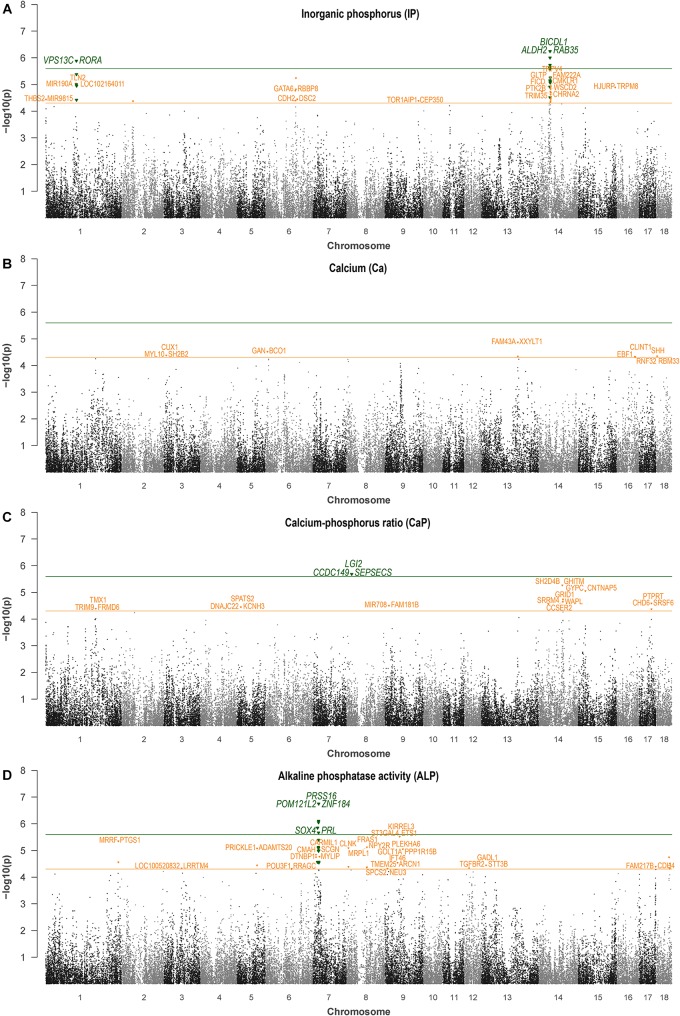
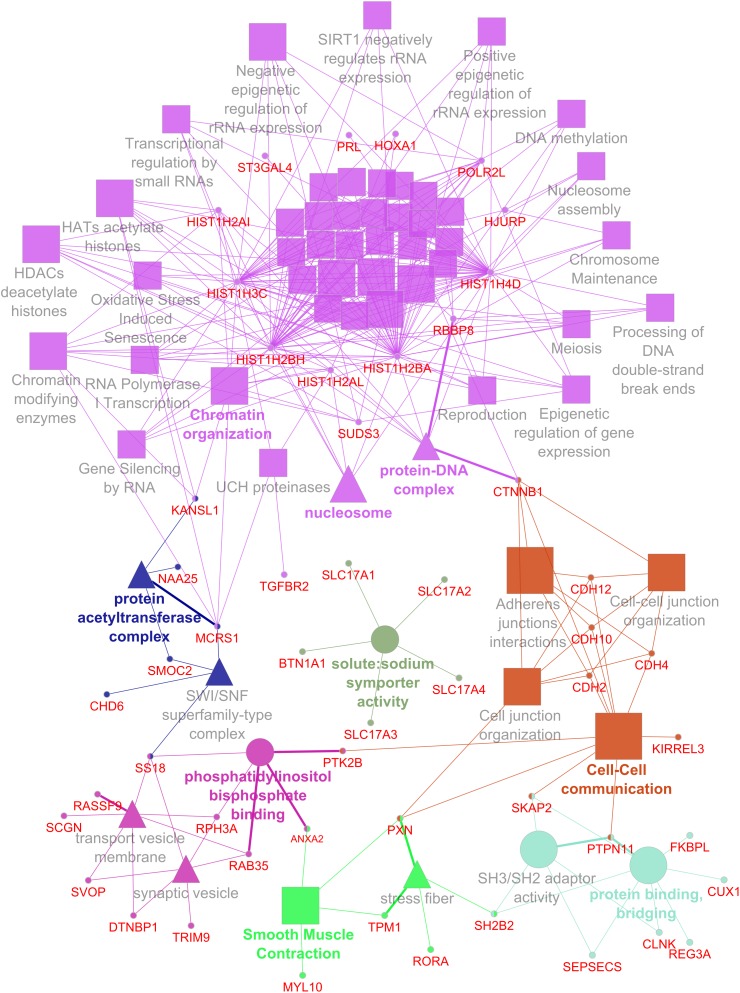
Blood values of calcium (Ca), inorganic phosphorus (IP), and alkaline phosphatase activity (ALP) are valuable indicators for mineral status and bone mineralization. The mineral homeostasis is maintained by absorption, retention, and excretion processes employing a number of known and unknown sensing and regulating factors with implications on immunity. Due to the high inter-individual variation of Ca and P levels in the blood of pigs and to clarify molecular contributions to this variation, the genetics of hematological traits related to the Ca and P balance were investigated in a German Landrace population, integrating both single-locus and multi-locus genome-wide association study (GWAS) approaches. Genomic heritability estimates suggest a moderate genetic contribution to the variation of hematological Ca ( = 456), IP ( = 1049), ALP ( = 439), and the Ca/P ratio ( = 455), with values ranging from 0.27 to 0.54. The genome-wide analysis of markers adds a number of genomic regions to the list of quantitative trait loci, some of which overlap with previous results. Despite the gaps in knowledge of genes involved in Ca and P metabolism, genes like , , , , and with reported connections to bone metabolism were derived from the significantly associated genomic regions. Additionally, genomic regions included and genes coding for phosphate transporters (-), which are linked to Ca and P homeostasis. The study calls for improved functional annotation of the proposed candidate genes to derive features involved in maintaining Ca and P balance. This gene information can be exploited to diagnose and predict characteristics of micronutrient utilization, bone development, and a well-functioning musculoskeletal system in pig husbandry and breeding.
钙(Ca)、无机磷(IP)和碱性磷酸酶活性(ALP)的血液值是矿物质状态和骨矿化的重要指标。矿物质稳态通过吸收、保留和排泄过程来维持,这些过程涉及许多已知和未知的传感和调节因子,对免疫有影响。由于猪血液中钙和磷水平存在高度个体差异,为了阐明这种差异的分子机制,在德国长白猪群体中研究了与钙磷平衡相关的血液学性状的遗传学,采用了单基因座和多基因座全基因组关联研究(GWAS)方法。基因组遗传力估计表明,血液学钙(=456)、IP(=1049)、ALP(=439)和钙磷比(=455)的变异有中等程度的遗传贡献,值范围为0.27至0.54。标记的全基因组分析在数量性状基因座列表中增加了许多基因组区域,其中一些与先前的结果重叠。尽管在钙磷代谢相关基因方面存在知识空白,但从显著相关的基因组区域中发现了与骨代谢有报道联系的基因,如 、 、 、 和 。此外,基因组区域包括 以及编码磷酸盐转运蛋白(-)的基因,这些基因与钙磷稳态有关。该研究呼吁对提出的候选基因进行改进的功能注释,以推导参与维持钙磷平衡的特征。这些基因信息可用于诊断和预测养猪和育种中微量营养素利用、骨骼发育和肌肉骨骼系统正常功能的特征。