Lu Jia, Guo Pengfei, Liu Xiaoqiu, Zhang Yongbin, Guo XueJun, Gao Xin, Chen Yuan
Piwei Institute, Guangzhou University of Chinese Medicine, Guangzhou, Guangdong 510405, China.
Experimental Animal Center, Guangzhou University of Chinese Medicine, Guangzhou, Guangdong 510405, China.
Evid Based Complement Alternat Med. 2019 Jun 17;2019:8302950. doi: 10.1155/2019/8302950. eCollection 2019.
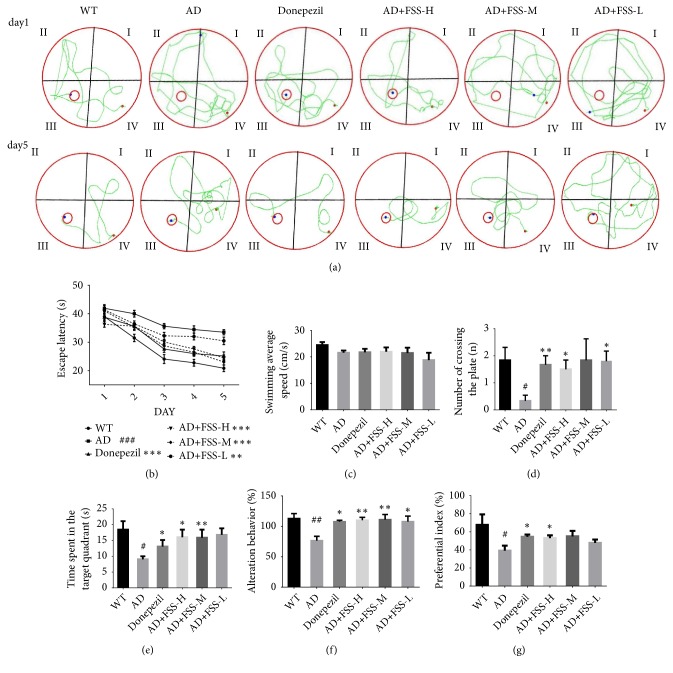
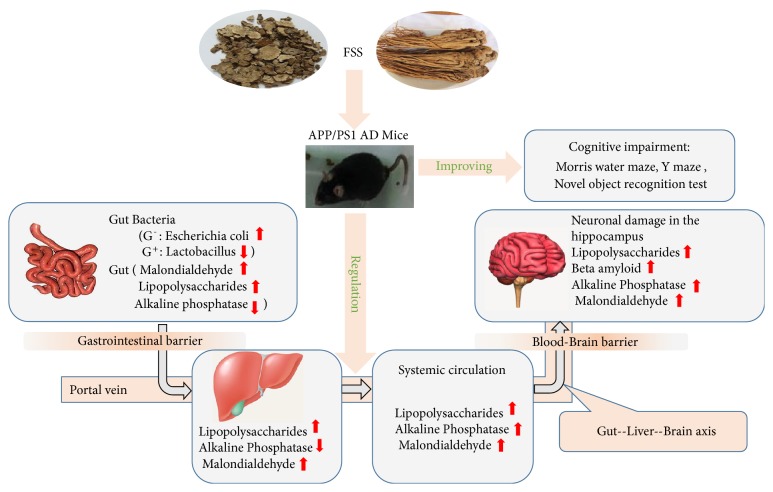
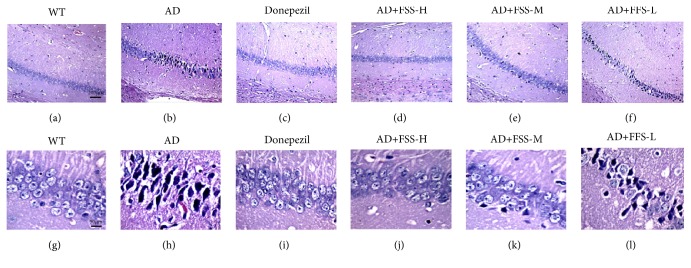
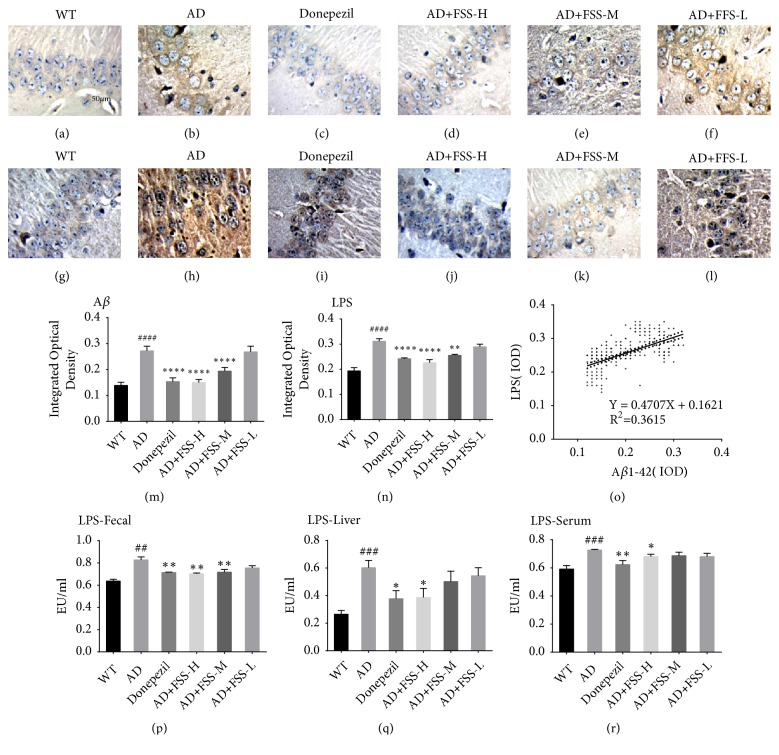
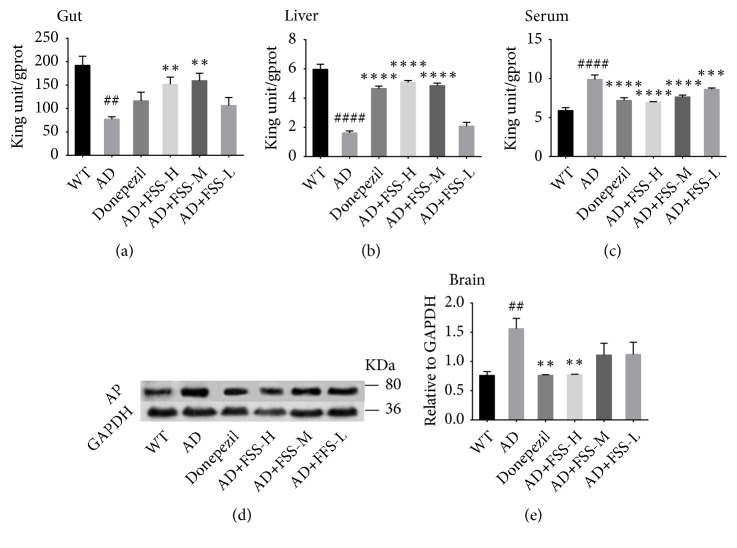
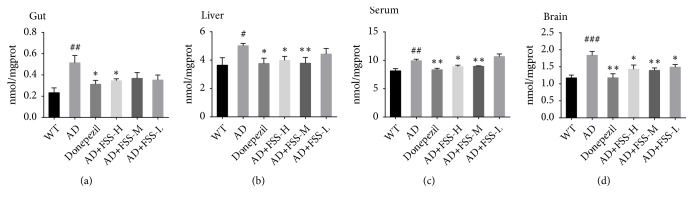
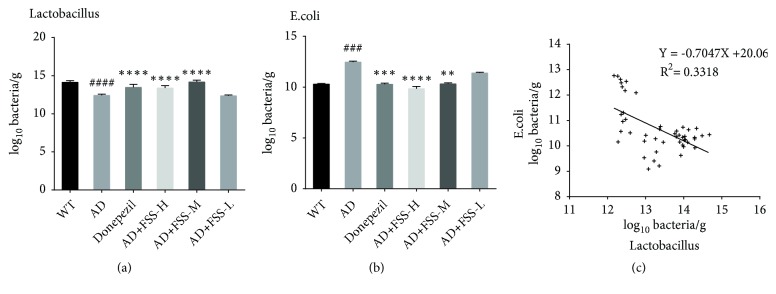
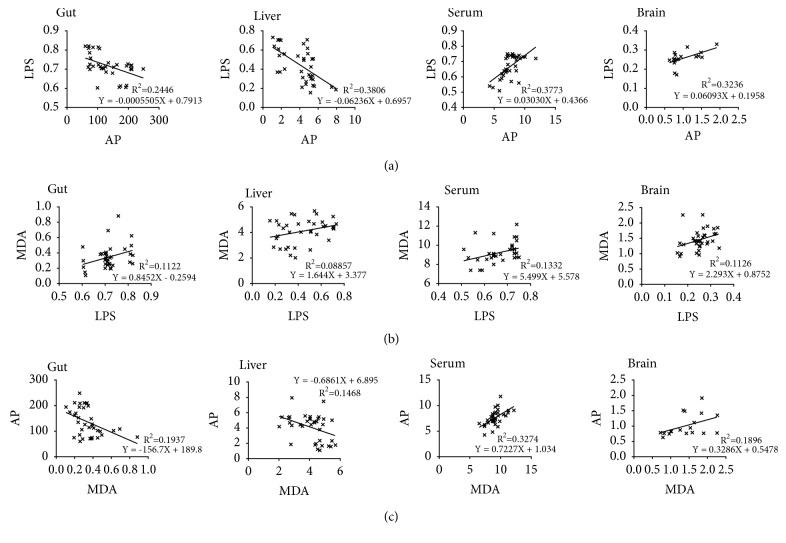
Fo Shou San (FSS) is an ancient paired-herb decoction, used in China to treat blood deficiency, blood stasis, stroke, and ischemic cerebral vascular disease for about one thousand years. The mechanisms associated with these properties, however, are not completely understood. Gut bacteria, gut bacterial lipopolysaccharides (LPS), alkaline phosphatase (AP), and lipid peroxidation are common biochemical signaling that takes place on gut-liver-brain axis. Growing evidences have revealed that gut bacterial lipopolysaccharides (LPS) enter the systemic circulation via the portal vein, and finally entering the brain tissue is an important cause of inflammatory degeneration of Alzheimer's disease (AD). Alkaline phosphatase (AP) dephosphorylates LPS forming a nontoxic LPS and reduces systemic inflammation via gut-liver-brain axis. In this study, to identify the differentially gut-liver-brain axis among APP/PS1 mice, FSS-treated APP/PS1 mice, and control mice, behavioral tests were performed to assess the cognitive ability and hematoxylin-eosin staining was used to assess neuronal damage in the hippocampus; immunohistochemistry, western blotting, a quantitative chromogenic end-point Tachypleus amebocyte lysate (TAL) assay kit, Malondialdehyde (MDA) assay kit, AP Assay Kit, and real-time quantitative PCR (qPCR) were used to assess the level of LPS, MDA, AP, and gut bacteria. We found that FSS regulates gut-liver-brain axis to regulate AP and gut bacteria and attenuate the LPS-related systemic inflammation, oxidative stress (MDA), and thereby AD-related pathology in APP/PS1 mice. This is the first study to provide a reference for FSS-treated AD mice to aid in understanding the underlying mechanisms of FSS. FSS may also improve gastrointestinal tract barrier and blood-brain barrier and thus ameliorates the symptoms of AD; this is subject to our further study.
佛手散(FSS)是一种古老的对药煎剂,在中国用于治疗血虚、血瘀、中风和缺血性脑血管疾病已有约一千年的历史。然而,与这些特性相关的机制尚未完全明确。肠道细菌、肠道细菌脂多糖(LPS)、碱性磷酸酶(AP)和脂质过氧化是在肠-肝-脑轴上发生的常见生化信号。越来越多的证据表明,肠道细菌脂多糖(LPS)通过门静脉进入体循环,最终进入脑组织是阿尔茨海默病(AD)炎症性退变的重要原因。碱性磷酸酶(AP)使LPS去磷酸化形成无毒的LPS,并通过肠-肝-脑轴减轻全身炎症。在本研究中,为了确定APP/PS1小鼠、FSS处理的APP/PS1小鼠和对照小鼠之间肠-肝-脑轴的差异,进行行为测试以评估认知能力,并用苏木精-伊红染色评估海马体中的神经元损伤;采用免疫组织化学、蛋白质印迹法、定量显色终点鲎试剂(TAL)检测试剂盒、丙二醛(MDA)检测试剂盒、AP检测试剂盒和实时定量PCR(qPCR)来评估LPS、MDA、AP和肠道细菌的水平。我们发现,FSS调节肠-肝-脑轴以调节AP和肠道细菌,并减轻与LPS相关的全身炎症、氧化应激(MDA),从而减轻APP/PS小鼠中与AD相关的病理变化。这是第一项为FSS治疗的AD小鼠提供参考以帮助理解FSS潜在机制的研究。FSS还可能改善胃肠道屏障和血脑屏障,从而改善AD症状;这有待我们进一步研究。