Oda Teiji, Yamaguchi Akane, Ishida Ryosuke, Nikai Tetsuro, Shimizu Koji, Matsumoto Ken-Ichi
Division of Thoracic and Cardiovascular Surgery, Department of Surgery, Shimane University Faculty of Medicine, Izumo, Shimane 693-8501, Japan.
Department of Emergency and Critical Care Medicine, Shimane Prefectural Central Hospital, Izumo, Shimane 693-8555, Japan.
Exp Ther Med. 2019 Aug;18(2):1069-1080. doi: 10.3892/etm.2019.7649. Epub 2019 Jun 4.
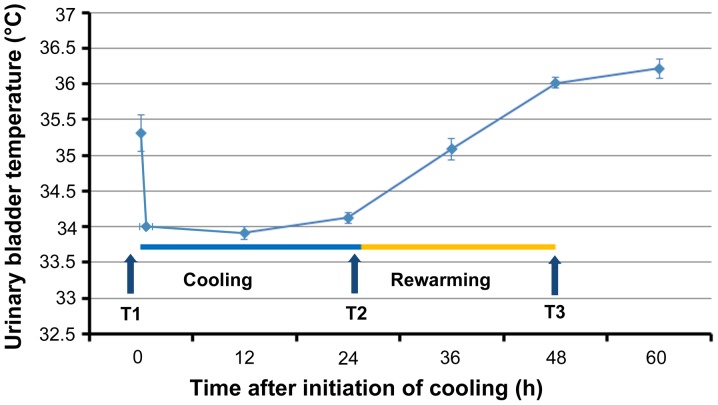
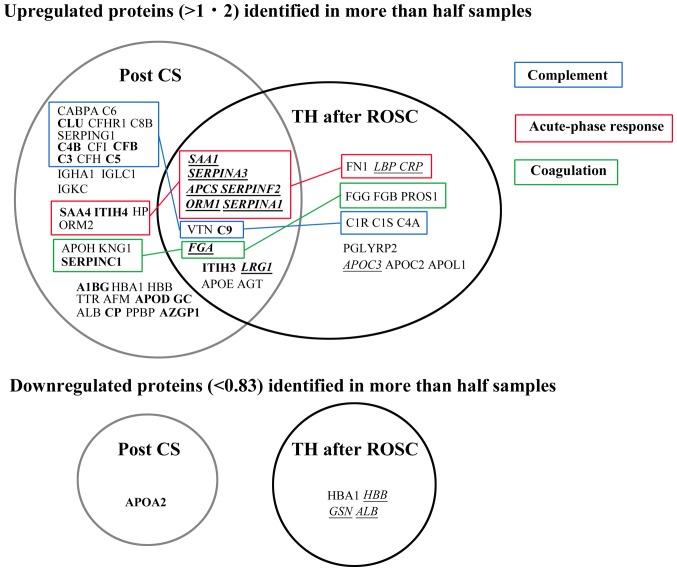
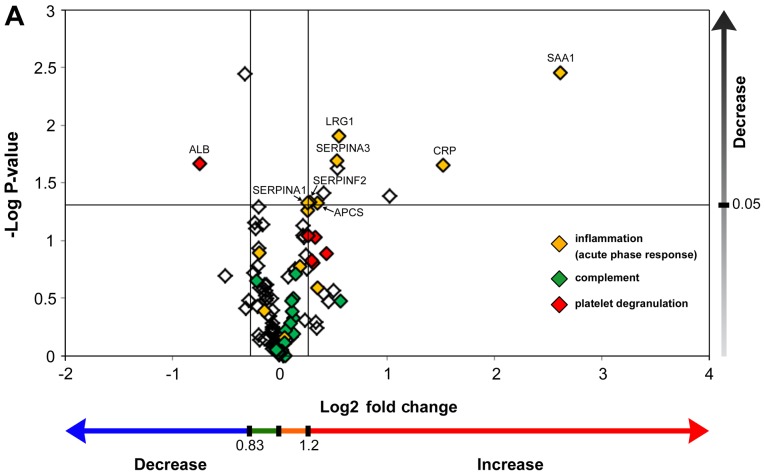
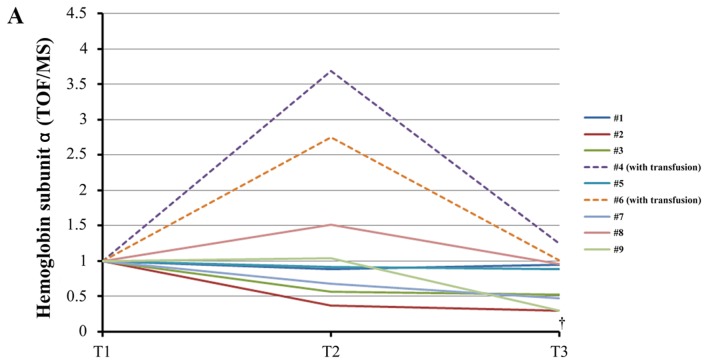
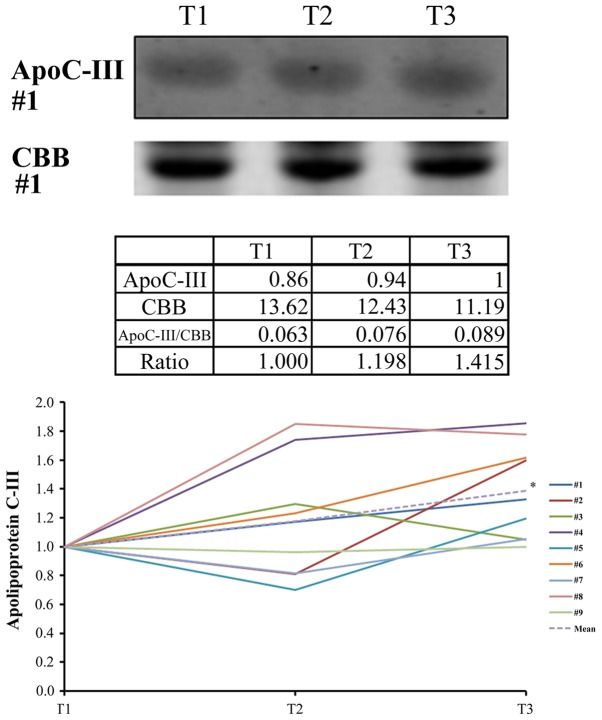
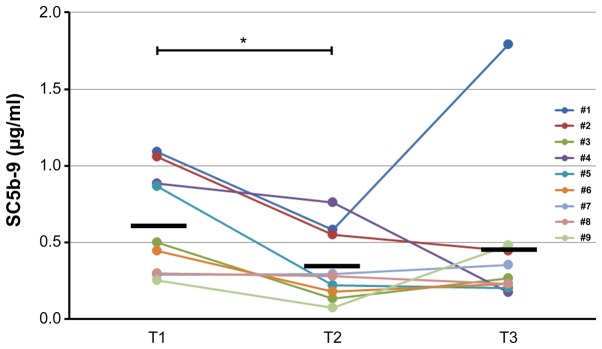
Hypothermia is used for several h during cardiac and aortic surgery to protect ischemic organs. Therapeutic hypothermia (TH) is used for ≤24 h as a treatment for comatose patients after the return of spontaneous circulation (ROSC) following cardiac arrest. The proteomic approach may provide unbiased data on alterations in the abundance of proteins during TH. The objective of this study was to assess the effects of cooling/rewarming on the plasma proteome during TH after ROSC and to identify the mechanism underlying its therapeutic effects. A total of nine comatose adult patients, resuscitated shortly after cardiac arrest, were cooled to 34°C for 24 h and slowly rewarmed to 36°C. A quantitative gel-free proteomic analysis was performed using the isobaric tag for relative and absolute quantification labeling tandem mass spectrometry. Plasma samples were obtained prior to cooling and rewarming, and immediately after rewarming, from all patients during TH after ROSC. A total of 92 high-confidence proteins were identified. Statistically significant alterations were observed (>1.2-fold increase or <0.833-fold decrease) in the levels of 15 of those proteins (P=0.003-0.047), mainly proteins belonging to the acute-phase response or platelet degranulation. Unexpectedly, the levels of free hemoglobin (hemoglobin subunits α and β) were significantly downregulated during TH (P<0.05). The level of the terminal complement complex (SC5b-9) showed significant reduction after cooling (P=0.023). Although the acute-phase response proteins were upregulated, the abundance of complement proteins did not change, and the levels of SC5b-9 and free hemoglobin decreased during TH in patients after ROSC.
在心脏和主动脉手术中,低温被用于数小时以保护缺血器官。治疗性低温(TH)用于心脏骤停后自主循环恢复(ROSC)的昏迷患者,持续时间≤24小时。蛋白质组学方法可以提供关于TH期间蛋白质丰度变化的无偏数据。本研究的目的是评估ROSC后TH期间降温/复温对血浆蛋白质组的影响,并确定其治疗作用的潜在机制。共有9名心脏骤停后不久复苏的成年昏迷患者被冷却至34°C持续24小时,然后缓慢复温至36°C。使用用于相对和绝对定量标记串联质谱的等压标签进行了无凝胶定量蛋白质组分析。在ROSC后TH期间,从所有患者在降温前、复温前以及复温后立即采集血浆样本。共鉴定出92种高可信度蛋白质。观察到其中15种蛋白质的水平有统计学显著变化(增加>1.2倍或减少<0.833倍)(P=0.003 - 0.047),主要是属于急性期反应或血小板脱颗粒的蛋白质。出乎意料的是,TH期间游离血红蛋白(血红蛋白亚基α和β)的水平显著下调(P<0.05)。终末补体复合物(SC5b - 9)的水平在降温后显著降低(P=0.023)。尽管急性期反应蛋白上调,但补体蛋白的丰度没有变化,并且ROSC后患者在TH期间SC5b - 9和游离血红蛋白的水平降低。