Joachim Mathias, Maguire Nicolas, Schäfer Johannes, Gerlach Doreen, Czermak Peter
Department of Life Science Engineering, Institute of Bioprocess Engineering and Pharmaceutical Technology, University of Applied Sciences Mittelhessen, Giessen, Germany.
Faculty of Biology and Chemistry, Justus Liebig University, Giessen, Germany.
Front Bioeng Biotechnol. 2019 Jun 27;7:150. doi: 10.3389/fbioe.2019.00150. eCollection 2019.
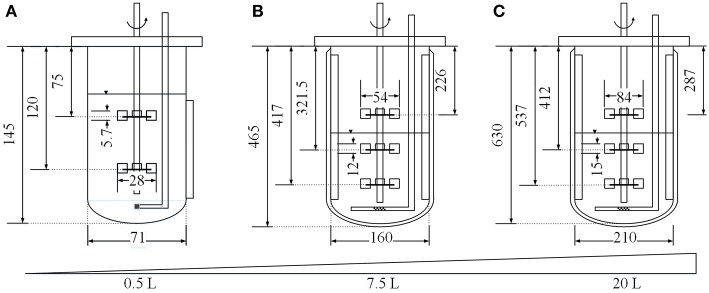
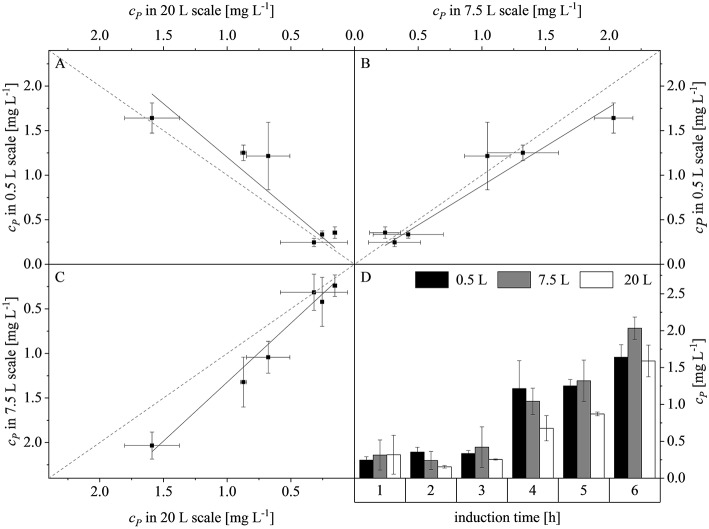
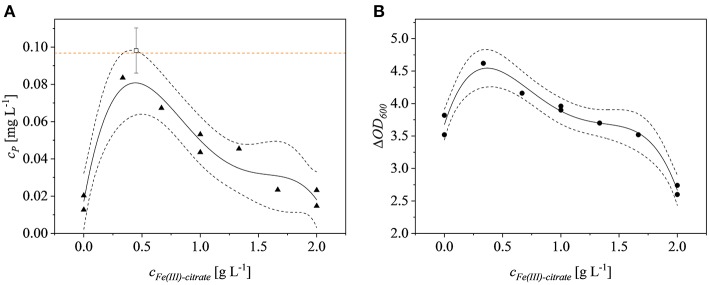
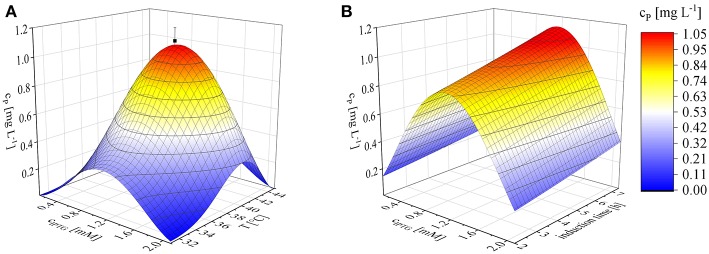
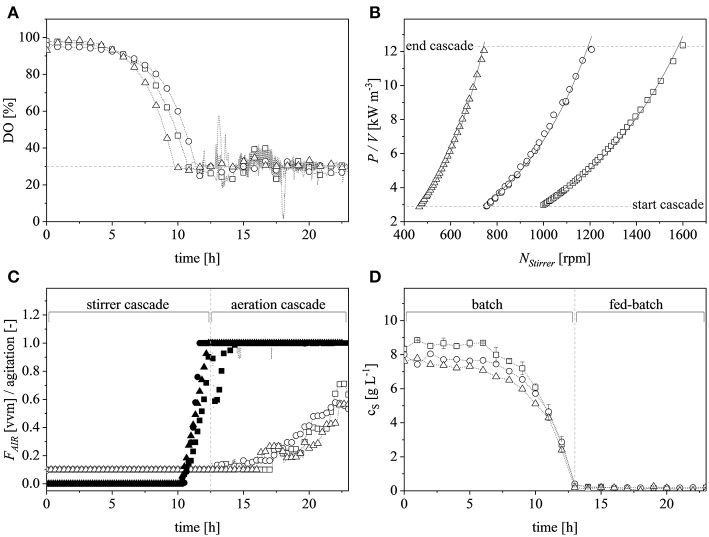
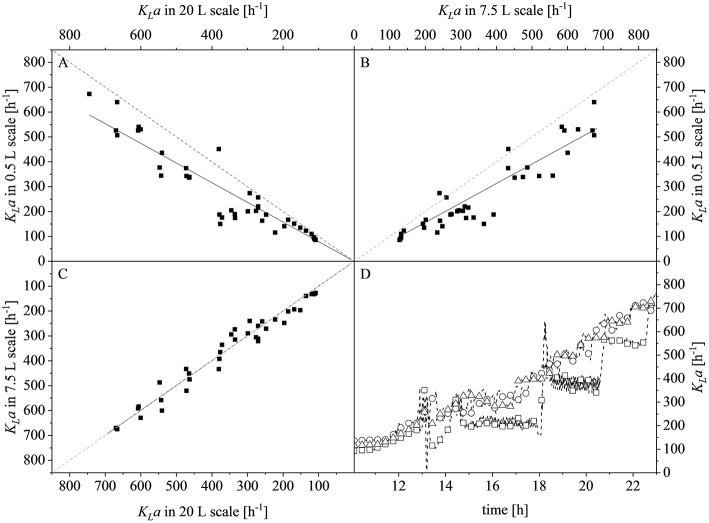
Peptides and proteins containing disulfide bonds can be produced in by targeting the oxidizing periplasm, co-expressing isomerases or chaperons, refolding from inclusion bodies, or by using redox-engineered strains. Thus far, protein expression in glutathione reductase and thioredoxin reductase deficient (Δ Δ) strains has required a complex medium. However, a chemically defined medium suitable for large-scale production would be preferable for industrial applications. Recently, we developed a minimal medium supplemented with iron (M9i) for high-density cultivation using Rosetta gami B(DE3)pLysS cells. Here we show that M9i is suitable for the production of insect metalloproteinase inhibitor (IMPI), which contains five disulfide bonds, in the same strain. We demonstrated the scalability of the new fed-batch process by combining the scale-up criteria of constant dissolved oxygen (DO) and matching volumetric power inputs () at the borders of the stirrer cascade. Process intensification was achieved by investigating production feed rates and different induction times. We improved product titers by ~200-fold compared to the standard process in complex medium while maintaining the activity of the IMPI protein. Our results show for the first time that it is possible to produce active proteins containing multiple disulfide bonds in a Δ Δ strain using M9i medium. The success of scale-up and process intensification shows that the industrial production of complex recombinant proteins in such strains using chemically defined M9i minimal medium is feasible.
含有二硫键的肽和蛋白质可以通过靶向氧化周质、共表达异构酶或伴侣蛋白、从包涵体中重折叠或使用氧化还原工程菌株来生产。到目前为止,在谷胱甘肽还原酶和硫氧还蛋白还原酶缺陷(ΔΔ)菌株中进行蛋白质表达需要复杂培养基。然而,适用于大规模生产的化学成分确定的培养基对于工业应用而言将更为可取。最近,我们开发了一种添加铁的基本培养基(M9i),用于使用Rosetta gami B(DE3)pLysS细胞进行高密度培养。在此我们表明,M9i适用于在同一菌株中生产含有五个二硫键的昆虫金属蛋白酶抑制剂(IMPI)。我们通过在搅拌器级联边界处结合恒定溶解氧(DO)和匹配体积功率输入()的放大标准,证明了新补料分批工艺的可扩展性。通过研究生产进料速率和不同诱导时间实现了过程强化。与复杂培养基中的标准工艺相比,我们将产物滴度提高了约200倍,同时保持了IMPI蛋白的活性。我们的结果首次表明,使用M9i培养基在ΔΔ菌株中生产含有多个二硫键的活性蛋白是可能 的。放大和过程强化的成功表明,使用化学成分确定的M9i基本培养基在此类菌株中工业生产复杂重组蛋白是可行的。