New England Biolabs, 240 County Road, Ipswich, MA, 01938, USA.
Department of Microbiology, Stress Adaptation and Metabolism in Enterobacteria Unit, UMR CNRS 2001, Institut Pasteur, 25-28 Rue du Dr Roux, 75015, Paris, France.
Appl Microbiol Biotechnol. 2020 Nov;104(22):9693-9706. doi: 10.1007/s00253-020-10920-5. Epub 2020 Sep 30.
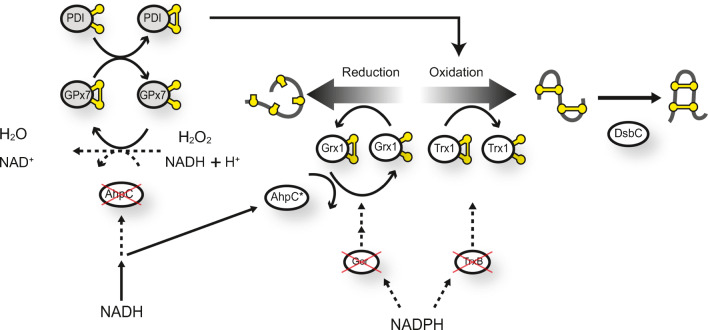
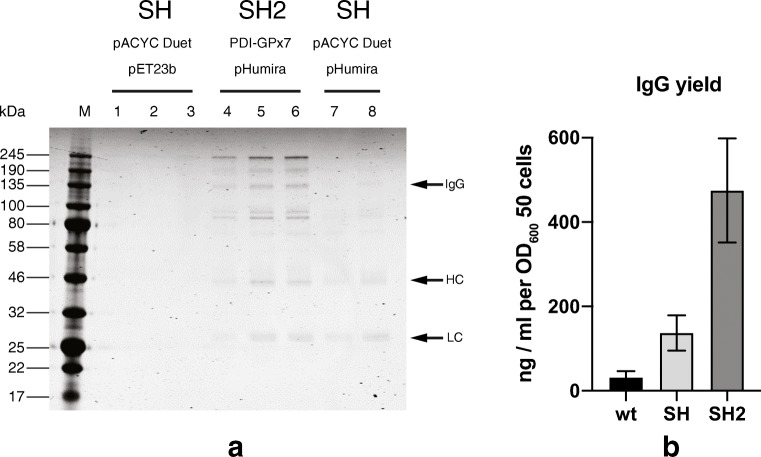
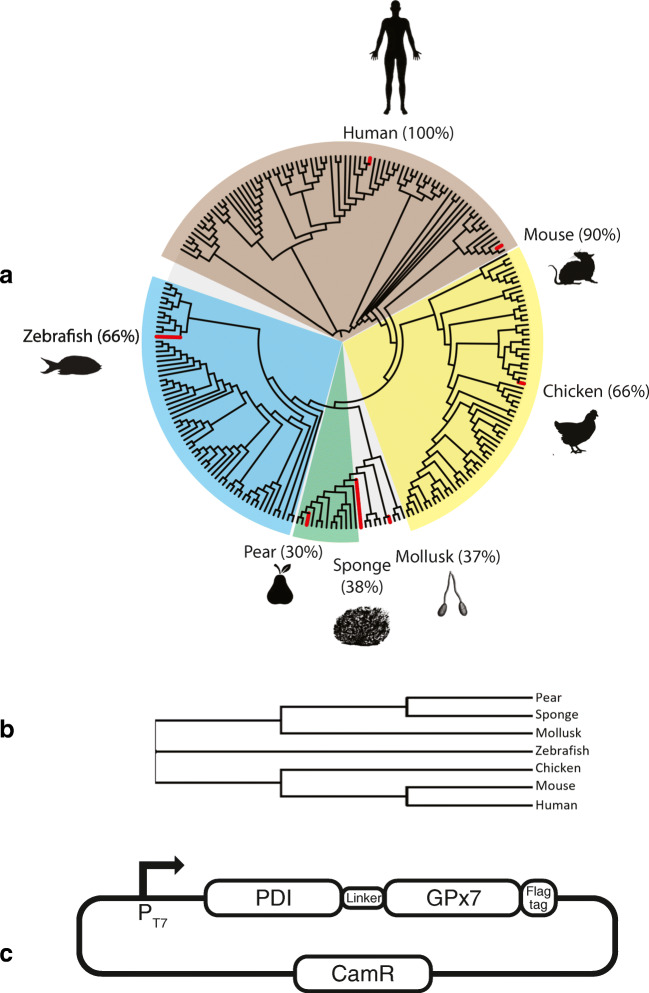
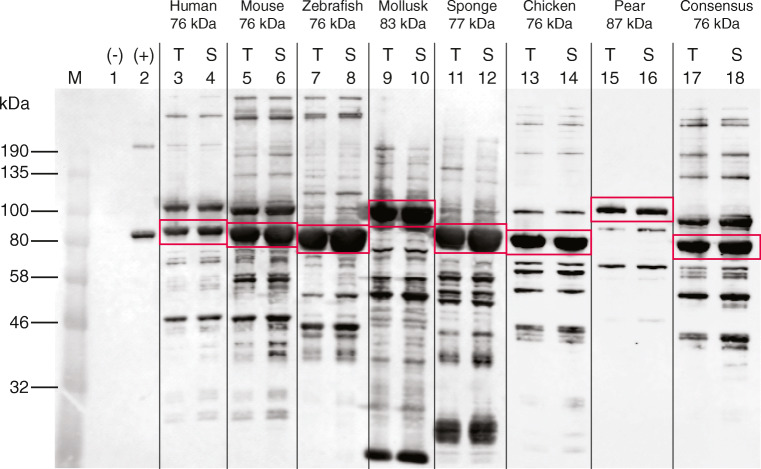
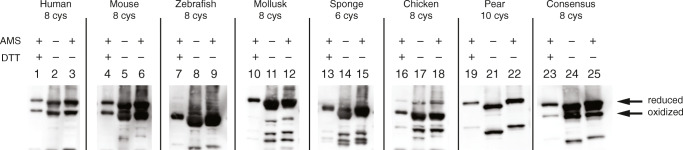
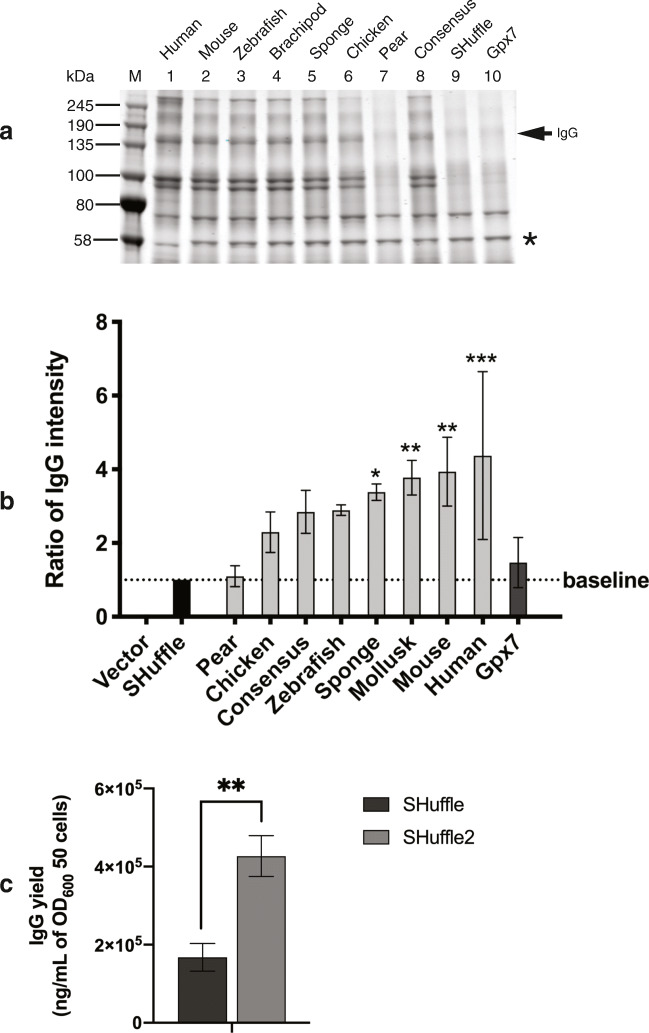
Microbial production of antibodies offers the promise of cheap, fast, and efficient production of antibodies at an industrial scale. Limiting this capacity in prokaryotes is the absence of the post-translational machinery, present in dedicated antibody producing eukaryotic cell lines, such as B cells. There has been few and limited success in producing full-length, correctly folded, and assembled IgG in the cytoplasm of prokaryotic cell lines. One such success was achieved by utilizing the genetically engineered Escherichia coli strain SHuffle with an oxidative cytoplasm. Due to the genetic disruption of reductive pathways, SHuffle cells are under constant oxidative stress, including increased levels of hydrogen peroxide (HO). The oxidizing capacity of HO was linked to improved disulfide bond formation, by expressing a fusion of two endoplasmic reticulum-resident proteins, the thiol peroxidase GPx7 and the protein disulfide isomerase, PDI. In concert, these proteins mediate disulfide transfer from HO to target proteins via PDI-Gpx7 fusions. The potential of this new strain was tested with Humira, a blockbuster antibody usually produced in eukaryotic cells. Expression results demonstrate that the new engineered SHuffle strain (SHuffle2) could produce Humira IgG four-fold better than the parental strain, both in shake-flask and in high-density fermentation. These preliminary studies guide the field in genetically engineering eukaryotic redox pathways in prokaryotes for the production of complex macromolecules. KEY POINTS: • A eukaryotic redox pathway was engineered into the E. coli strain SHuffle in order to improve the yield of the blockbuster antibody Humira. • The best peroxidase-PDI fusion was selected using bioinformatics and in vivo studies. • Improved yields of Humira were demonstrated at shake-flask and high-density fermenters.
微生物生产抗体具有在工业规模上低成本、快速和高效生产抗体的潜力。原核生物缺乏翻译后加工机制,而这种机制存在于专门的抗体产生真核细胞系中,如 B 细胞。在原核细胞系的细胞质中生产全长、正确折叠和组装的 IgG 的成功案例很少且有限。一个成功的例子是利用经过基因工程改造的具有氧化细胞质的大肠杆菌菌株 SHuffle。由于还原途径的遗传破坏,SHuffle 细胞处于持续的氧化应激状态,包括过氧化氢 (HO) 水平升高。HO 的氧化能力与通过表达内质网驻留蛋白二硫键异构酶 (PDI) 和硫氧还蛋白过氧化物酶 (GPx7) 的融合物改善二硫键形成有关。这些蛋白质通过 PDI-Gpx7 融合物将二硫键从 HO 转移到靶蛋白,从而协同作用。该新菌株的潜力通过 Humira 进行了测试,Humira 是一种通常在真核细胞中生产的重磅抗体。表达结果表明,新的工程化 SHuffle 菌株 (SHuffle2) 可以比亲本菌株在摇瓶和高密度发酵中分别将 Humira IgG 的产量提高四倍。这些初步研究为在原核生物中对真核细胞的氧化还原途径进行基因工程改造以生产复杂的大分子提供了指导。 关键点: • 为了提高重磅抗体 Humira 的产量,将一种真核氧化还原途径工程化到大肠杆菌菌株 SHuffle 中。 • 使用生物信息学和体内研究选择了最佳的过氧化物酶-PDI 融合物。 • 在摇瓶和高密度发酵罐中证明了 Humira 产量的提高。