Mauri Lucio, Marinozzi Maria, Phatak Nisarga, Karfunkle Michael, St Ange Kalib, Guerrini Marco, Keire David A, Linhardt Robert J
NMR Center, Istituto di Ricerche Chimiche e Biochimiche "G. Ronzoni," Milan, Italy.
Division of Pharmaceutical Analysis, Office of Testing and Research, Center for Drug Evaluation and Research, U.S. Food and Drug Administration, St. Louis, MO, United States.
Front Med (Lausanne). 2019 Jun 27;6:142. doi: 10.3389/fmed.2019.00142. eCollection 2019.
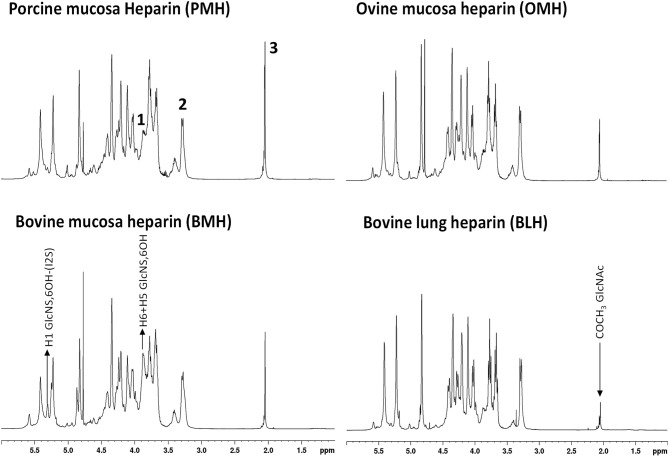
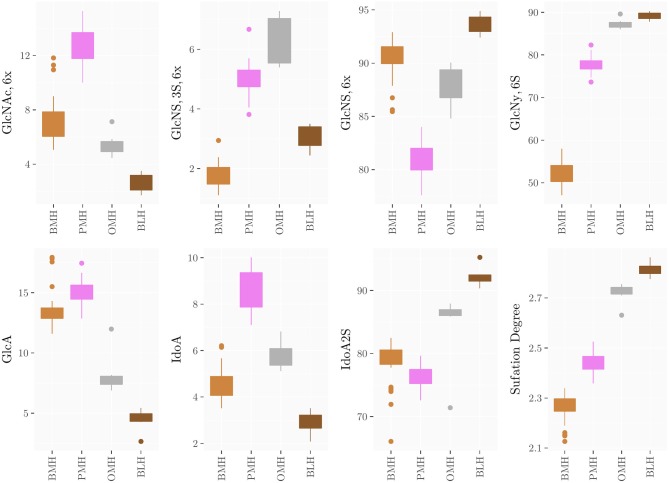
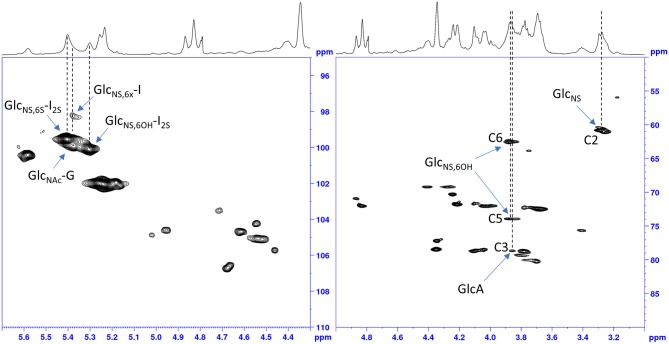
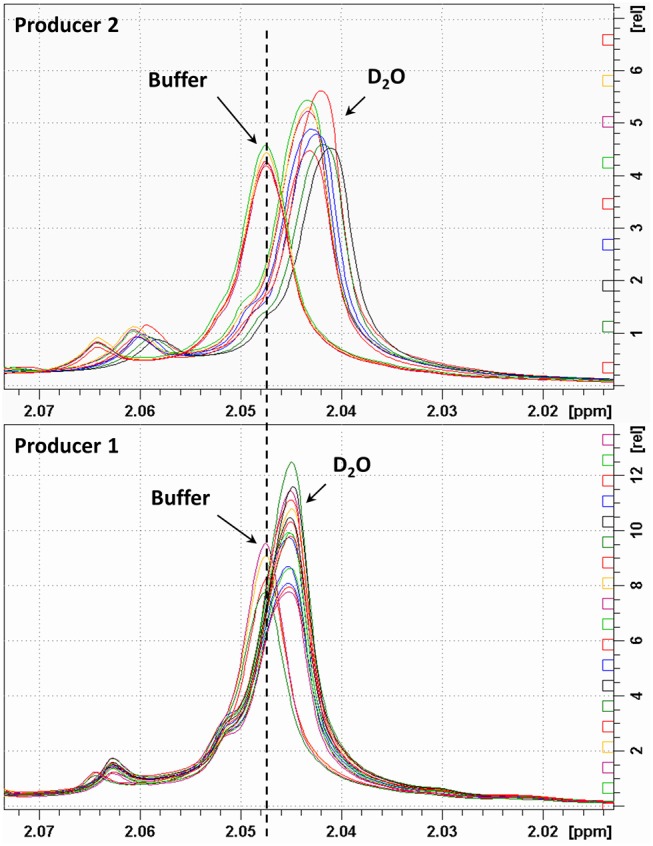
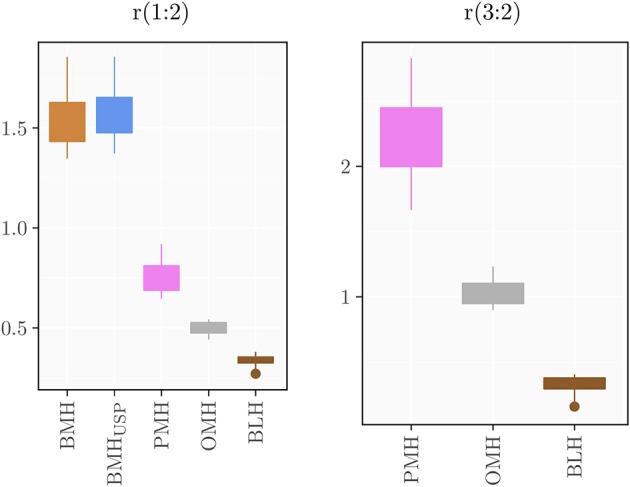
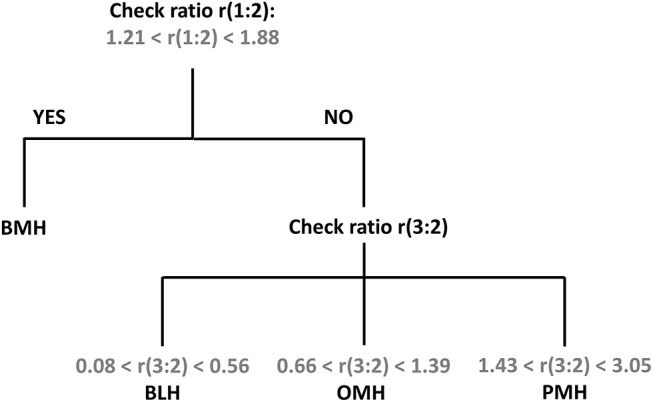
The US Food and Drug Administration has encouraged the reintroduction of bovine heparin drug product to the US market to mitigate the risks of heparin shortages and potential adulteration or contamination of the primary source which is porcine heparin. Here, a 1D-NMR method was applied to compare heparin sodium of bovine intestinal origin with that of bovine lung, porcine, or ovine intestinal origin. The results showed that a simple 1D test using NMR signal intensity ratios among diagnostic signals of the proton spectra uniquely identified the origin of heparin and concomitantly could be used to assure the correct sample labeling. However, a limitation of the use of only mono-dimensional spectra is that these spectra may not provide sufficiently detailed information on the composition of heparin batches to adequately determine the quality of this complex product. As an alternative, a higher resolution quantitative 2D-HSQC method was used to calculate the percentage of mono- and disaccharides, distinguish the origin of heparin and, simultaneously, assess the heparin composition. The 2D-HSQC method is proposed to provide sufficient information to evaluate the quality of industrial production process used to make the drug substance. Together, the 1D and 2D data produced by these measurements can be used to assure the identity and purity of this widely used drug.
美国食品药品监督管理局鼓励将牛源肝素药品重新引入美国市场,以降低肝素短缺风险以及猪源肝素这一主要来源可能存在的掺假或污染风险。在此,采用一维核磁共振(1D-NMR)方法,对牛肠源肝素钠与牛肺源、猪源或羊肠源肝素钠进行比较。结果表明,利用质子谱诊断信号的核磁共振信号强度比进行简单的一维测试,能够唯一确定肝素的来源,并可据此确保样品标签正确。然而,仅使用一维谱图存在局限性,即这些谱图可能无法提供关于肝素批次组成的足够详细信息,以充分确定这种复杂产品的质量。作为替代方法,采用更高分辨率的定量二维异核单量子相干(2D-HSQC)方法来计算单糖和二糖的百分比、区分肝素来源,同时评估肝素组成。二维异核单量子相干方法被认为能够提供足够信息,以评估用于生产原料药的工业生产过程的质量。这些测量产生的一维和二维数据共同可用于确保这种广泛使用的药物的同一性和纯度。