Department of Surgery, Oregon Health and Science University, Portland, Oregon.
Department of Cell, Developmental and Cancer Biology, Oregon Health and Science University, Portland, Oregon; Knight Cancer Institute, Oregon Health and Science University, Portland, Oregon.
Cell Mol Gastroenterol Hepatol. 2019;8(4):595-607. doi: 10.1016/j.jcmgh.2019.07.002. Epub 2019 Jul 15.
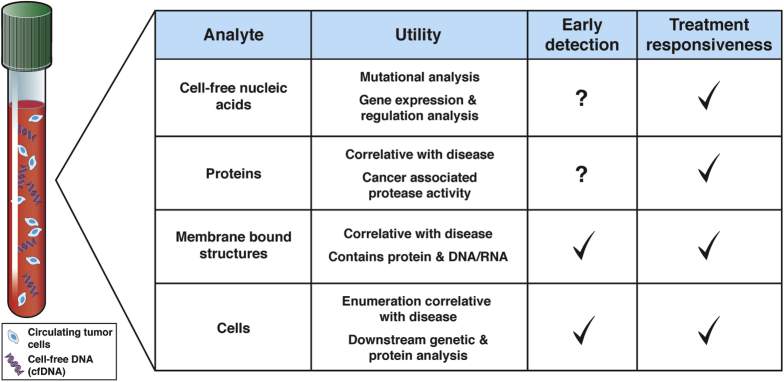
Gastrointestinal cancers account for more cancer-related deaths than any other organ system, owing in part to difficulties in early detection, treatment response assessment, and post-treatment surveillance. Circulating biomarkers hold the promise for noninvasive liquid biopsy platforms to overcome these obstacles. Although tumors shed detectable levels of degraded genetic material and cellular debris into peripheral blood, identifying reproducible and clinically relevant information from these analytes (eg, cell-free nucleotides, exosomes, proteins) has proven difficult. Cell-based circulating biomarkers also present challenges, but have multiple advantages including allowing for a more comprehensive tumor analysis, and communicating the risk of metastatic spread. Circulating tumor cells have dominated the cancer cell biomarker field with robust evidence in extraintestinal cancers; however, establishing their clinical utility beyond that of prognostication in colorectal and pancreatic cancers has remained elusive. Recently identified novel populations of tumor-derived cells bring renewed potential to this area of investigation. Cancer-associated macrophage-like cells, immune cells with phagocytosed tumor material, also show utility in prognostication and assessing treatment responsiveness. In addition, circulating hybrid cells are the result of tumor-macrophage fusion, with mounting evidence for a role in the metastatic cascade. Because of their relative abundance in circulation, circulating hybrid cells have great potential as a liquid biomarker for early detection, prognostication, and surveillance. In all, the power of the cell reaches beyond enumeration by providing a cellular source of tumor DNA, RNA, and protein, which can be harnessed to impact overall survival.
胃肠道癌症导致的癌症相关死亡人数超过其他任何器官系统,部分原因是早期检测、治疗反应评估和治疗后监测存在困难。循环生物标志物有望为非侵入性液体活检平台提供克服这些障碍的方法。尽管肿瘤会将可检测水平的降解遗传物质和细胞碎片释放到外周血液中,但从这些分析物(例如,无细胞核苷酸、外泌体、蛋白质)中识别出可重复且具有临床相关性的信息一直具有挑战性。基于细胞的循环生物标志物也存在挑战,但具有多个优势,包括能够进行更全面的肿瘤分析,并传达转移扩散的风险。循环肿瘤细胞在非胃肠道癌症中具有强有力的证据,主导着癌症细胞生物标志物领域;然而,除了结直肠癌和胰腺癌的预后外,它们在临床应用方面的实用性仍然难以确定。最近发现的肿瘤衍生细胞的新型群体为该研究领域带来了新的潜力。肿瘤相关巨噬细胞样细胞是吞噬肿瘤物质的免疫细胞,在预后和评估治疗反应方面也具有实用性。此外,循环杂交细胞是肿瘤-巨噬细胞融合的结果,越来越多的证据表明其在转移级联反应中起作用。由于它们在循环中的相对丰富度,循环杂交细胞作为早期检测、预后和监测的液体生物标志物具有巨大潜力。总之,细胞的力量超越了计数,它提供了肿瘤 DNA、RNA 和蛋白质的细胞来源,可以用来影响总生存。