Reproductive Medicine Center, Yantai Yuhuangding Hospital, Affiliated Hospital of Qingdao University, Yantai, Shandong, China.
Department of Obstetrics and Gynecology, Yantai Yuhuangding Hospital, Affiliated Hospital of Qingdao University, Yantai, Shandong, China.
Reprod Biol Endocrinol. 2019 Jul 18;17(1):59. doi: 10.1186/s12958-019-0500-0.
Vitamin D plays critical role in the female reproductive system. It seems that vitamin D is associated with clinical pregnancy outcomes of assisted reproductive technologies (ART), but its role remains elusive. This study is aimed to establish whether vitamin D is associated with clinical outcomes of in vitro fertilization (IVF).
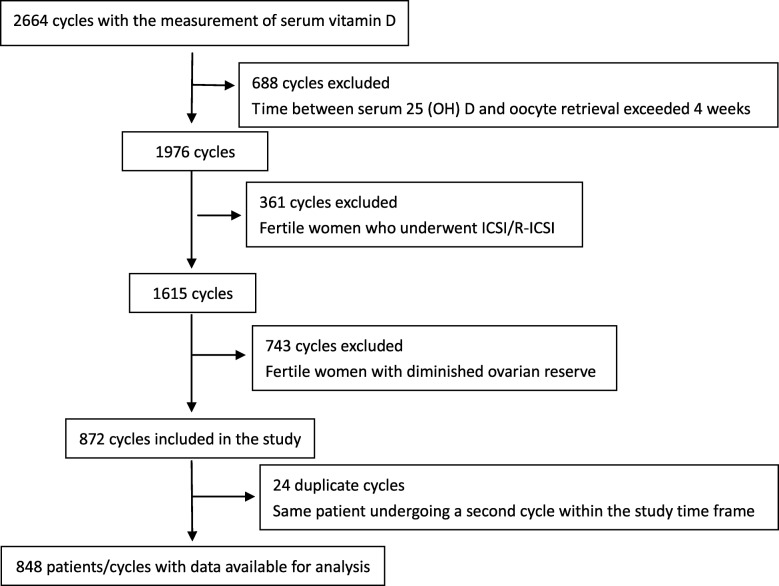
The cross-sectional study was carried out from January 1st 2017 to December 31st 2017. A total of 848 patients who had indications for IVF were enrolled. The patients were classified by serum 25 (OH) D quartiles. The outcome parameters of IVF were compared in each group, including normal fertilization rate, high quality embryo rate, clinical pregnancy rate, implantation rate and live birth rate.
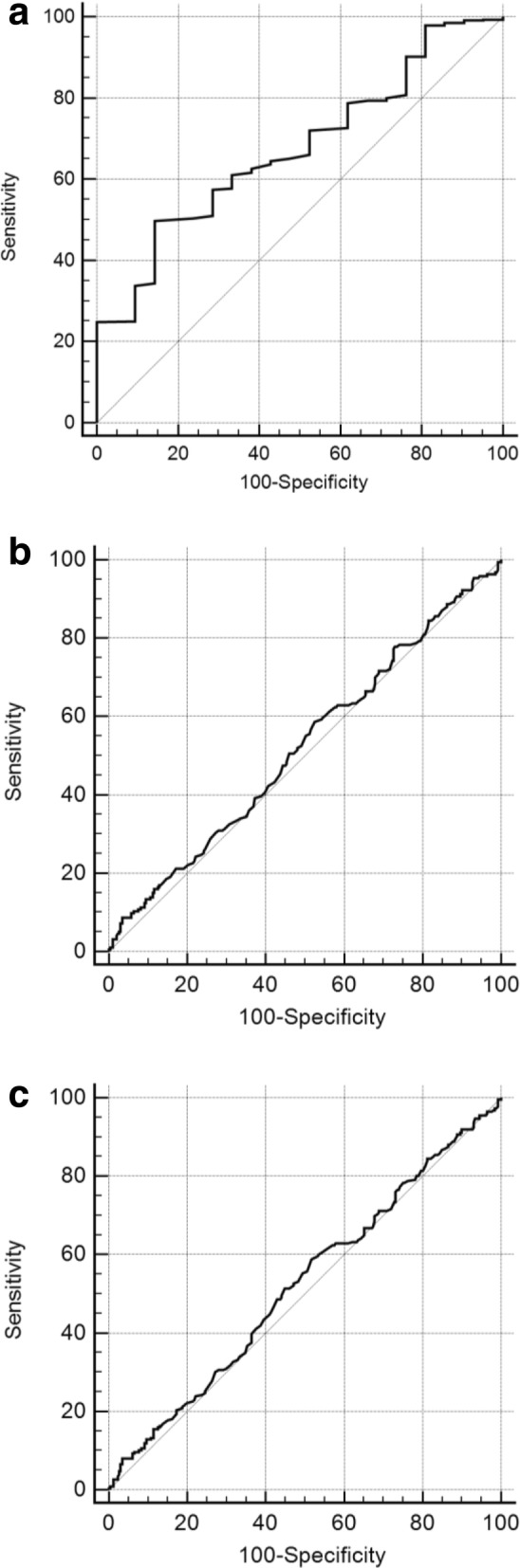
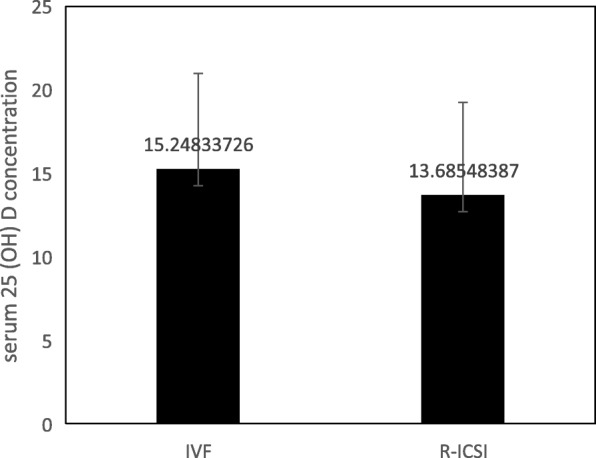
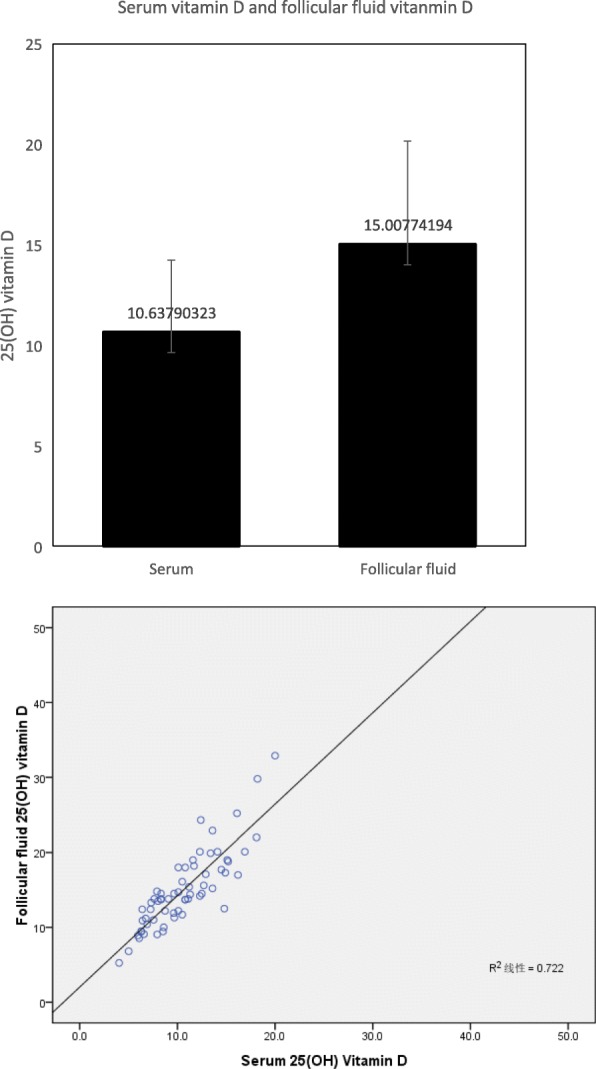
The median 25 (OH) D concentration was 15.25 ng/ml. Serum 25 (OH) D levels in women varied with the seasons. We found that serum 25 (OH) D levels were higher in autumn than other seasons, and the lowest level occurred in spring. Follicular fluid (FF) vitamin D levels were positively correlated with serum vitamin D levels (r = 0.85, P < 0.001). The levels of FF vitamin D were significantly higher than the levels of serum vitamin D (P < 0.001). Normal fertilization rates were significantly different among four groups (P = 0.007). The group of women with the highest serum 25 (OH) D levels had the highest normal fertilization rate. However, the clinical pregnancy rate, implantation rate and live birth rates were not significantly different among the four groups when the age, BMI, AMH, seasons of blood drawing, COH protocol, high quality embryo rate and number of embryos transferred were adjusted. In addition, we found that serum 25 (OH) D levels were significantly higher in patients received IVF than patients received R-ICSI (P = 0.013).
Among Chinese women, lower serum vitamin D levels are associated with a lower fertilization rate in IVF. However, vitamin D level was not associated with the clinical pregnancy and live birth rate following IVF.
维生素 D 在女性生殖系统中起着至关重要的作用。似乎维生素 D 与辅助生殖技术(ART)的临床妊娠结局有关,但它的作用仍不清楚。本研究旨在确定维生素 D 是否与体外受精(IVF)的临床结局有关。
本横断面研究于 2017 年 1 月 1 日至 12 月 31 日进行。共纳入 848 例有 IVF 适应证的患者。根据血清 25(OH)D 四分位间距将患者进行分组。比较各组 IVF 的结局参数,包括正常受精率、优质胚胎率、临床妊娠率、种植率和活产率。
血清 25(OH)D 浓度的中位数为 15.25ng/ml。女性血清 25(OH)D 水平随季节变化而变化。我们发现,秋季血清 25(OH)D 水平高于其他季节,春季水平最低。卵泡液(FF)维生素 D 水平与血清维生素 D 水平呈正相关(r=0.85,P<0.001)。FF 中维生素 D 的水平明显高于血清中的水平(P<0.001)。四组间正常受精率差异有统计学意义(P=0.007)。血清 25(OH)D 水平最高的组的正常受精率最高。然而,当调整年龄、BMI、AMH、采血季节、COH 方案、优质胚胎率和移植胚胎数后,四组间的临床妊娠率、种植率和活产率差异无统计学意义。此外,我们发现接受 IVF 的患者的血清 25(OH)D 水平明显高于接受 R-ICSI 的患者(P=0.013)。
在中国女性中,较低的血清维生素 D 水平与 IVF 中的受精率降低有关。然而,维生素 D 水平与 IVF 后的临床妊娠率和活产率无关。