Division of Cardiovascular Medicine, Department of Medicine, University of Puerto Rico School of Medicine, San Juan, Puerto Rico.
Division of Cardiovascular Medicine, Department of Medicine, Yale University School of Medicine, New Haven, Connecticut.
JACC Cardiovasc Interv. 2019 Jul 22;12(14):1328-1338. doi: 10.1016/j.jcin.2019.06.013.
This study sought to develop and compare an array of machine learning methods to predict in-hospital mortality after transcatheter aortic valve replacement (TAVR) in the United States.
Existing risk prediction tools for in-hospital complications in patients undergoing TAVR have been designed using statistical modeling approaches and have certain limitations.
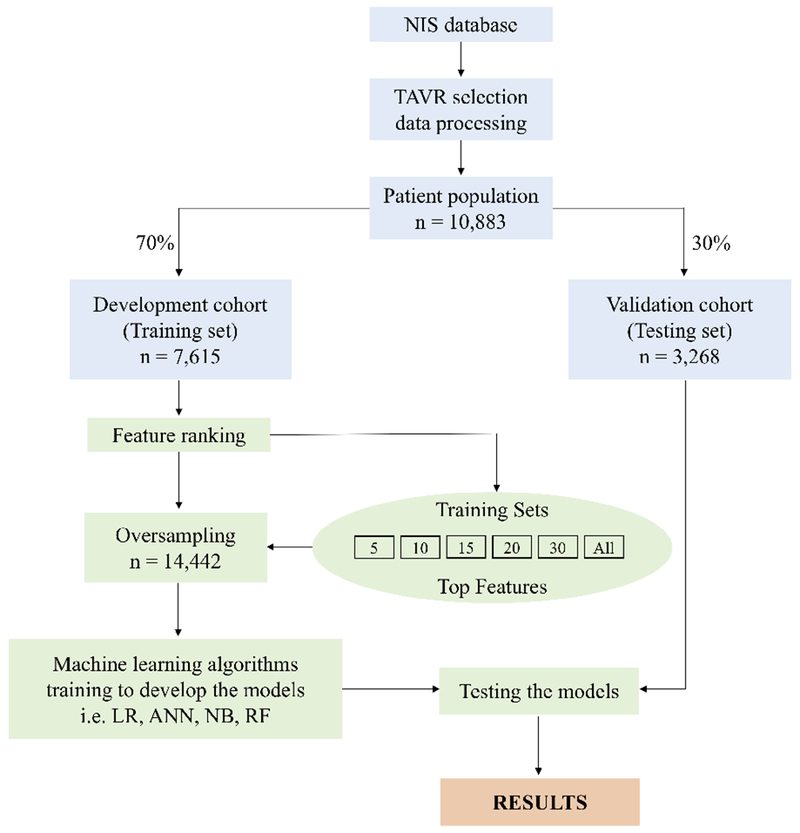
Patient data were obtained from the National Inpatient Sample database from 2012 to 2015. The data were randomly divided into a development cohort (n = 7,615) and a validation cohort (n = 3,268). Logistic regression, artificial neural network, naive Bayes, and random forest machine learning algorithms were applied to obtain in-hospital mortality prediction models.
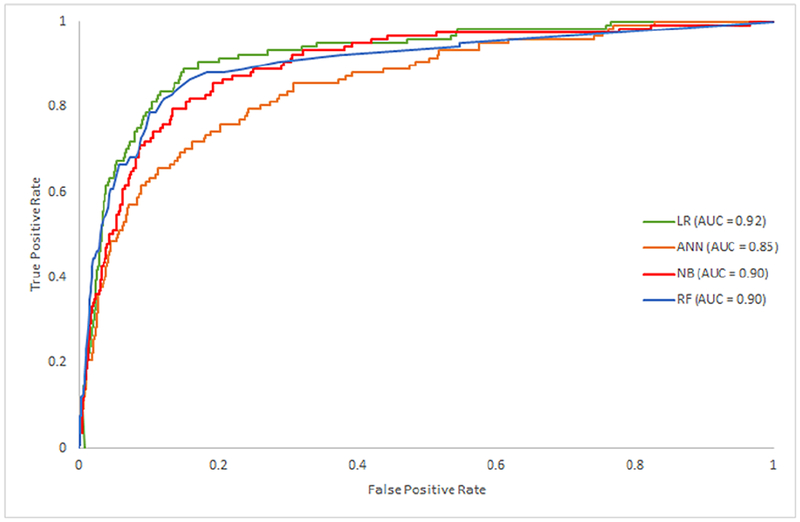
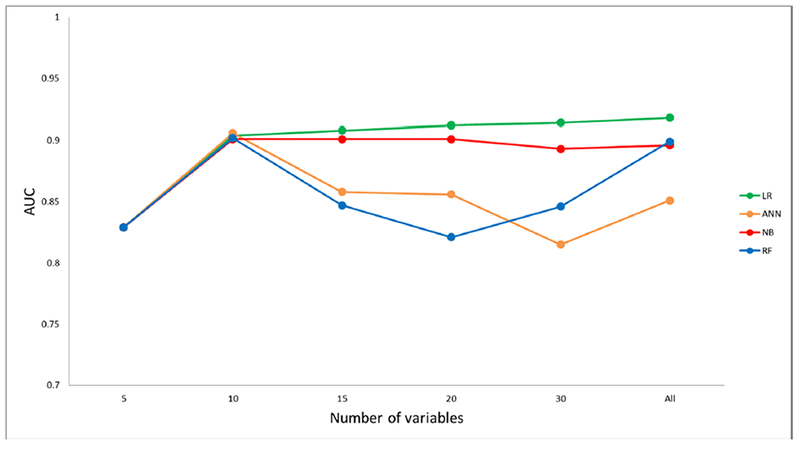
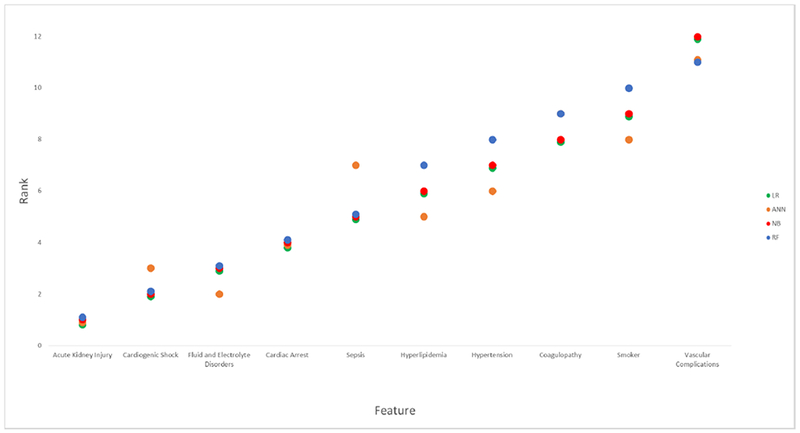
A total of 10,883 TAVRs were analyzed in our study. The overall in-hospital mortality was 3.6%. Overall, prediction models' performance measured by area under the curve were good (>0.80). The best model was obtained by logistic regression (area under the curve: 0.92; 95% confidence interval: 0.89 to 0.95). Most obtained models plateaued after introducing 10 variables. Acute kidney injury was the main predictor of in-hospital mortality ranked with the highest mean importance in all the models. The National Inpatient Sample TAVR score showed the best discrimination among available TAVR prediction scores.
Machine learning methods can generate robust models to predict in-hospital mortality for TAVR. The National Inpatient Sample TAVR score should be considered for prognosis and shared decision making in TAVR patients.
本研究旨在开发并比较一系列机器学习方法,以预测美国经导管主动脉瓣置换术(TAVR)后的院内死亡率。
现有的 TAVR 患者院内并发症风险预测工具是使用统计建模方法设计的,存在一定的局限性。
患者数据来自 2012 年至 2015 年的全国住院患者样本数据库。数据随机分为开发队列(n=7615)和验证队列(n=3268)。应用逻辑回归、人工神经网络、朴素贝叶斯和随机森林机器学习算法获得院内死亡率预测模型。
本研究共分析了 10883 例 TAVR。总体院内死亡率为 3.6%。总体而言,通过曲线下面积衡量的预测模型性能良好(>0.80)。逻辑回归获得的模型最佳(曲线下面积:0.92;95%置信区间:0.89 至 0.95)。大多数获得的模型在引入 10 个变量后趋于平稳。急性肾损伤是所有模型中预测院内死亡率的主要指标,其平均重要性最高。全国住院患者样本 TAVR 评分在现有 TAVR 预测评分中具有最佳的区分度。
机器学习方法可以生成稳健的模型来预测 TAVR 的院内死亡率。全国住院患者样本 TAVR 评分应在 TAVR 患者的预后和共同决策中考虑。