Department of Cell & Regenerative Biology, University of Wisconsin-Madison, Madison, WI, 53705, USA.
Cellular and Molecular Biology Program, University of Michigan, Ann Arbor, MI, 48109-2200, USA.
Nat Commun. 2019 Jul 18;10(1):3168. doi: 10.1038/s41467-019-11100-4.
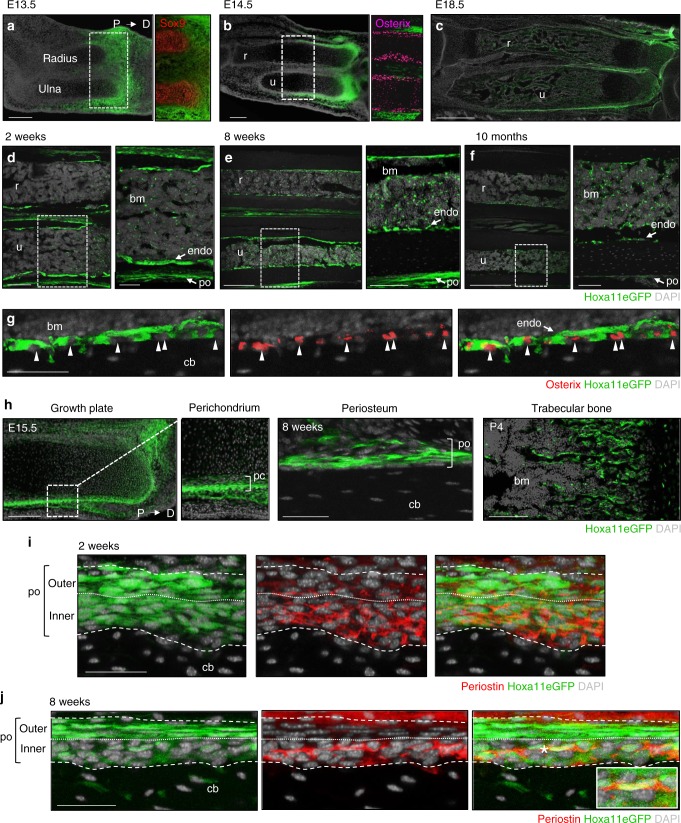
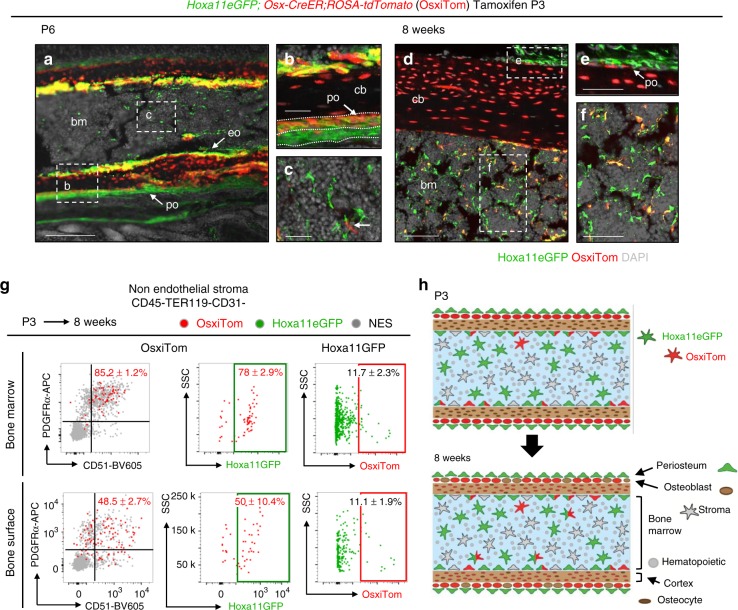
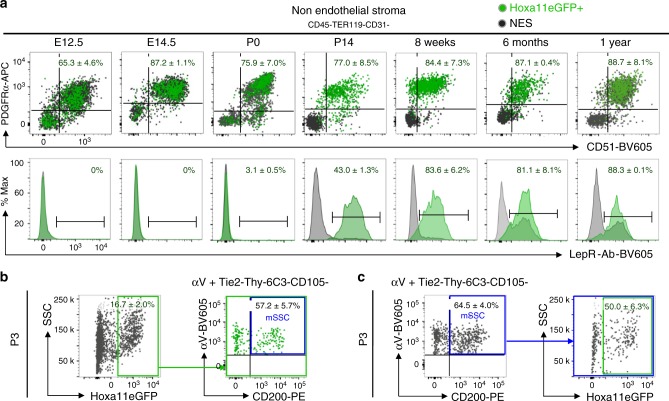
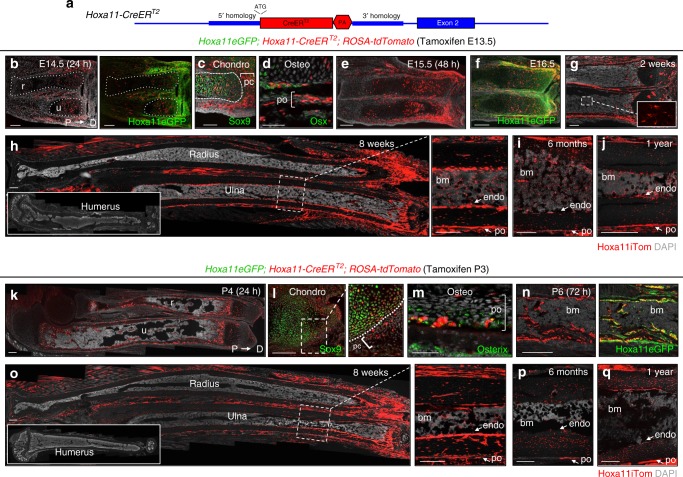
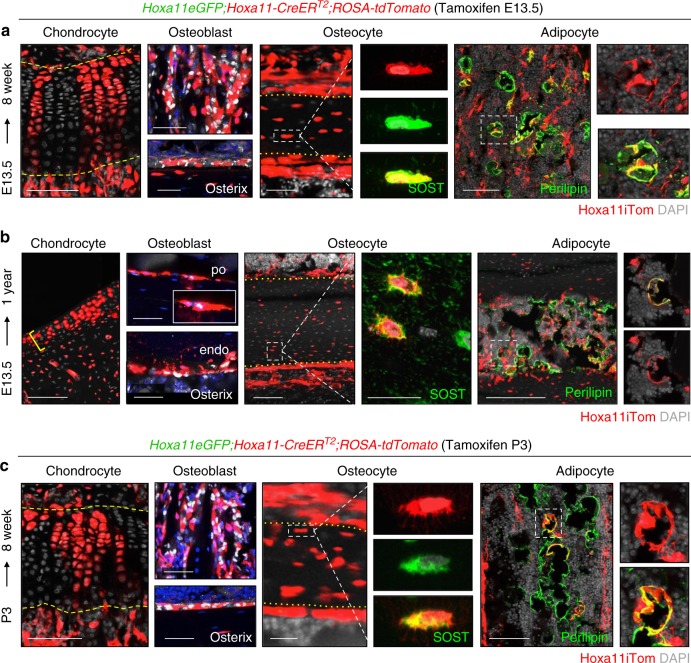
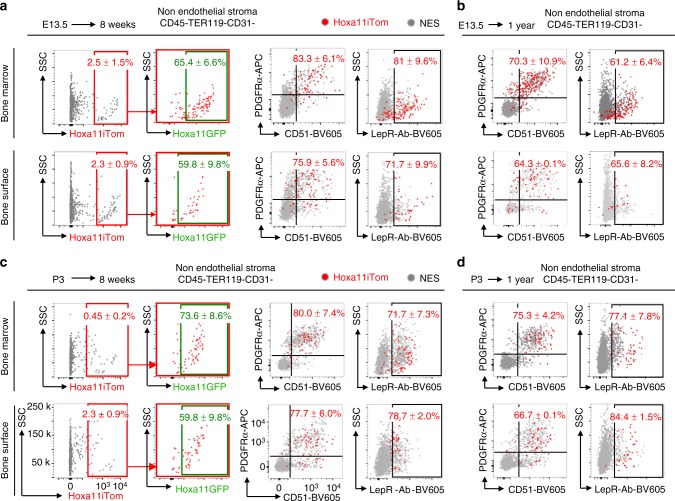
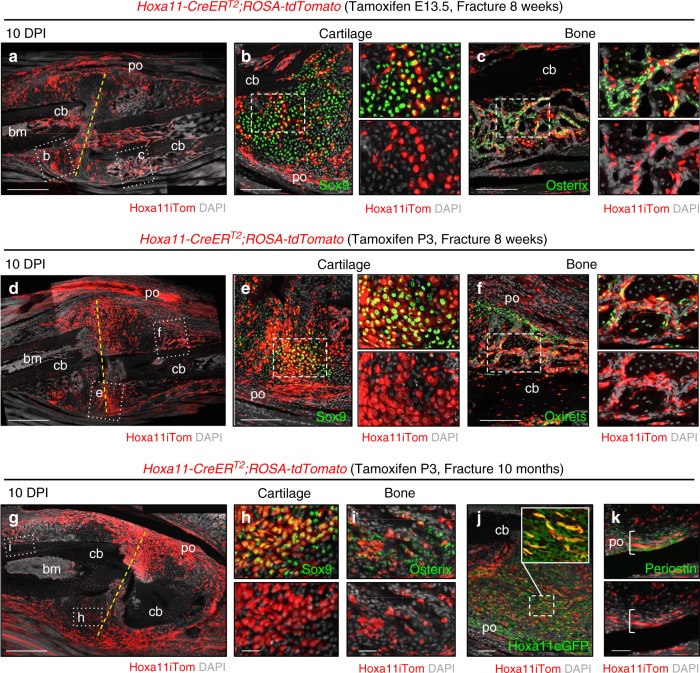
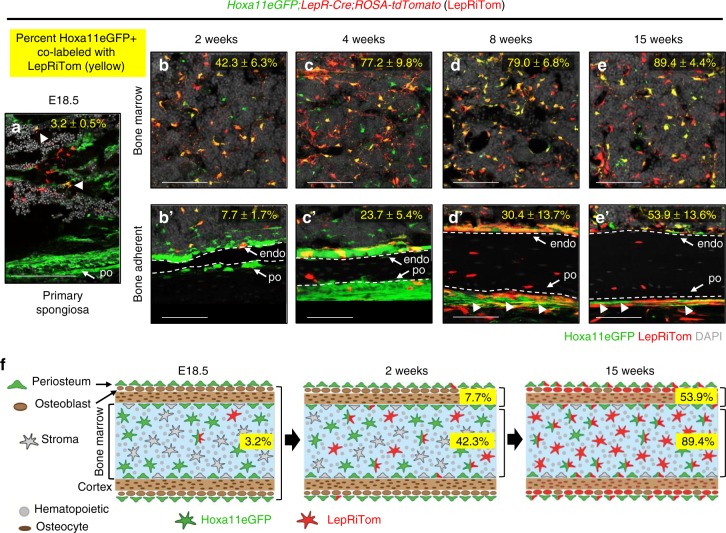
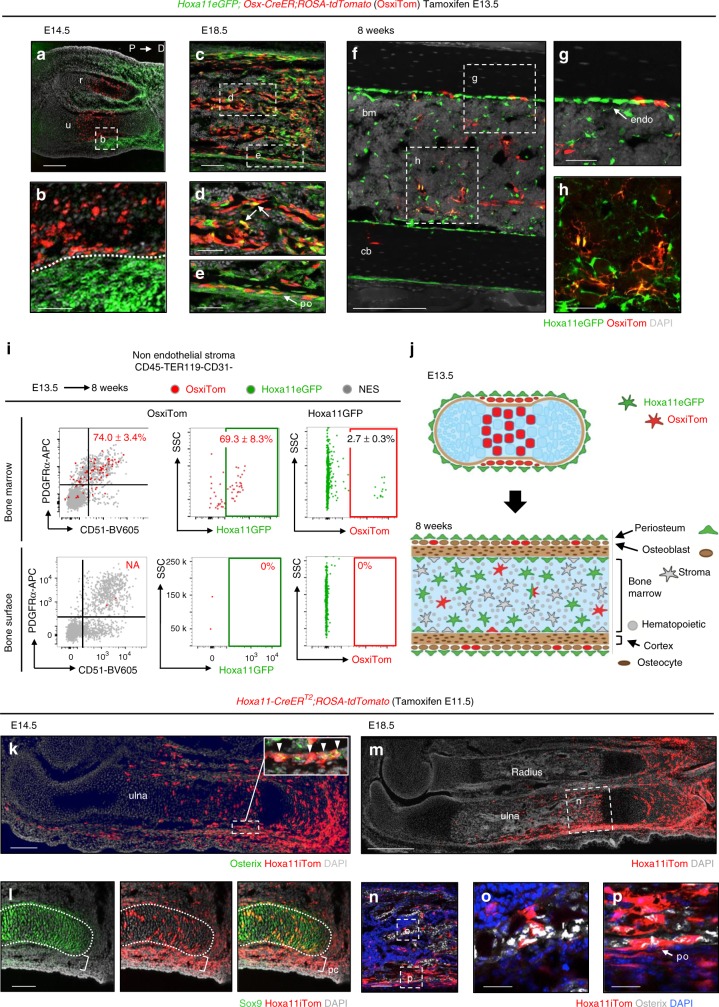
Multipotent mesenchymal stromal cells (MSCs) are required for skeletal formation, maintenance, and repair throughout life; however, current models posit that postnatally arising long-lived adult MSCs replace transient embryonic progenitor populations. We previously reported exclusive expression and function of the embryonic patterning transcription factor, Hoxa11, in adult skeletal progenitor-enriched MSCs. Here, using a newly generated Hoxa11-CreER lineage-tracing system, we show Hoxa11-lineage marked cells give rise to all skeletal lineages throughout the life of the animal and persist as MSCs. Hoxa11 lineage-positive cells give rise to previously described progenitor-enriched MSC populations marked by LepR-Cre and Osx-CreER, placing them upstream of these populations. Our studies establish that Hox-expressing cells are skeletal stem cells that arise from the earliest stages of skeletal development and self-renew throughout the life of the animal.
多能间充质基质细胞 (MSCs) 是骨骼形成、维持和修复所必需的;然而,目前的模型假设,出生后出现的长寿成体 MSCs 替代短暂的胚胎祖细胞群体。我们之前报道了胚胎模式形成转录因子 Hoxa11 在成年骨骼祖细胞富集 MSC 中的特异性表达和功能。在这里,我们使用新生成的 Hoxa11-CreER 谱系示踪系统,表明 Hoxa11 谱系标记的细胞在动物的整个生命周期中产生所有骨骼谱系,并作为 MSC 持续存在。Hoxa11 谱系阳性细胞产生以前描述过的由 LepR-Cre 和 Osx-CreER 标记的祖细胞富集 MSC 群体,将它们置于这些群体的上游。我们的研究确立了 Hox 表达细胞是骨骼干细胞,它们起源于骨骼发育的最早阶段,并在动物的整个生命周期中自我更新。