Zeng Ziwei, Wu Xianrui, Chen Junji, Luo Shuangling, Hou Yujie, Kang Liang
Department of Colorectal Surgery, The Sixth Affiliated Hospital, Sun Yat-sen University, Guangzhou, China.
Guangdong Institute of Gastroenterology, The Sixth Affiliated Hospital, Sun Yat-sen University, Guangzhou, China.
Gastroenterol Res Pract. 2019 Jun 19;2019:1732340. doi: 10.1155/2019/1732340. eCollection 2019.
To evaluate the safety and feasibility of transanal endoscopic surgery for diffuse cavernous hemangioma of the rectum (DCHR).
All DCHR patients who underwent transanal endoscopic surgery in our hospital between January 2014 and June 2018 were reviewed.
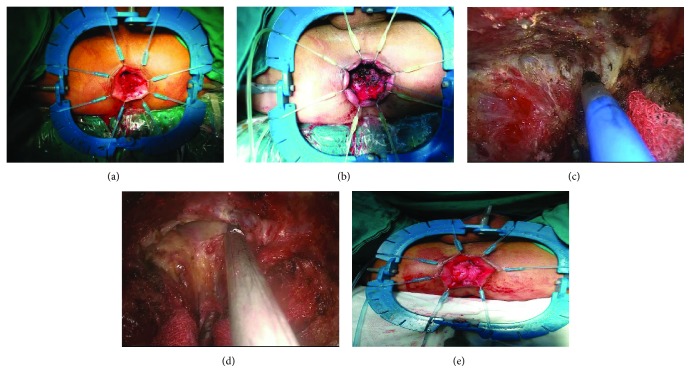
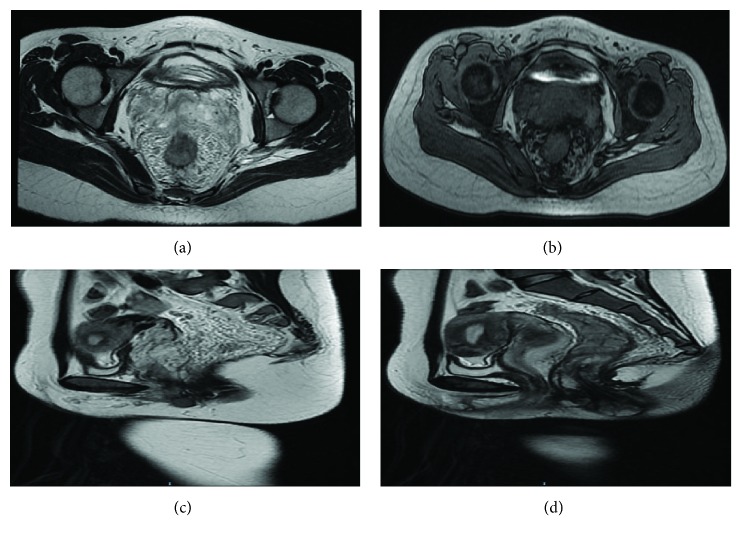
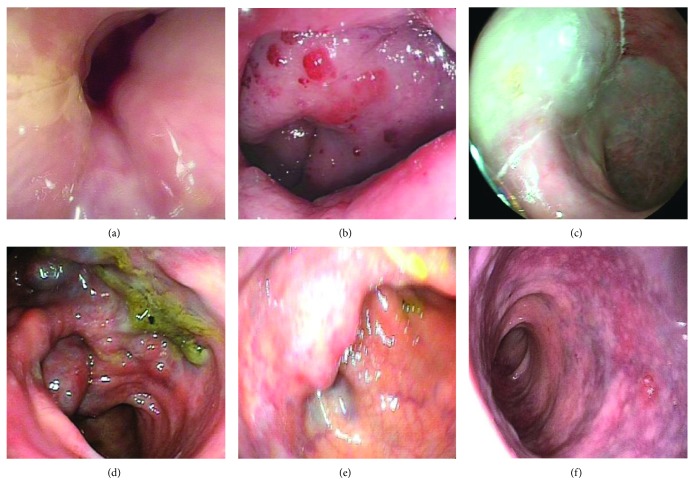
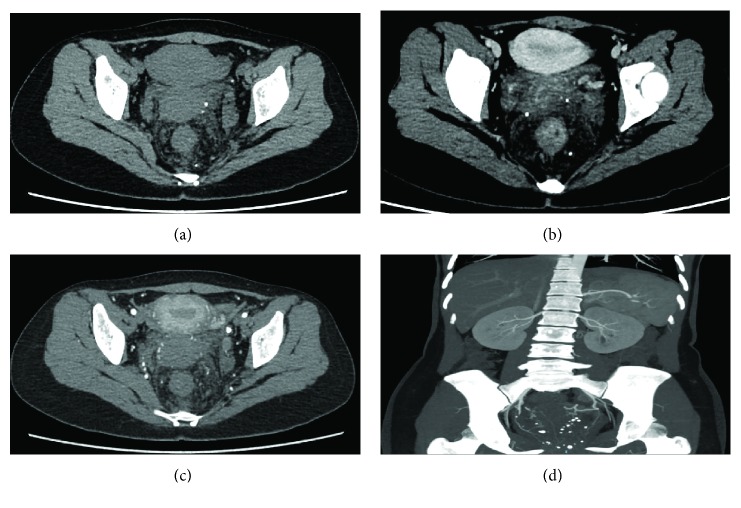
A total of 7 patients with a diagnosis of DCHR underwent transanal endoscopic surgery during the study period. Four patients (57.1%) were male, with a mean age at surgery of 34.5 ± 7.7 years, and three patients (42.9%) were female, with a mean age at surgery of 29.9 ± 3.8 years. Recurrent painless rectal bleeding was the main symptom in all patients. The mean age was 32 years old (range 21-54 years). The median duration of symptoms was 10 years (range 1 month-50 years). The level of hemoglobin at admission ranged from 59.0 to 148.0 g/l (mean 106.6 g/l), and the level of mean corpuscular volume (MCV) ranged from 75.1 fl to 93.5 fl (mean 83.7 fl). Colonoscopy, computed tomography (CT), and magnetic resonance imaging (MRI) were important in the diagnosis of DCHR because of their high positive rates and accurate features. All of the lesions are between the anal canal and the descending colon. Two patients could be found with some enlarged serpentine vessels in the cervix, vagina, or corpus cavernosum by MRI. After admission, all the patients underwent transanal endoscopic surgery and four patients had simultaneous loop ileostomy. The mean operative time was 278 min (range 168-400 min). The median amount of intraoperative blood loss was 50 ml (range 10-300 ml). The mean distance from anal verge to anastomosis was 2.2 ± 0.2 cm. The anastomosis was fashioned with a stapler in two patients (28.6%). There were no intraoperative and postoperative complications. All the patients continued to recover well from the surgery, and nobody needed postoperative blood transfusions.
The specific diagnosis rate of DCHR is low. Preoperative MRI and CT examination can make a definitive diagnosis and determine the extent of the lesions. DCHR is mostly restricted to the rectum, sigmoid colon, anal wall, and mesorectum. The best treatment for DCHR is complete lesion resection. It is safe and feasible to treat DCHR using transanal endoscopic surgery. Moreover, transanal endoscopic surgery might have a huge potential when used to treat other rectal diseases.
评估经肛门内镜手术治疗直肠弥漫性海绵状血管瘤(DCHR)的安全性和可行性。
回顾性分析2014年1月至2018年6月在我院接受经肛门内镜手术的所有DCHR患者。
在研究期间,共有7例诊断为DCHR的患者接受了经肛门内镜手术。4例(57.1%)为男性,手术时平均年龄为34.5±7.7岁,3例(42.9%)为女性,手术时平均年龄为29.9±3.8岁。反复无痛性直肠出血是所有患者的主要症状。平均年龄为32岁(范围21 - 54岁)。症状的中位持续时间为10年(范围1个月 - 50年)。入院时血红蛋白水平在59.0至148.0 g/l之间(平均106.6 g/l),平均红细胞体积(MCV)水平在75.1 fl至93.5 fl之间(平均83.7 fl)。结肠镜检查、计算机断层扫描(CT)和磁共振成像(MRI)因其高阳性率和准确特征在DCHR的诊断中具有重要作用。所有病变均位于肛管至降结肠之间。通过MRI可发现2例患者在宫颈、阴道或海绵体中有一些扩张的迂曲血管。入院后,所有患者均接受了经肛门内镜手术,4例患者同时行回肠袢式造口术。平均手术时间为278分钟(范围168 - 400分钟)。术中中位失血量为50 ml(范围10 - 300 ml)。从肛缘到吻合口的平均距离为2.2±0.2 cm。2例患者(28.6%)使用吻合器进行吻合。无术中及术后并发症。所有患者术后恢复良好,无人需要术后输血。
DCHR的特异性诊断率较低。术前MRI和CT检查可做出明确诊断并确定病变范围。DCHR大多局限于直肠、乙状结肠、肛管壁和直肠系膜。DCHR的最佳治疗方法是完整切除病变。使用经肛门内镜手术治疗DCHR是安全可行的。此外,经肛门内镜手术在治疗其他直肠疾病时可能具有巨大潜力。