Steinle Heidrun, Weber Marbod, Behring Andreas, Mau-Holzmann Ulrike, Schlensak Christian, Wendel Hans Peter, Avci-Adali Meltem
University Hospital Tübingen, Department of Thoracic and Cardiovascular Surgery, Calwerstraße 7/1, 72076 Tübingen, Germany.
University Hospital Tübingen, Institute of Medical Genetics and Applied Genomics, Calwerstraße 7, 72076 Tübingen, Germany.
Stem Cells Int. 2019 Jun 19;2019:7641767. doi: 10.1155/2019/7641767. eCollection 2019.
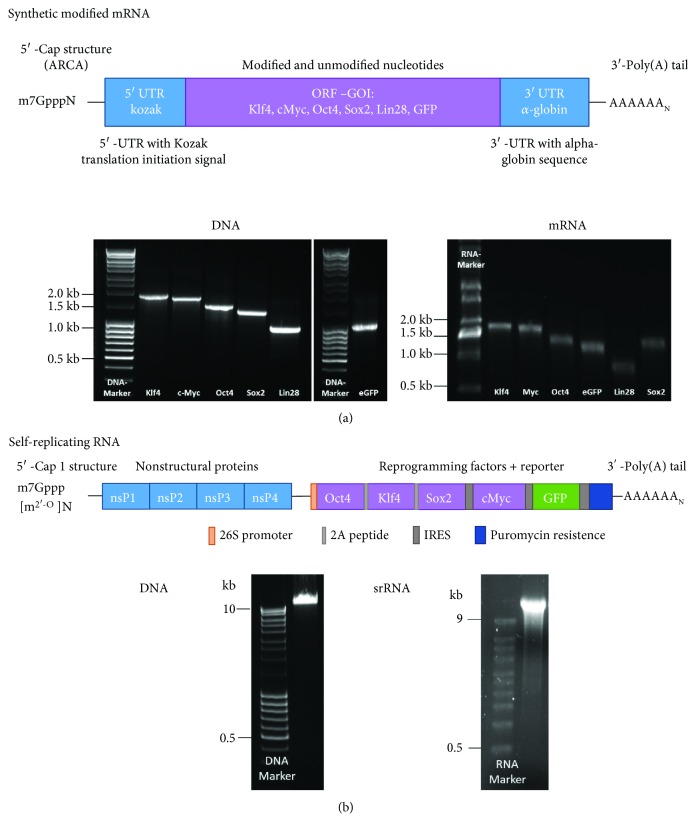
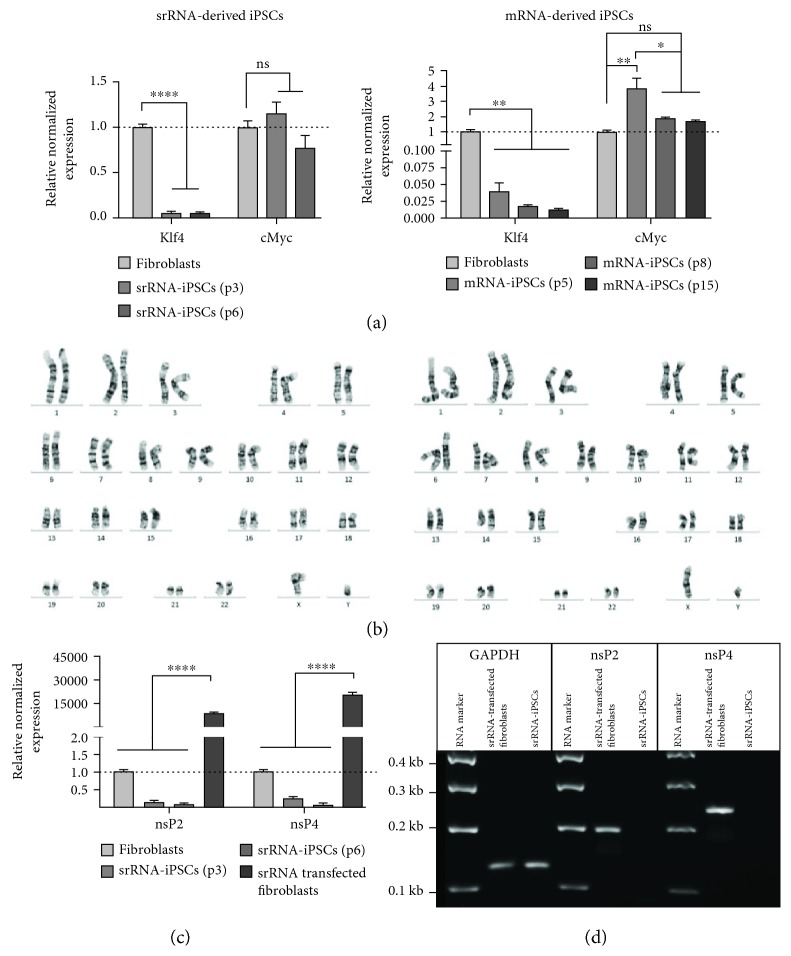
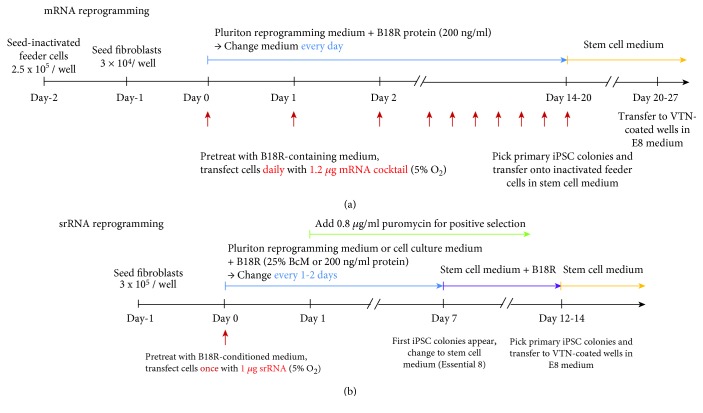
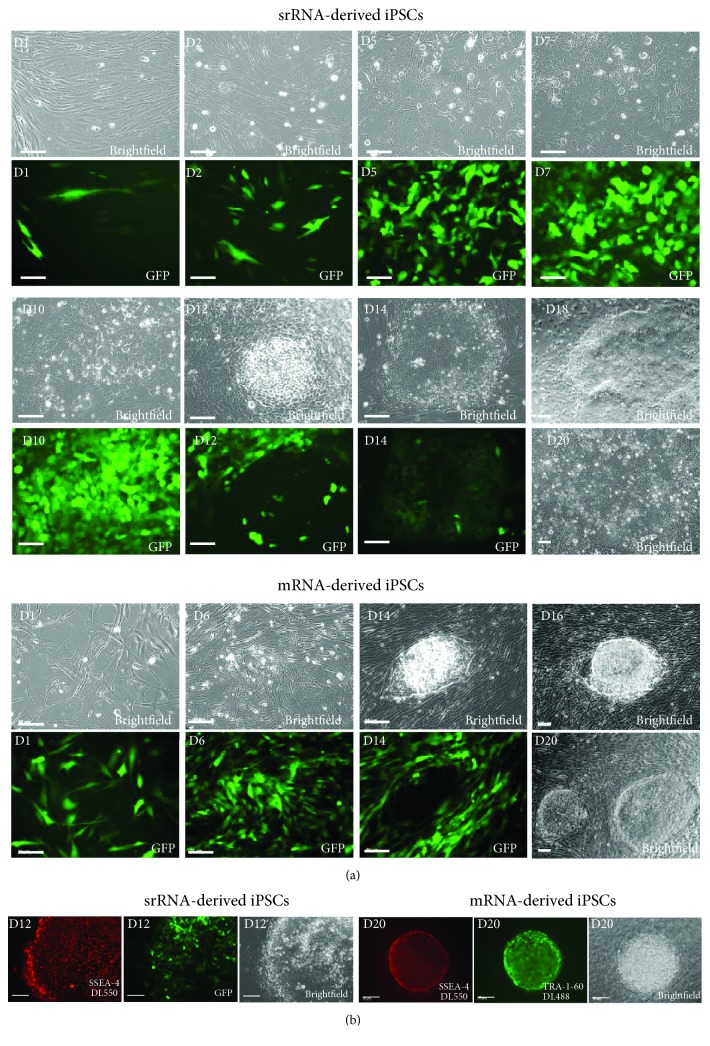
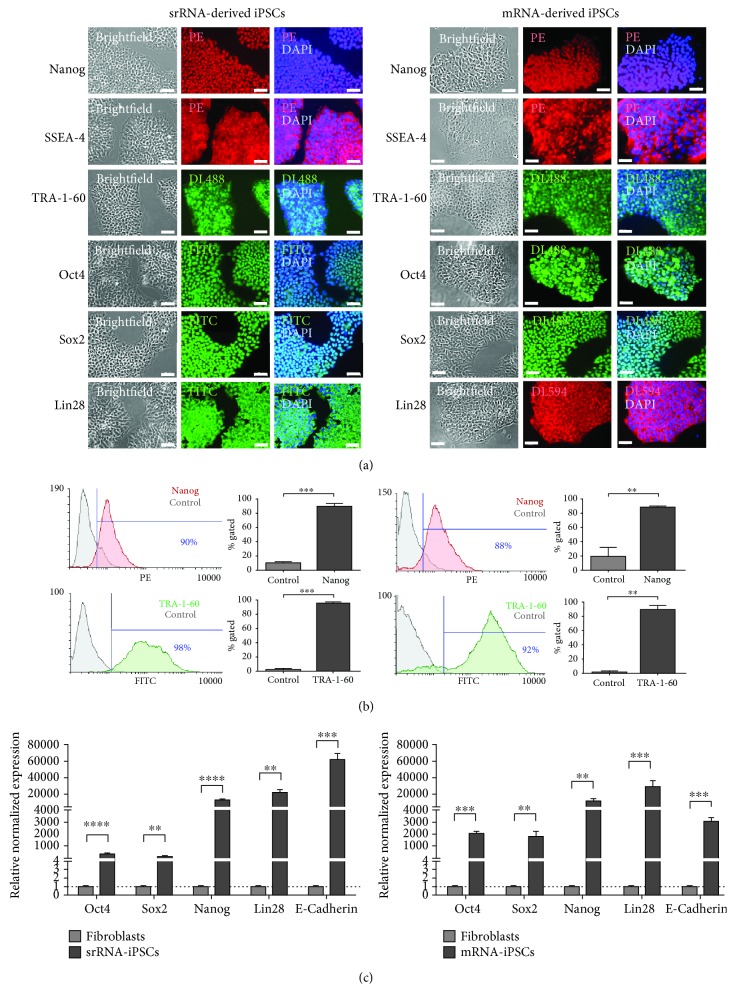
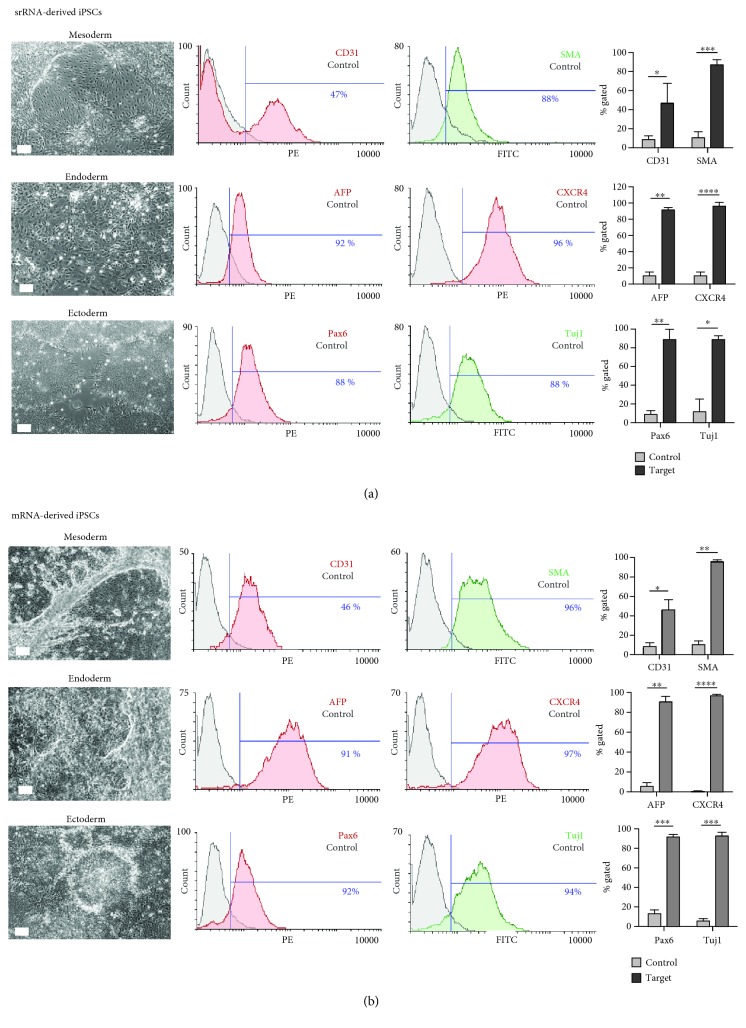
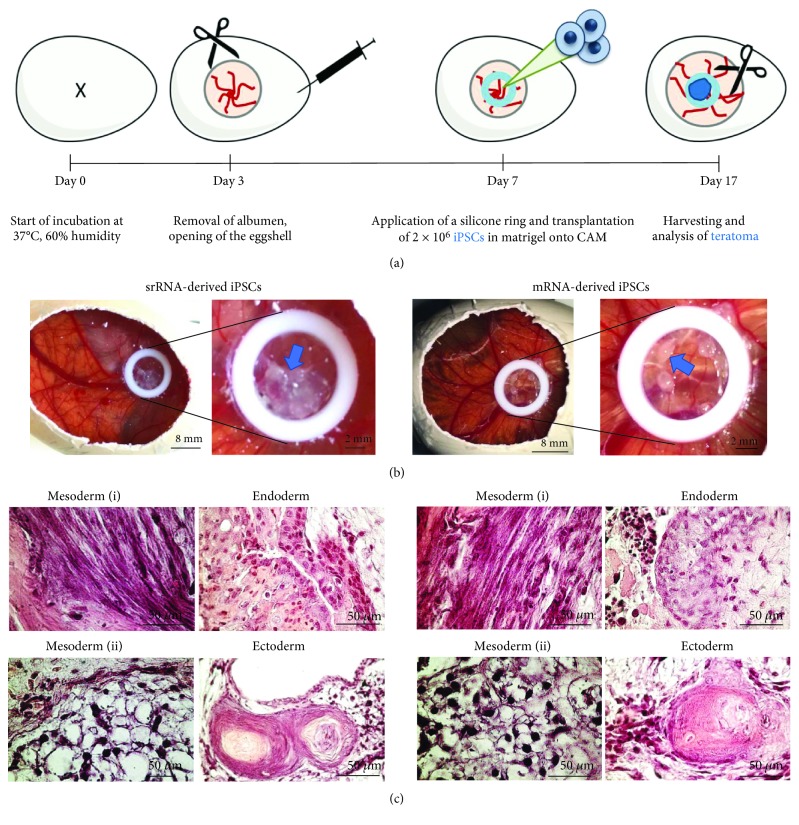
The reprogramming of somatic cells into induced pluripotent stem cells (iPSCs) is gaining in importance in the fields of regenerative medicine, tissue engineering, and disease modeling. Patient-specific iPSCs have as an unlimited cell source a tremendous potential for generating various types of autologous cells. For the future clinical applicability of these iPSC-derived cells, the generation of iPSCs via nongenome integrating methods and the efficient reprogramming of patients' somatic cells are required. In this study, 2 different RNA-based footprint-free methods for the generation of iPSCs were compared: the use of synthetic modified messenger RNAs (mRNAs) or self-replicating RNAs (srRNAs) encoding the reprogramming factors and GFP. Using both RNA-based methods, integration-free iPSCs without genomic alterations were obtained. The pluripotency characteristics identified by specific marker detection and the in vitro and in vivo trilineage differentiation capacity were comparable. Moreover, the incorporation of a GFP encoding sequence into the srRNA enabled a direct and convenient monitoring of the reprogramming procedure and the successful detection of srRNA translation in the transfected cells. Nevertheless, the use of a single srRNA to induce pluripotency was less time consuming, faster, and more efficient than the daily transfection of cells with synthetic mRNAs. Therefore, we believe that the srRNA-based approach might be more appropriate and efficient for the reprogramming of different types of somatic cells for clinical applications.
将体细胞重编程为诱导多能干细胞(iPSC)在再生医学、组织工程和疾病建模领域正变得越来越重要。患者特异性iPSC作为一种无限的细胞来源,在产生各种类型的自体细胞方面具有巨大潜力。为了使这些iPSC衍生细胞在未来具有临床适用性,需要通过非基因组整合方法生成iPSC,并对患者体细胞进行高效重编程。在本研究中,比较了2种不同的基于RNA的无足迹iPSC生成方法:使用编码重编程因子和绿色荧光蛋白(GFP)的合成修饰信使RNA(mRNA)或自我复制RNA(srRNA)。使用这两种基于RNA的方法,均获得了无基因组改变的无整合iPSC。通过特异性标志物检测确定的多能性特征以及体外和体内三系分化能力相当。此外,将GFP编码序列掺入srRNA能够直接方便地监测重编程过程,并成功检测转染细胞中srRNA的翻译。然而,与每天用合成mRNA转染细胞相比,使用单个srRNA诱导多能性耗时更少、速度更快且效率更高。因此,我们认为基于srRNA的方法可能更适合且高效地用于将不同类型的体细胞重编程以用于临床应用。