Baciadonna Luigi, Briefer Elodie F, Favaro Livio, McElligott Alan G
1Biological and Experimental Psychology, School of Biological and Chemical Sciences, Queen Mary University of London, Mile End Road, London, E1 4NS UK.
2Institute of Agricultural Sciences, ETH Zürich, Universitätsstrasse 2, 8092 Zürich, Switzerland.
Front Zool. 2019 Jul 10;16:25. doi: 10.1186/s12983-019-0323-z. eCollection 2019.
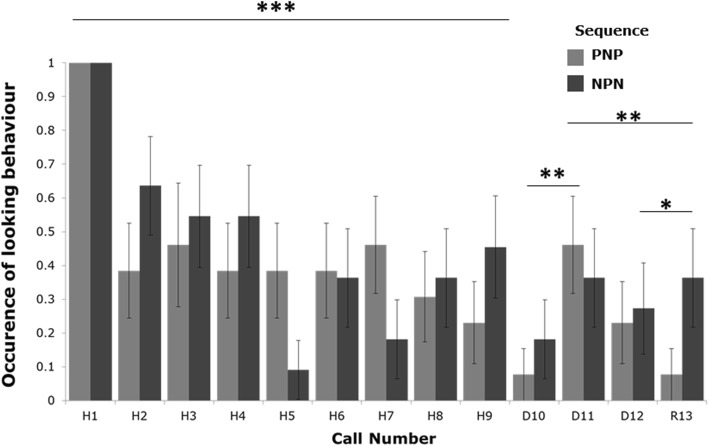
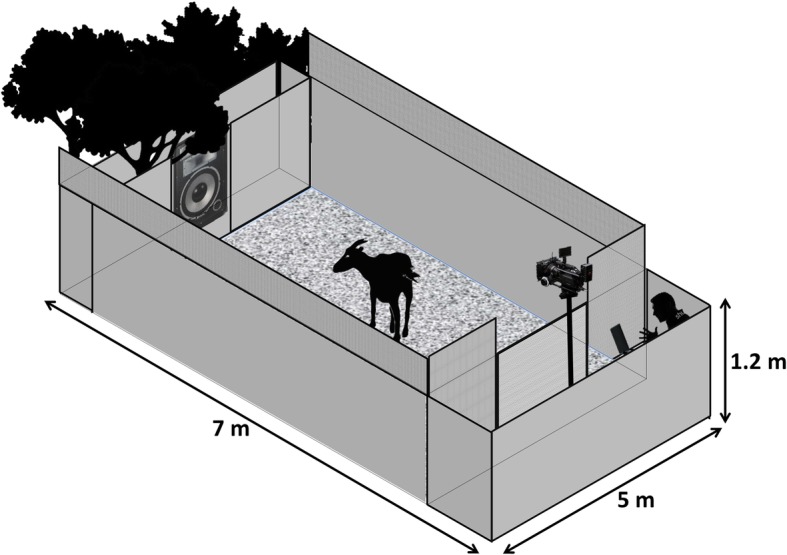
Evidence from humans suggests that the expression of emotions can regulate social interactions and promote coordination within a group. Despite its evolutionary importance, social communication of emotions in non-human animals is still not well understood. Here, we combine behavioural and physiological measures, to determine if animals can distinguish between vocalisations linked to different emotional valences (positive and negative). Using a playback paradigm, goats were habituated to listen to a conspecific call associated with positive or negative valence (habituation phase) and were subsequently exposed to a variant of the same call type (contact call) associated with the opposite valence (dishabituation phase), followed by a final call randomly selected from the habituation phase as control (rehabituation phase). The effects of the calls on the occurrence of looking and cardiac responses in these phases were recorded and compared.
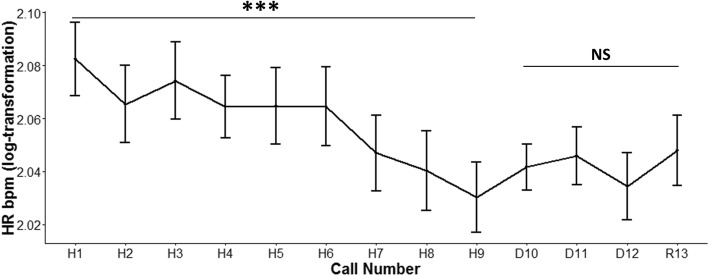
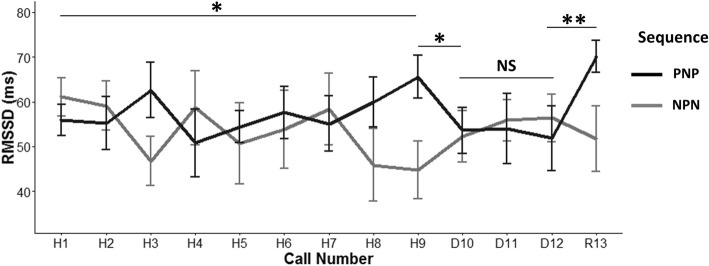
We found that when the valence of the call variant changed, goats were more likely to look at the source of the sound, indicating that they could distinguish calls based on their valence. Heart rate was not affected by the valence of the calls played, whereas heart-rate variability tended to be higher in the habituation and rehabituation phases, when positive calls were played compared to negative ones. Together, the behavioural and physiological measures provide evidence suggesting, first, that goats are able to distinguish call variants based on their valence, and second, that goat behaviour and cardiac responses are affected by call valence.
This study indicates that auditory modalities are a potent means to communicate emotions in non-human animals. These findings can contribute to our understanding of the evolution of emotion perception in non-human animals.
来自人类的证据表明,情绪表达可以调节社会互动并促进群体内的协调。尽管其在进化上具有重要意义,但非人类动物的情绪社会交流仍未得到很好的理解。在这里,我们结合行为和生理测量方法,以确定动物是否能够区分与不同情绪效价(积极和消极)相关的发声。使用回放范式,让山羊习惯听与积极或消极效价相关的同种叫声(习惯化阶段),随后让它们接触与相反效价相关的相同叫声类型(接触叫声)的变体(去习惯化阶段),最后从习惯化阶段随机选择一个叫声作为对照(重新习惯化阶段)。记录并比较了这些阶段中叫声对注视和心脏反应发生情况的影响。
我们发现,当叫声变体的效价发生变化时,山羊更有可能看向声音来源,这表明它们能够根据效价区分叫声。心率不受所播放叫声效价的影响,而在习惯化和重新习惯化阶段,当播放积极叫声时,心率变异性往往比播放消极叫声时更高。行为和生理测量共同提供了证据,首先表明山羊能够根据效价区分叫声变体,其次表明山羊的行为和心脏反应受叫声效价的影响。
本研究表明,听觉方式是在非人类动物中传达情绪的有效手段。这些发现有助于我们理解非人类动物情绪感知的进化。