Lee Ji Yeon, Aguilar Ludwig Erik, Park Chan Hee, Kim Cheol Sang
Department of Mechanical Design Engineering, Graduate School, Chonbuk National University, Jeonju 54896, Korea.
Department of Bionanosystem Engineering, Chonbuk National University, Jeonju 54896, Korea.
Polymers (Basel). 2019 Jul 18;11(7):1200. doi: 10.3390/polym11071200.
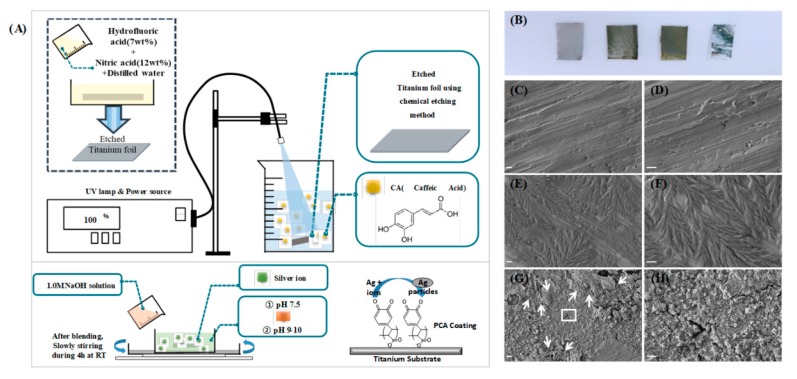
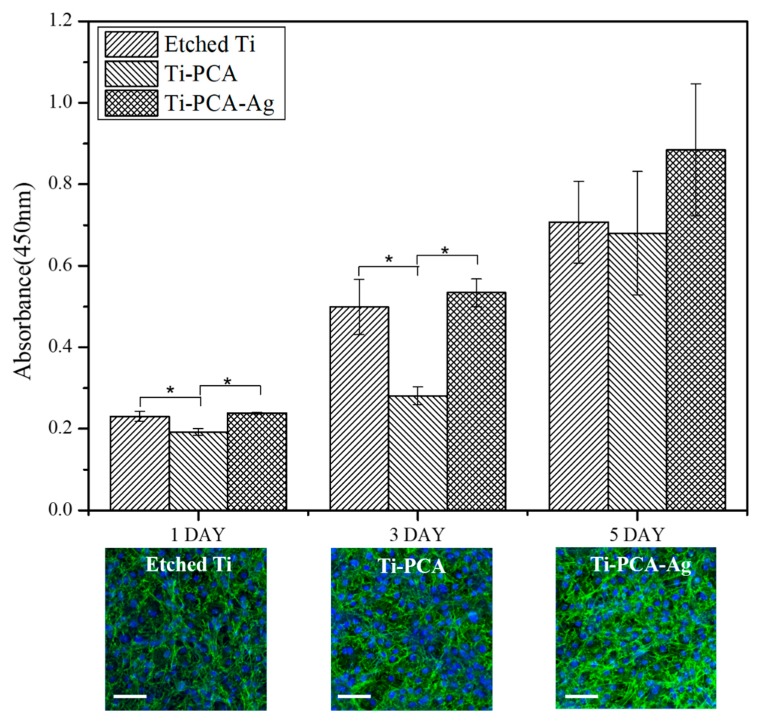
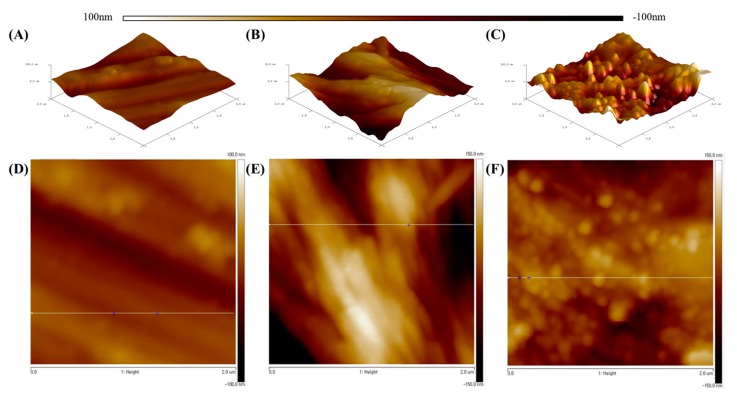
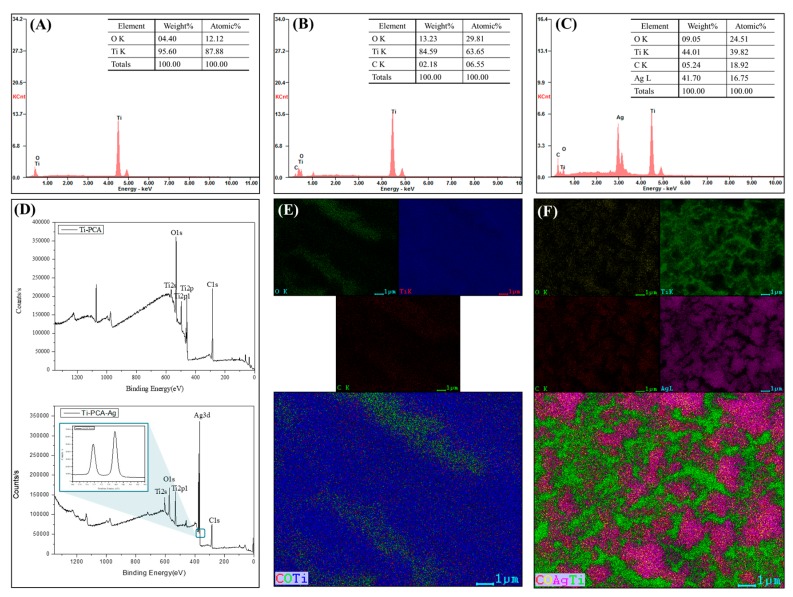
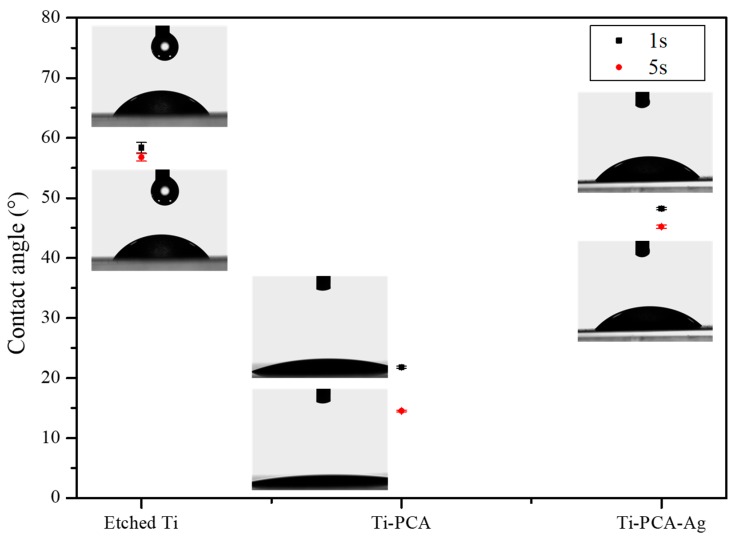
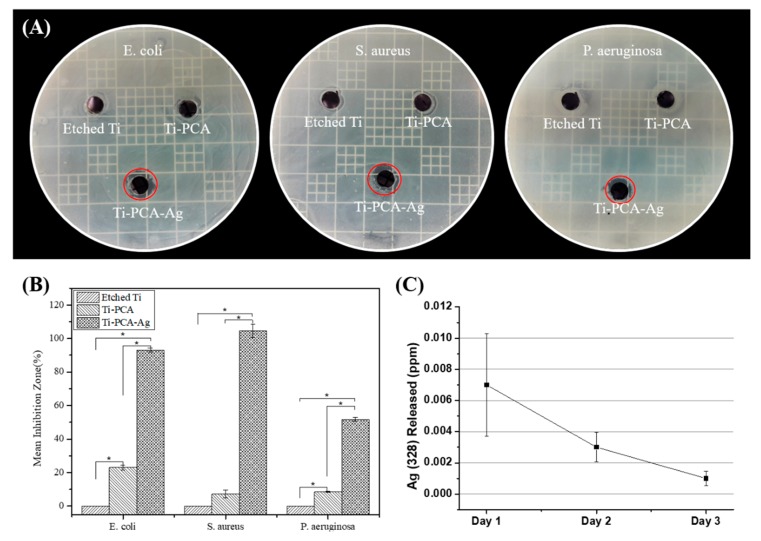
Titanium implants are extensively used in biomedical applications due to their excellent biocompatibility, corrosion resistance, and superb mechanical stability. In this work, we present the use of polycaffeic acid (PCA) to immobilize metallic silver on the surface of titanium materials to prevent implant bacterial infection. Caffeic acid is a plant-derived phenolic compound, rich in catechol moieties and it can form functional coatings using alkaline buffers and with UV irradiation. This combination can trigger oxidative polymerization and deposition on the surface of metallic substrates. Using PCA can also give advantages in bone implants in decreasing inflammation by decelerating macrophage and osteoclast activity. Here, chemical and physical properties were investigated using FE-SEM, EDS, XPS, AFM, and contact angle. The in vitro biocompatibility and antibacterial studies show that PCA with metallic silver can inhibit bacterial growth, and proliferation of MC-3T3 cells was observed. Therefore, our results suggest that the introduced approach can be considered as a potential method for functional implant coating application in the orthopedic field.
钛植入物因其优异的生物相容性、耐腐蚀性和出色的机械稳定性而广泛应用于生物医学领域。在这项工作中,我们展示了使用聚咖啡酸(PCA)将金属银固定在钛材料表面以防止植入物细菌感染。咖啡酸是一种植物来源的酚类化合物,富含邻苯二酚基团,它可以使用碱性缓冲液并通过紫外线照射形成功能涂层。这种组合可以引发氧化聚合并沉积在金属基材表面。使用PCA还可以在骨植入物中通过减缓巨噬细胞和破骨细胞的活性来减少炎症。在此,使用场发射扫描电子显微镜(FE-SEM)、能谱仪(EDS)、X射线光电子能谱(XPS)、原子力显微镜(AFM)和接触角对化学和物理性质进行了研究。体外生物相容性和抗菌研究表明,含金属银的PCA可以抑制细菌生长,并观察到MC-3T3细胞的增殖。因此,我们的结果表明,所引入的方法可被视为骨科领域功能性植入物涂层应用的一种潜在方法。