Park So-Yeon, Choi Jang-Hyun, Nam Jeong-Seok
School of Life Sciences, Gwangju Institute of Science and Technology, Gwangju 61005, Korea.
Cell Logistics Research Center, Gwangju Institute of Science and Technology, Gwangju 61005, Korea.
Cancers (Basel). 2019 Jul 9;11(7):965. doi: 10.3390/cancers11070965.
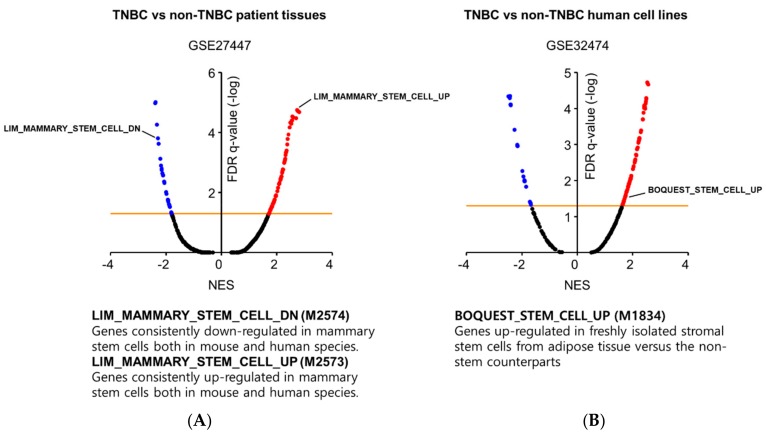
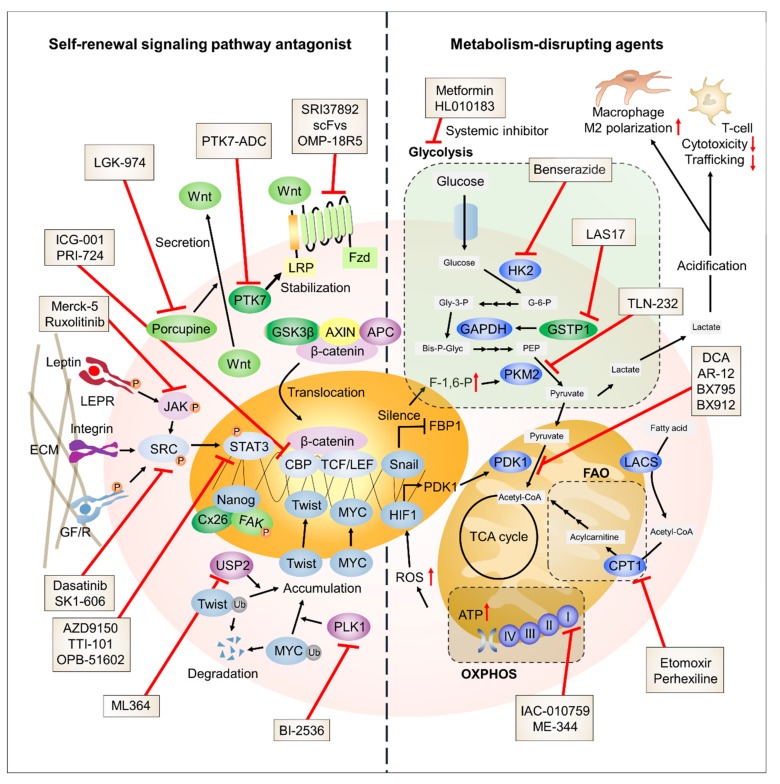
Triple-negative breast cancer (TNBC) is a highly aggressive form of breast cancer that lacks targeted therapy options, and patients diagnosed with TNBC have poorer outcomes than patients with other breast cancer subtypes. Emerging evidence suggests that breast cancer stem cells (BCSCs), which have tumor-initiating potential and possess self-renewal capacity, may be responsible for this poor outcome by promoting therapy resistance, metastasis, and recurrence. TNBC cells have been consistently reported to display cancer stem cell (CSC) signatures at functional, molecular, and transcriptional levels. In recent decades, CSC-targeting strategies have shown therapeutic effects on TNBC in multiple preclinical studies, and some of these strategies are currently being evaluated in clinical trials. Therefore, understanding CSC biology in TNBC has the potential to guide the discovery of novel therapeutic agents in the future. In this review, we focus on the self-renewal signaling pathways (SRSPs) that are aberrantly activated in TNBC cells and discuss the specific signaling components that are involved in the tumor-initiating potential of TNBC cells. Additionally, we describe the molecular mechanisms shared by both TNBC cells and CSCs, including metabolic plasticity, which enables TNBC cells to switch between metabolic pathways according to substrate availability to meet the energetic and biosynthetic demands for rapid growth and survival under harsh conditions. We highlight CSCs as potential key regulators driving the aggressiveness of TNBC. Thus, the manipulation of CSCs in TNBC can be a targeted therapeutic strategy for TNBC in the future.
三阴性乳腺癌(TNBC)是一种侵袭性很强的乳腺癌,缺乏靶向治疗方案,与其他乳腺癌亚型的患者相比,被诊断为TNBC的患者预后较差。新出现的证据表明,具有肿瘤起始潜能和自我更新能力的乳腺癌干细胞(BCSCs)可能通过促进治疗耐药性、转移和复发导致这种不良预后。一直有报道称,TNBC细胞在功能、分子和转录水平上表现出癌症干细胞(CSC)特征。近几十年来,针对CSC的策略在多项临床前研究中对TNBC显示出治疗效果,其中一些策略目前正在临床试验中进行评估。因此,了解TNBC中的CSC生物学特性有可能在未来指导新型治疗药物的发现。在这篇综述中,我们重点关注在TNBC细胞中异常激活的自我更新信号通路(SRSPs),并讨论参与TNBC细胞肿瘤起始潜能的特定信号成分。此外,我们描述了TNBC细胞和CSC共有的分子机制,包括代谢可塑性,这使TNBC细胞能够根据底物可用性在代谢途径之间切换,以满足在恶劣条件下快速生长和存活的能量和生物合成需求。我们强调CSC是驱动TNBC侵袭性的潜在关键调节因子。因此,操纵TNBC中的CSC可能成为未来TNBC的一种靶向治疗策略。