Department of Radiation Oncology, Division of Molecular Radiation Biology, UT Southwestern Medical Center, Dallas, TX 75390.
Department of Thoracic Head and Neck Medical Oncology, UT MD Anderson Cancer Center, Houston, TX 77030.
Neoplasia. 2019 Sep;21(9):849-862. doi: 10.1016/j.neo.2019.06.004. Epub 2019 Jul 18.
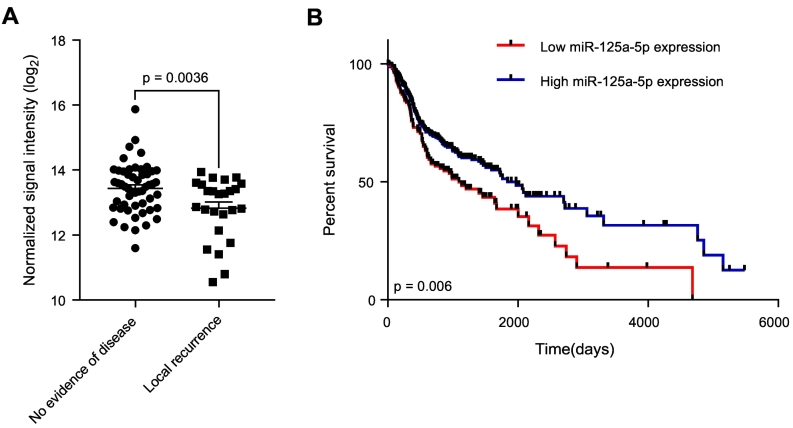
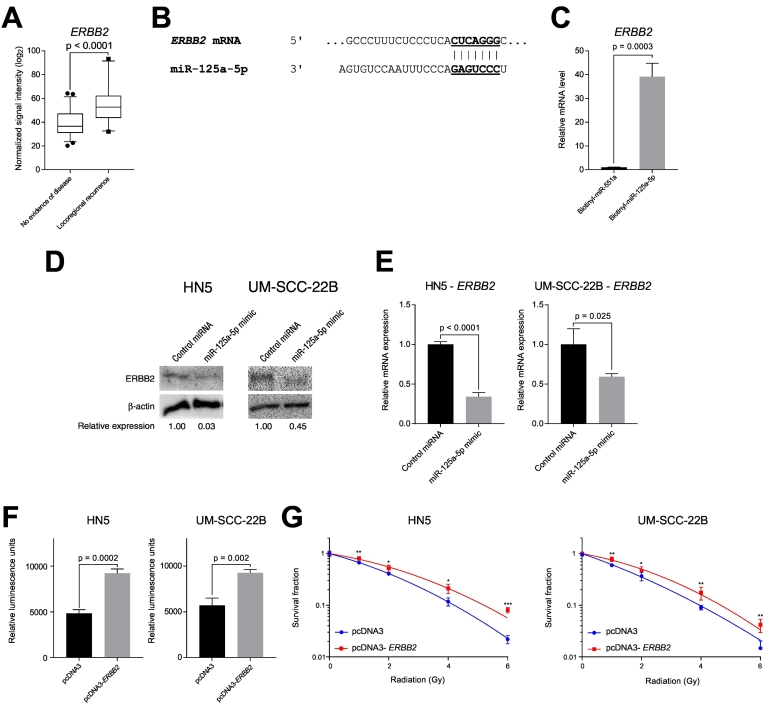
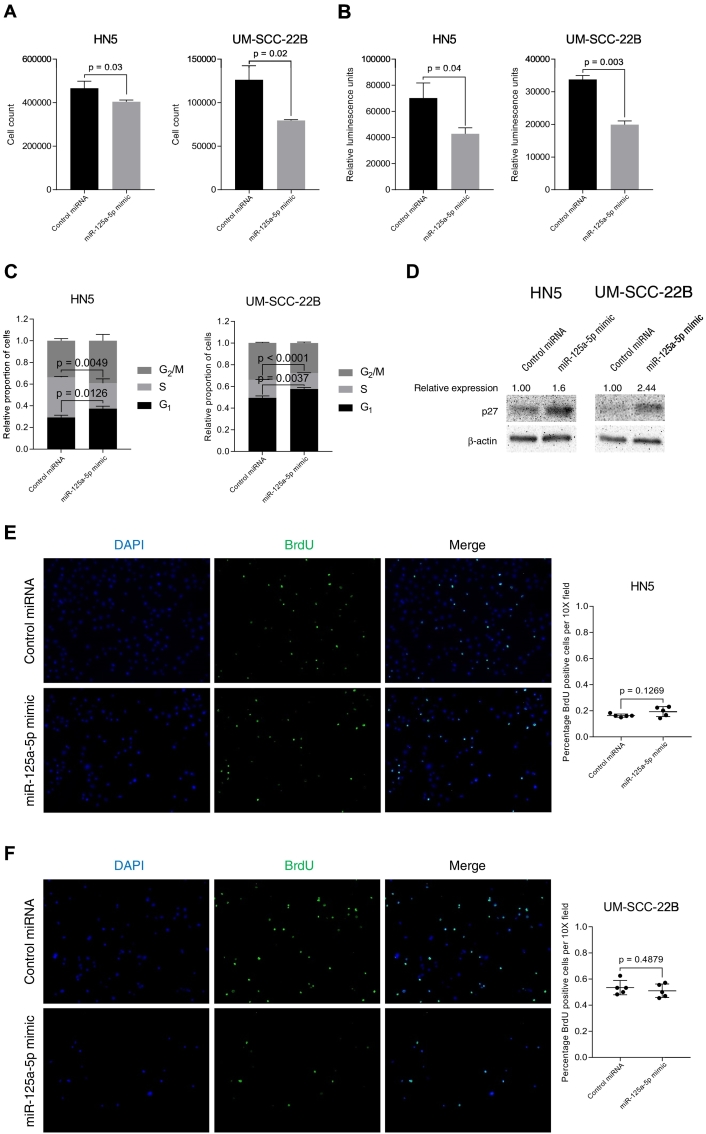
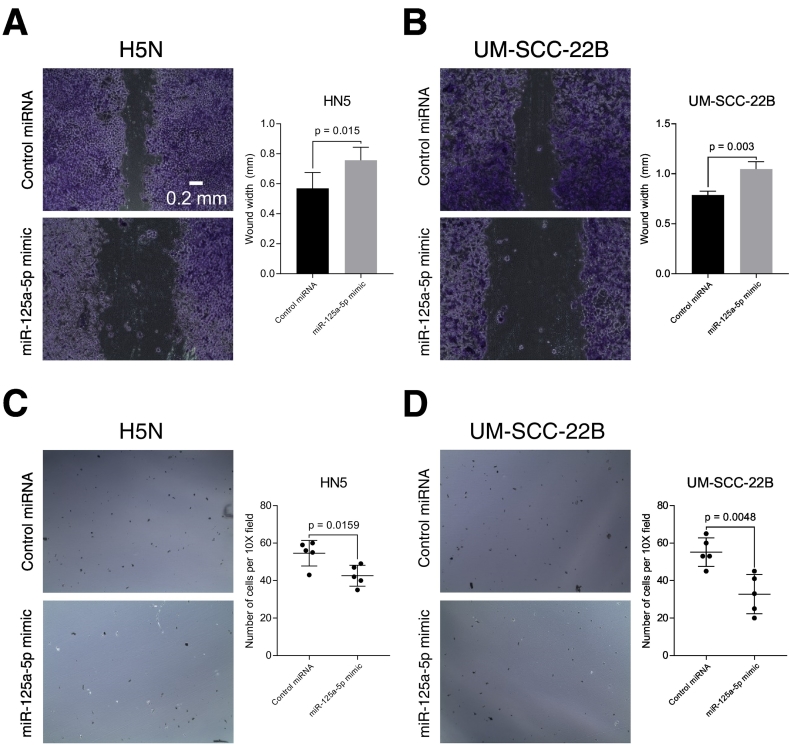
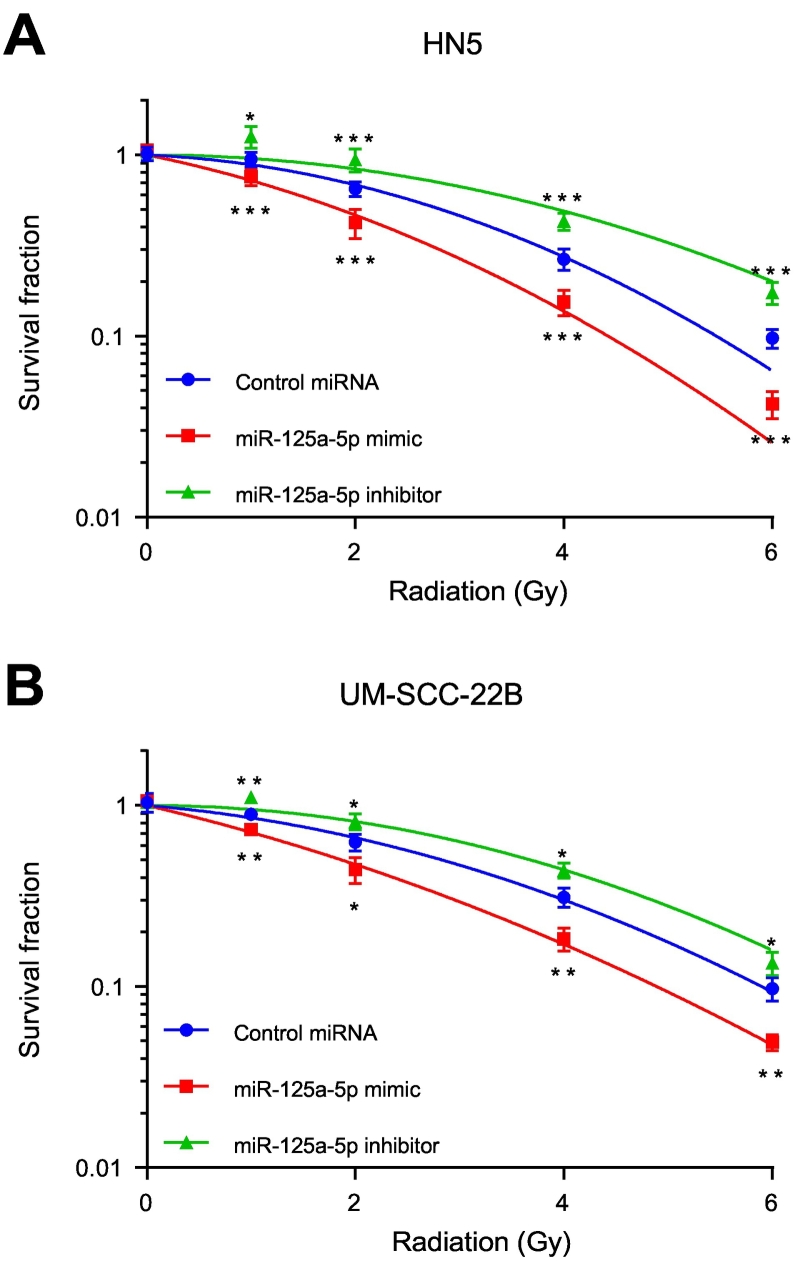
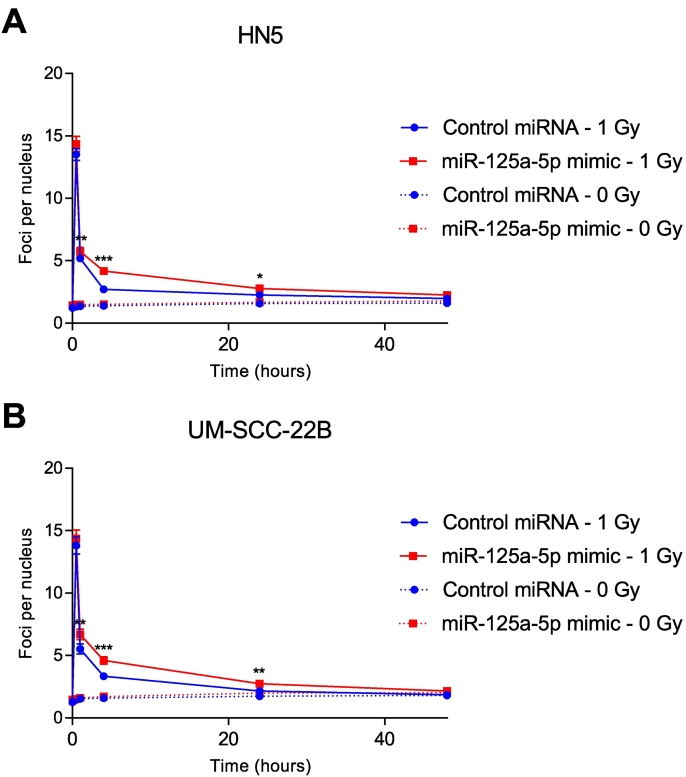
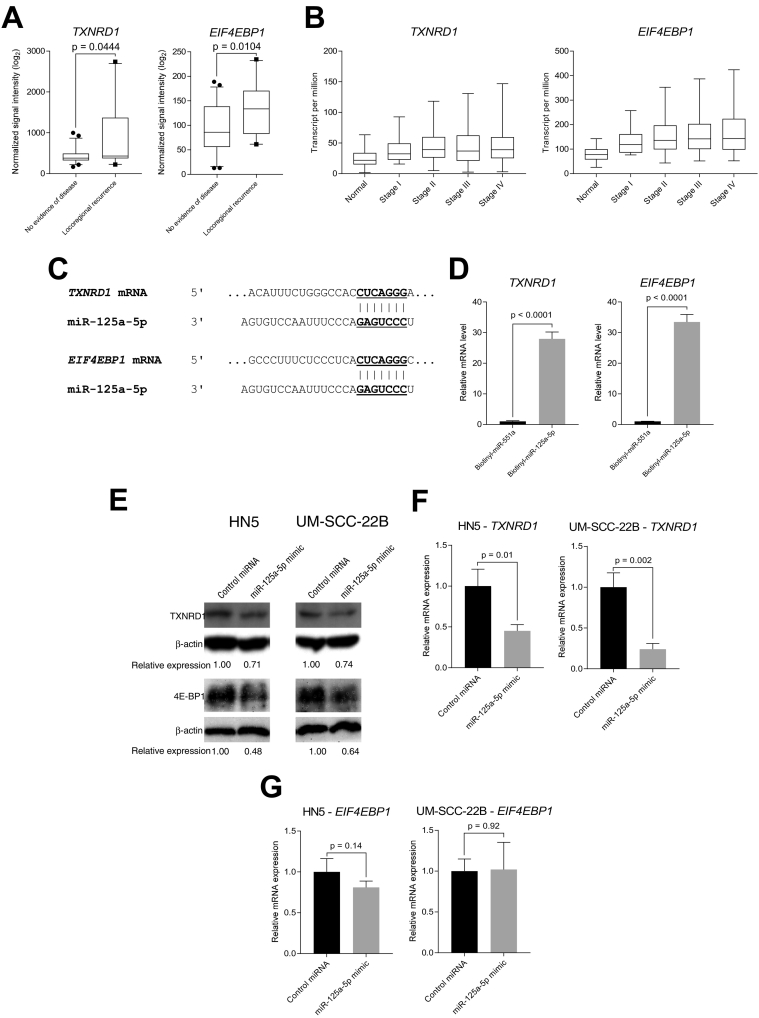
MicroRNAs (miRNAs) are short single-stranded RNAs, measuring 21 to 23 nucleotides in length and regulate gene expression at the post-transcriptional level through mRNA destabilization or repressing protein synthesis. Dysregulation of miRNAs can lead to tumorigenesis through changes in regulation of key cellular processes such as cell proliferation, cell survival, and apoptosis. miR-125a-5p has been implicated as a tumor suppressor miRNA in malignancies such as non-small cell lung cancer and colon cancer. However, the role of miR-125a-5p has not been fully investigated in head and neck squamous cell carcinoma (HNSCC). We performed microRNA microarray profiling of HNSCC tumor samples obtained from a prospective clinical trial evaluating the role of postoperative radiotherapy in head and neck cancer. We also mined through The Cancer Genome Atlas to evaluate expression and survival data. Biological experiments, including cell proliferation, flow cytometry, cell migration and invasion, clonogenic survival, and fluorescent microscopy, were conducted using HN5 and UM-SCC-22B cell lines. miR-125a-5p downregulation was associated with recurrent disease in a panel of high-risk HNSCC and then confirmed poor survival associated with low expression in HNSCC via the Cancer Genome Atlas, suggesting that miR-125a-5p acts as a tumor suppressor miRNA. We then demonstrated that miR-125a-5p regulates cell proliferation through cell cycle regulation at the G/S transition. We also show that miR-125a-5p can alter cell migration and modulate sensitivity to ionizing radiation. Finally, we identified putative mRNA targets of miR-125a-5p, including ERBB2, EIF4EBP1, and TXNRD1, which support the tumor suppressive mechanism of miR-125a-5p. Functional validation of ERBB2 suggests that miR-125a-5p affects cell proliferation and sensitivity to ionizing radiation, in part, through ERBB2. Our data suggests that miR-125a-5p acts as a tumor suppressor miRNA, has potential as a diagnostic tool and may be a potential therapeutic target for the management and treatment of squamous cell carcinoma of the head and neck.
微小 RNA(miRNAs)是短链单链 RNA,长度为 21 到 23 个核苷酸,通过 mRNA 不稳定性或抑制蛋白质合成在转录后水平调节基因表达。miRNAs 的失调可通过改变细胞增殖、细胞存活和细胞凋亡等关键细胞过程的调节导致肿瘤发生。miR-125a-5p 已被认为是非小细胞肺癌和结肠癌等恶性肿瘤的肿瘤抑制 miRNA。然而,miR-125a-5p 在头颈部鳞状细胞癌(HNSCC)中的作用尚未得到充分研究。我们对头颈癌术后放疗作用的前瞻性临床试验中获得的 HNSCC 肿瘤样本进行了 miRNA 微阵列分析。我们还通过癌症基因组图谱进行了挖掘,以评估表达和生存数据。使用 HN5 和 UM-SCC-22B 细胞系进行了包括细胞增殖、流式细胞术、细胞迁移和侵袭、集落形成存活和荧光显微镜检查在内的生物学实验。miR-125a-5p 的下调与高危 HNSCC 患者的疾病复发有关,随后通过癌症基因组图谱证实了 miR-125a-5p 低表达与 HNSCC 患者的不良预后相关,这表明 miR-125a-5p 作为肿瘤抑制 miRNA 发挥作用。然后,我们证明 miR-125a-5p 通过 G/S 转换时的细胞周期调节来调节细胞增殖。我们还表明 miR-125a-5p 可以改变细胞迁移并调节对电离辐射的敏感性。最后,我们确定了 miR-125a-5p 的潜在 mRNA 靶标,包括 ERBB2、EIF4EBP1 和 TXNRD1,这些靶标支持 miR-125a-5p 的肿瘤抑制机制。对 ERBB2 的功能验证表明,miR-125a-5p 通过 ERBB2 影响细胞增殖和对电离辐射的敏感性。我们的数据表明,miR-125a-5p 作为肿瘤抑制 miRNA 发挥作用,具有作为诊断工具的潜力,并可能成为头颈部鳞状细胞癌的管理和治疗的潜在治疗靶点。