The Third Affiliated Hospital of Zhengzhou University, Zhengzhou City, China.
J Ovarian Res. 2019 Jul 20;12(1):67. doi: 10.1186/s13048-019-0539-8.
Women with vanishing twin syndrome are associated with increased risks of adverse neonatal outcomes, such as preterm birth (PTB) and low birthweight (LBW), compared with those in singleton live births following single embryo transfer (SET) in assisted reproductive technology (ART).
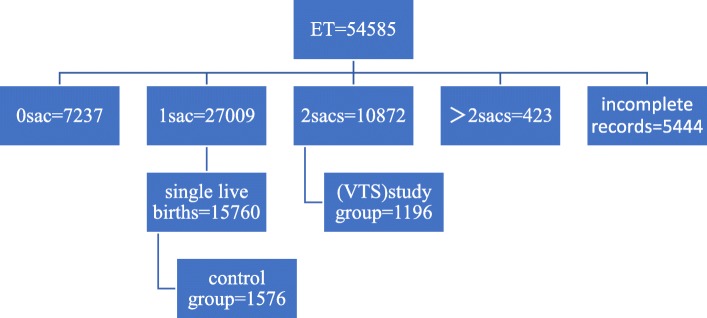
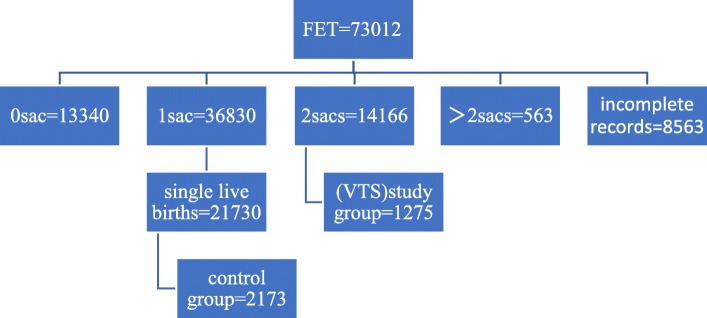
Anonymized data on all cycles performed in China were obtained from the Reproductive Medicine Department at the Third Affiliated Hospital of Zhengzhou University, which had involved 127597 cycles following double embryos transfer (DET), including 54585 fresh embryos transfer (ET) cycles and 73012 frozen embryos transfer (FET) cycles. In addition, the obstetric outcomes, such as gestation age, PTB, small for gestation age (SGA), birthweight (BW), LBW, congenital malformation, pediatric admission and Neonatal Intensive Care Unit (NICU) admission in the fresh ET and FET cycles, were analyzed. Moreover, logistic regression analysis was performed to adjust the confounders, including age of women, body weight index (BMI), value of AMH, infertile years, current cycle, antral follicles, cause of infertility, number of oocytes retrieved, endometrial thickness at the date of transplantation, number of high-quality embryos, and embryo stage.
In the fresh ET cycles, the BW and gestational age in study group were lower than those in control group, which were (2962.4 ± 563.1vs. 3104.9 ± 498. 5, p = 0.000) and (262.8 ± 8.4 vs. 268.9 ± 13.9, p = 0.000), respectively. Relative to control group, the study group was linked with increased risks of PTB (adjusted odds ratio (aOR) 2.45, 95% CI:1.98-3.03, adjusted p = 0.000), LBW (aOR2.11, 95% CI:1.67-2.65, adjusted p = 0.000), pediatric admission (aOR 2.55, 95% CI2.07-3.13, adjusted p = 0.000), and NICU admission (aOR 1.98, 95% CI1.32-2.96, adjusted p = 0.001), but there were no statistically significant differences in the risks of SGA (aOR 1.09, 95% CI0.82-1.45, adjusted p = 0.960) and congenital malformation (aOR 0.94, 95% CI0.53-1.68, adjusted p = 0.640) between the two groups. In the FET cycles, the gestational age and BW in study group were lower than those in control group, which were (263.0 ± 15.7vs. 273.0 ± 10.5, p = 0.000) and (3099 ± 662.1vs. 3352 ± 671.5), respectively. The study group was associated with increased risks of PTB (aOR2. 45, 95% CI: 2.23-3.43, adjusted p = 0.000), LBW (aOR 2.67, 95% CI: 2.13-3.34, adjusted p = 0.000), pediatric admission (aOR2.62, 95% CI2.14-3.21, adjusted p = 0.000), and NICU admission (aOR 2.22, 95% CI1.43, 3.46, adjusted p = 0.001) compared with those in control group, but differences in the risks of SGA (aOR 0.98, 95% CI0.71-1.36, adjusted p = 0.730) and congenital malformation (aOR 0.99, 95% CI 0.60,1.63, adjusted p = 0.940) between the two groups were not statistically significant.
Our study finds that singleton live births with VTS have higher risks of LBW, PTB, pediatric admission and NICU admission than those without VTS in both the fresh and frozen cycles, even after adjusting for confounders. However, no increased risks of SGA or congenital malformation are observed in singleton live births in both the fresh and frozen ART cycles following DET.
与单胎活产相比,接受双胚胎移植(DET)后行单胚胎移植(SET)的妇女发生不良新生儿结局(如早产和低出生体重)的风险增加,这些结局包括早产(PTB)和低出生体重(LBW)。
本研究获得了郑州大学第三附属医院生殖医学科的所有周期的匿名数据,该科共进行了 127597 个周期的辅助生殖技术(ART),包括 54585 个新鲜胚胎移植(ET)周期和 73012 个冷冻胚胎移植(FET)周期。此外,还分析了新鲜 ET 和 FET 周期的围产期结局,如胎龄、PTB、小于胎龄儿(SGA)、出生体重(BW)、LBW、先天性畸形、儿科入院和新生儿重症监护病房(NICU)入院。此外,还进行了 logistic 回归分析,以调整混杂因素,包括妇女的年龄、体重指数(BMI)、抗苗勒管激素(AMH)值、不孕年限、当前周期、窦卵泡数、不孕原因、获卵数、移植日子宫内膜厚度、高质量胚胎数和胚胎阶段。
在新鲜 ET 周期中,研究组的 BW 和胎龄均低于对照组,分别为(2962.4±563.1 vs. 3104.9±498.5,p=0.000)和(262.8±8.4 vs. 268.9±13.9,p=0.000)。与对照组相比,研究组发生 PTB(调整优势比[aOR]2.45,95%CI:1.98-3.03,调整 p=0.000)、LBW(aOR2.11,95%CI:1.67-2.65,调整 p=0.000)、儿科入院(aOR 2.55,95%CI2.07-3.13,调整 p=0.000)和 NICU 入院(aOR 1.98,95%CI1.32-2.96,调整 p=0.001)的风险增加,但 SGA(aOR 1.09,95%CI0.82-1.45,调整 p=0.960)和先天性畸形(aOR 0.94,95%CI0.53-1.68,调整 p=0.640)的风险无统计学差异。在 FET 周期中,研究组的胎龄和 BW 均低于对照组,分别为(263.0±15.7 vs. 273.0±10.5,p=0.000)和(3099±662.1 vs. 3352±671.5)。与对照组相比,研究组发生 PTB(aOR2.45,95%CI:2.23-3.43,调整 p=0.000)、LBW(aOR 2.67,95%CI:2.13-3.34,调整 p=0.000)、儿科入院(aOR2.62,95%CI2.14-3.21,调整 p=0.000)和 NICU 入院(aOR 2.22,95%CI1.43-3.46,调整 p=0.001)的风险增加,但 SGA(aOR 0.98,95%CI0.71-1.36,调整 p=0.730)和先天性畸形(aOR 0.99,95%CI0.60,1.63,调整 p=0.940)的风险无统计学差异。
本研究发现,与无 VTS 的单胎活产相比,新鲜和冷冻周期中 VTS 单胎活产发生 LBW、PTB、儿科入院和 NICU 入院的风险更高,即使调整了混杂因素也是如此。然而,在新鲜和冷冻 DET 后,单胎活产的 SGA 或先天性畸形风险并未增加。