Purdue Institute for Inflammation, Immunology and Infectious Disease and Department of Biological Sciences, Purdue University, West Lafayette, IN, USA.
The Key Laboratory of Innate Immune Biology of Fujian Province, Provincial University Key Laboratory of Cellular Stress Response and Metabolic Regulation, Biomedical Research Center of South China, Key Laboratory of OptoElectronic Science and Technology for Medicine of the Ministry of Education, College of Life Sciences, Fujian Normal University, Fuzhou, China.
Nature. 2019 Aug;572(7769):387-391. doi: 10.1038/s41586-019-1439-1. Epub 2019 Jul 22.
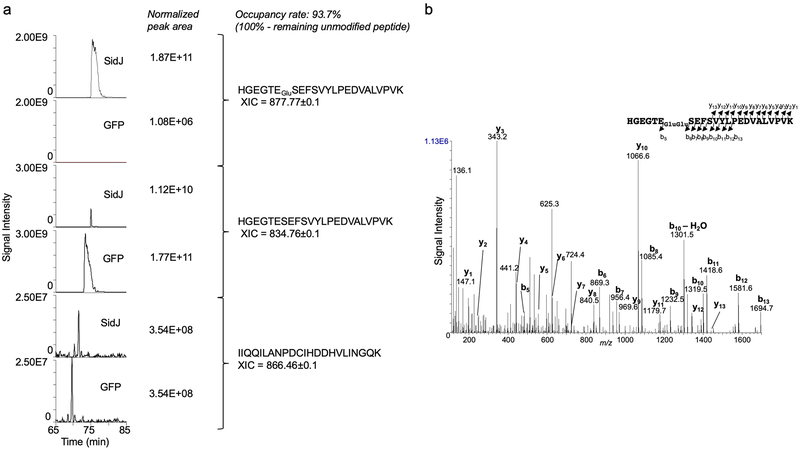
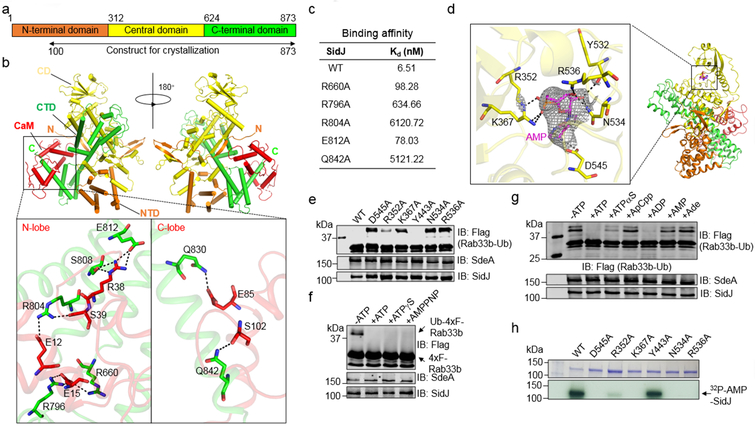
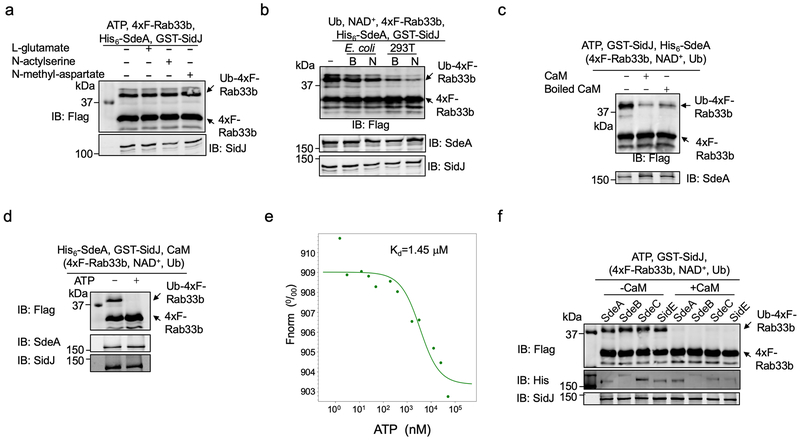
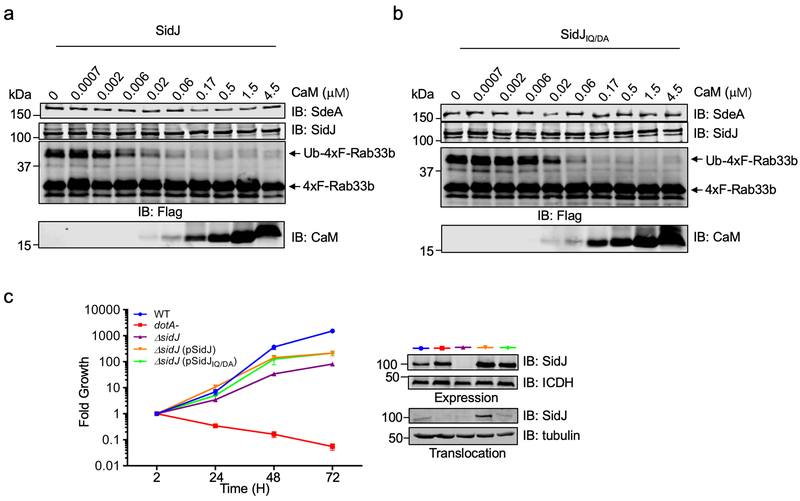
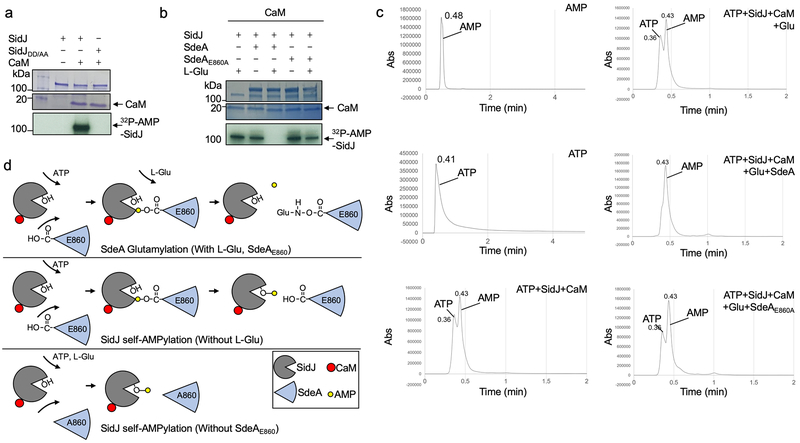
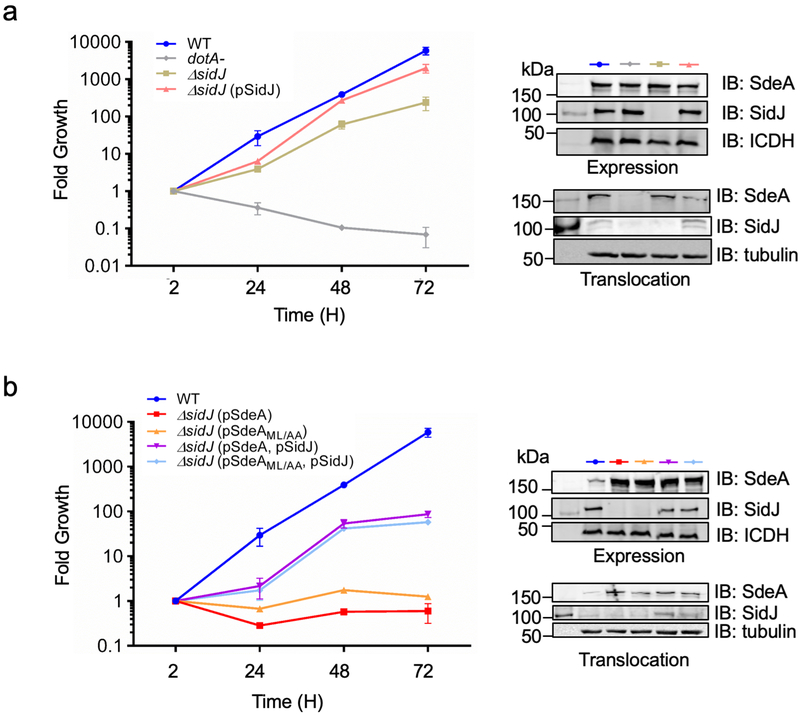
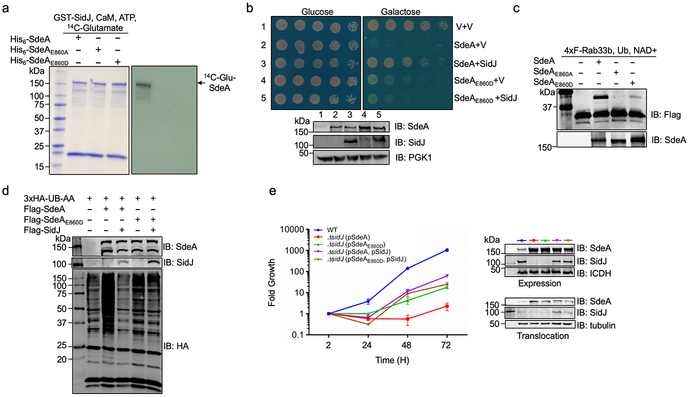
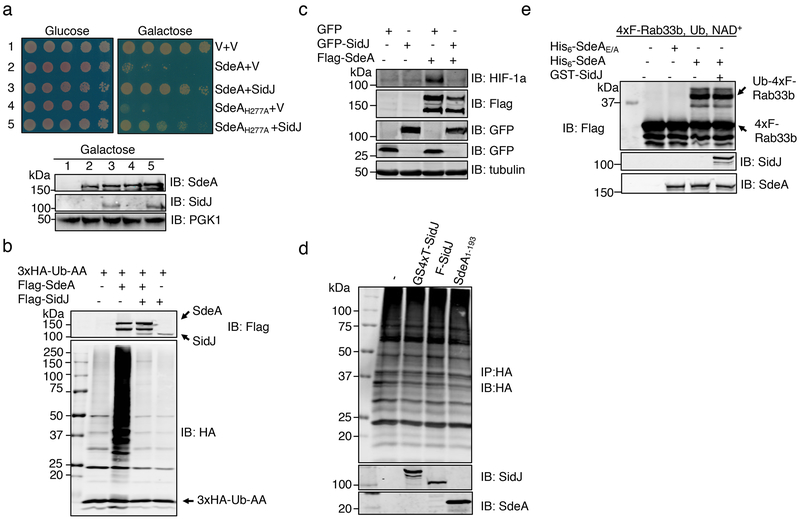
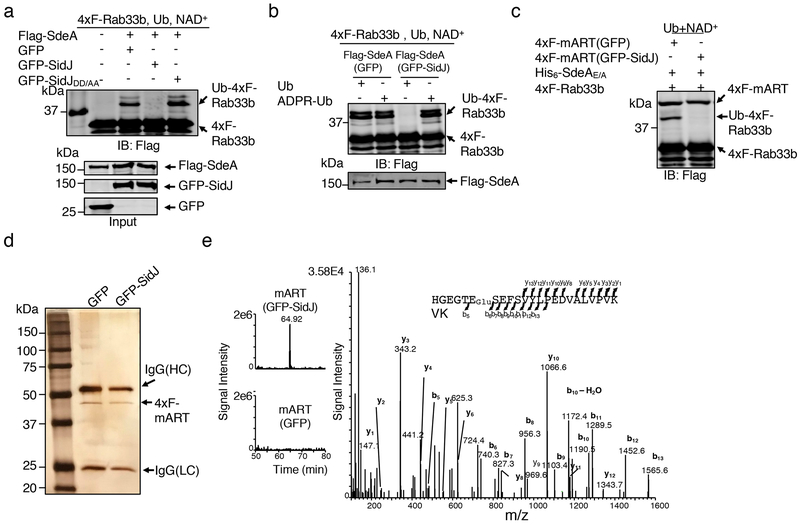
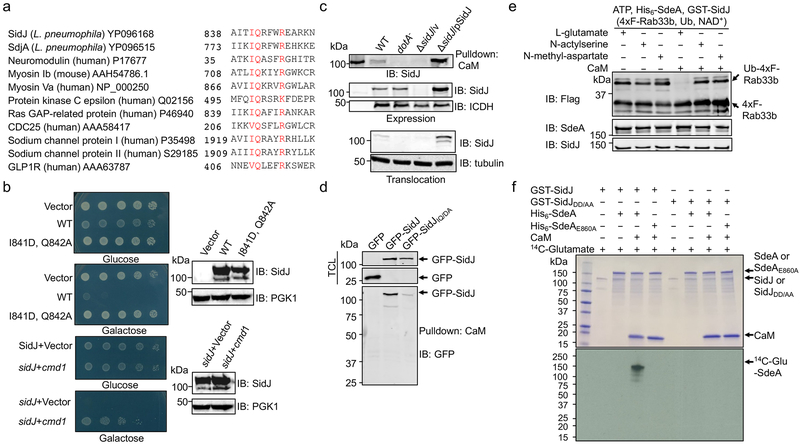
The bacterial pathogen Legionella pneumophila creates an intracellular niche permissive for its replication by extensively modulating host-cell functions using hundreds of effector proteins delivered by its Dot/Icm secretion system. Among these, members of the SidE family (SidEs) regulate several cellular processes through a unique phosphoribosyl ubiquitination mechanism that bypasses the canonical ubiquitination machinery. The activity of SidEs is regulated by another Dot/Icm effector known as SidJ; however, the mechanism of this regulation is not completely understood. Here we demonstrate that SidJ inhibits the activity of SidEs by inducing the covalent attachment of glutamate moieties to SdeA-a member of the SidE family-at E860, one of the catalytic residues that is required for the mono-ADP-ribosyltransferase activity involved in ubiquitin activation. This inhibition by SidJ is spatially restricted in host cells because its activity requires the eukaryote-specific protein calmodulin (CaM). We solved a structure of SidJ-CaM in complex with AMP and found that the ATP used in this reaction is cleaved at the α-phosphate position by SidJ, which-in the absence of glutamate or modifiable SdeA-undergoes self-AMPylation. Our results reveal a mechanism of regulation in bacterial pathogenicity in which a glutamylation reaction that inhibits the activity of virulence factors is activated by host-factor-dependent acyl-adenylation.
细菌病原体嗜肺军团菌通过其 Dot/Icm 分泌系统输送的数百种效应蛋白,广泛调节宿主细胞功能,从而创造出一个允许其复制的细胞内小生境。在这些效应蛋白中,SidE 家族(SidEs)成员通过一种独特的磷酸核糖基泛素化机制调节几种细胞过程,该机制绕过了典型的泛素化机制。SidE 的活性受另一种称为 SidJ 的 Dot/Icm 效应物调节;然而,这种调节的机制尚不完全清楚。在这里,我们证明 SidJ 通过将谷氨酸部分共价连接到 SdeA(SidE 家族的一员)上的 E860 来抑制 SidE 的活性,该反应需要催化残基之一,这对于涉及泛素激活的单 ADP-核糖基转移酶活性是必需的。SidJ 的这种抑制作用在宿主细胞中是空间受限的,因为其活性需要真核生物特异性蛋白钙调蛋白(CaM)。我们解决了 SidJ-CaM 与 AMP 复合物的结构,并发现该反应中使用的 ATP 在α-磷酸位置被 SidJ 切割,在没有谷氨酸或可修饰的 SdeA 的情况下,SidJ 会发生自身 AMP 化。我们的结果揭示了一种细菌致病性的调节机制,其中抑制毒力因子活性的谷氨酸化反应是由宿主因子依赖性酰化-腺苷酸化激活的。