Department of Social, Health and Organisational Psychology, Utrecht University, PO Box 80140, 3508TC, Utrecht, The Netherlands.
Department of Marketing, University of Groningen, Nettelbosje 2, 9747AE, Groningen, The Netherlands.
BMC Public Health. 2019 Jul 22;19(1):974. doi: 10.1186/s12889-019-7323-y.
The current field experiment demonstrates the effectiveness of nudging to promote healthy food choices.
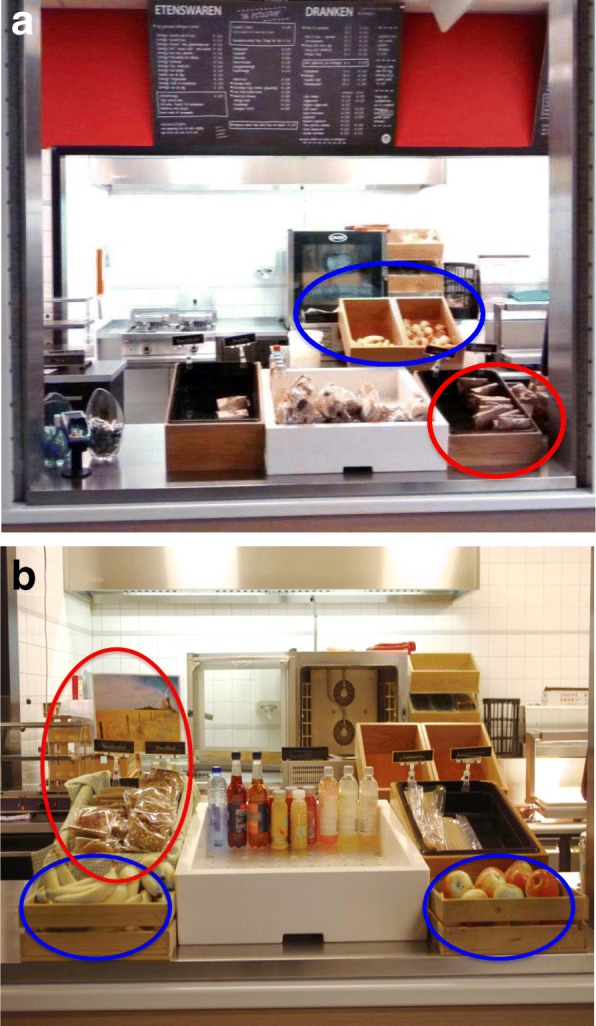
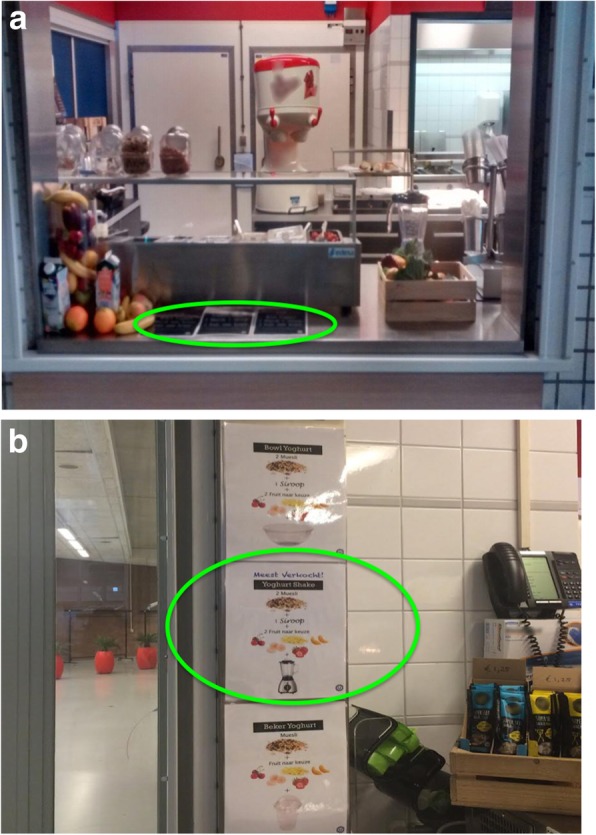
Three types of nudges were implemented at a take-away food vendor: 1) an accessibility nudge that placed fruits at the front counter; 2) a salience nudge that presented healthy bread rolls to be more visually attractive; and 3) a social proof nudge that conveyed yoghurt as a popular choice. We additionally assessed whether nudging effects would remain robust when a disclosure message was included. The field experiment was conducted over a seven-week period. The measured outcome was the sales of the targeted healthy food products.
The accessibility nudge significantly increased the sales of the fresh fruits. The impact of the salience nudge was limited presumably due to existing preferences or habits that typically facilitate bread purchases. As the sales of the yoghurt shakes remained consistently low over the seven-week period the impact of the social proof nudge remained unexamined. Critically, disclosing the purpose of the nudges did not interfere with effects.
Current findings suggest nudging as an effective strategy for healthy food promotion, and offer implications for topical debate regarding the ethics of nudges.
本次现场实验证明了轻推策略在促进健康食品选择方面的有效性。
在一家外卖食品供应商实施了三种类型的轻推策略:1)可及性轻推,将水果放在前台;2)凸显性轻推,使健康面包卷更具视觉吸引力;3)社会认同轻推,将酸奶传达为一种受欢迎的选择。我们还评估了当包含披露信息时,轻推效果是否仍然稳健。现场实验持续了七周。测量的结果是目标健康食品的销售情况。
可及性轻推显著增加了新鲜水果的销量。凸显性轻推的影响有限,可能是由于现有的偏好或习惯通常有利于面包购买。由于酸奶奶昔的销售在七周内一直保持较低水平,社会认同轻推的影响仍未得到检验。至关重要的是,披露轻推的目的并没有干扰效果。
目前的研究结果表明,轻推是促进健康食品的有效策略,并为有关轻推伦理的热门辩论提供了启示。