• 文献检索
  • 文档翻译
  • 深度研究
  • 学术资讯
  • Suppr Zotero 插件Zotero 插件
  • 邀请有礼
  • 套餐&价格
  • 历史记录
应用&插件
Suppr Zotero 插件Zotero 插件浏览器插件Mac 客户端Windows 客户端微信小程序
定价
高级版会员购买积分包购买API积分包
服务
文献检索文档翻译深度研究API 文档MCP 服务
关于我们
关于 Suppr公司介绍联系我们用户协议隐私条款
关注我们

Suppr 超能文献

核心技术专利:CN118964589B侵权必究
粤ICP备2023148730 号-1Suppr @ 2026

文献检索

告别复杂PubMed语法,用中文像聊天一样搜索,搜遍4000万医学文献。AI智能推荐,让科研检索更轻松。

立即免费搜索

文件翻译

保留排版,准确专业,支持PDF/Word/PPT等文件格式,支持 12+语言互译。

免费翻译文档

深度研究

AI帮你快速写综述,25分钟生成高质量综述,智能提取关键信息,辅助科研写作。

立即免费体验

猕猴更喜欢关注分形维数更高的视觉模式轮廓。

Macaques preferentially attend to visual patterns with higher fractal dimension contours.

机构信息

Animal Behavior Graduate Group, University of California Davis, Davis, United States.

Department of Population Health and Reproduction, School of Veterinary Medicine, University of California Davis, Davis, United States.

出版信息

Sci Rep. 2019 Jul 22;9(1):10592. doi: 10.1038/s41598-019-46799-0.

DOI:10.1038/s41598-019-46799-0
PMID:31332197
原文链接:https://pmc.ncbi.nlm.nih.gov/articles/PMC6646383/
Abstract

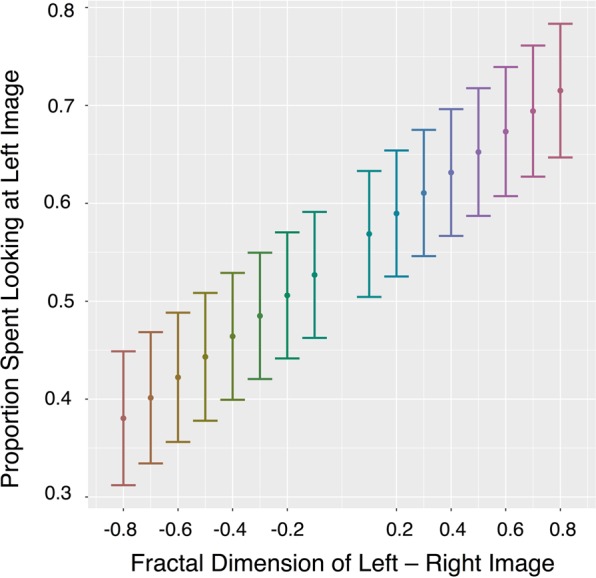
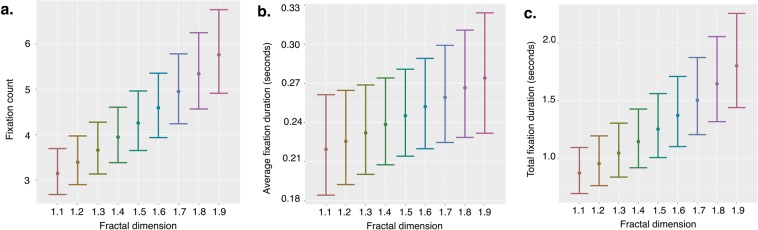
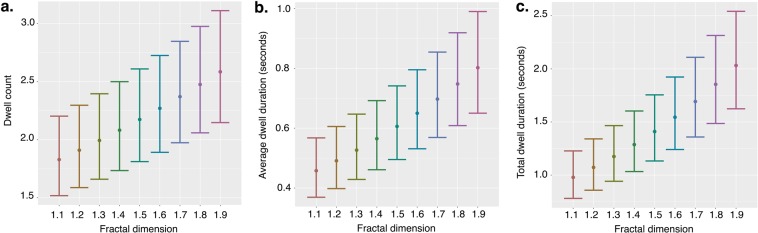
Animals' sensory systems evolved to efficiently process information from their environmental niches. Niches often include irregular shapes and rough textures (e.g., jagged terrain, canopy outlines) that must be navigated to find food, escape predators, and master other fitness-related challenges. For most primates, vision is the dominant sensory modality and thus, primates have evolved systems for processing complicated visual stimuli. One way to quantify information present in visual stimuli in natural scenes is evaluating their fractal dimension. We hypothesized that sensitivity to complicated geometric forms, indexed by fractal dimension, is an evolutionarily conserved capacity, and tested this capacity in rhesus macaques (Macaca mulatta). Monkeys viewed paired black and white images of simulated self-similar contours that systematically varied in fractal dimension while their attention to the stimuli was measured using noninvasive infrared eye tracking. They fixated more frequently on, dwelled for longer durations on, and had attentional biases towards images that contain boundary contours with higher fractal dimensions. This indicates that, like humans, they discriminate between visual stimuli on the basis of fractal dimension and may prefer viewing informationally rich visual stimuli. Our findings suggest that sensitivity to fractal dimension may be a wider ability of the vertebrate vision system.

摘要

动物的感觉系统进化到能够高效地处理来自其生态位的信息。生态位通常包括不规则的形状和粗糙的纹理(例如,锯齿状的地形、树冠轮廓),这些都必须加以导航才能找到食物、躲避捕食者,并掌握其他与适应能力相关的挑战。对于大多数灵长类动物来说,视觉是主导的感觉方式,因此灵长类动物已经进化出了处理复杂视觉刺激的系统。一种量化自然场景中视觉刺激中存在的信息量的方法是评估它们的分形维数。我们假设,对复杂几何形状的敏感性,由分形维数来衡量,是一种进化上保守的能力,并在恒河猴(Macaca mulatta)中测试了这种能力。猴子观看了成对的黑白模拟自相似轮廓图像,这些图像的分形维数系统地变化,而他们对刺激的注意力则通过非侵入性的红外眼动追踪来测量。他们更频繁地注视、更长时间地注视、并对具有更高分形维数的边界轮廓的图像产生注意力偏向。这表明,与人类一样,它们可以根据分形维数来区分视觉刺激,并且可能更喜欢观看信息丰富的视觉刺激。我们的研究结果表明,对分形维数的敏感性可能是脊椎动物视觉系统的更广泛的能力。
https://cdn.ncbi.nlm.nih.gov/pmc/blobs/cf99/6646383/91b78ad28537/41598_2019_46799_Fig6_HTML.jpg
https://cdn.ncbi.nlm.nih.gov/pmc/blobs/cf99/6646383/02f6aad3ae01/41598_2019_46799_Fig1_HTML.jpg
https://cdn.ncbi.nlm.nih.gov/pmc/blobs/cf99/6646383/327f6af50191/41598_2019_46799_Fig2_HTML.jpg
https://cdn.ncbi.nlm.nih.gov/pmc/blobs/cf99/6646383/505eaf5d0bb4/41598_2019_46799_Fig3_HTML.jpg
https://cdn.ncbi.nlm.nih.gov/pmc/blobs/cf99/6646383/2bc91b431279/41598_2019_46799_Fig4_HTML.jpg
https://cdn.ncbi.nlm.nih.gov/pmc/blobs/cf99/6646383/0a3b80efa453/41598_2019_46799_Fig5_HTML.jpg
https://cdn.ncbi.nlm.nih.gov/pmc/blobs/cf99/6646383/91b78ad28537/41598_2019_46799_Fig6_HTML.jpg
https://cdn.ncbi.nlm.nih.gov/pmc/blobs/cf99/6646383/02f6aad3ae01/41598_2019_46799_Fig1_HTML.jpg
https://cdn.ncbi.nlm.nih.gov/pmc/blobs/cf99/6646383/327f6af50191/41598_2019_46799_Fig2_HTML.jpg
https://cdn.ncbi.nlm.nih.gov/pmc/blobs/cf99/6646383/505eaf5d0bb4/41598_2019_46799_Fig3_HTML.jpg
https://cdn.ncbi.nlm.nih.gov/pmc/blobs/cf99/6646383/2bc91b431279/41598_2019_46799_Fig4_HTML.jpg
https://cdn.ncbi.nlm.nih.gov/pmc/blobs/cf99/6646383/0a3b80efa453/41598_2019_46799_Fig5_HTML.jpg
https://cdn.ncbi.nlm.nih.gov/pmc/blobs/cf99/6646383/91b78ad28537/41598_2019_46799_Fig6_HTML.jpg

相似文献

1
Macaques preferentially attend to visual patterns with higher fractal dimension contours.猕猴更喜欢关注分形维数更高的视觉模式轮廓。
Sci Rep. 2019 Jul 22;9(1):10592. doi: 10.1038/s41598-019-46799-0.
2
Seeing two faces together: preference formation in humans and rhesus macaques.同时看到两张面孔:人类和恒河猴的偏好形成
Anim Cogn. 2014 Sep;17(5):1107-19. doi: 10.1007/s10071-014-0742-3. Epub 2014 Mar 18.
3
Attentional biases and memory for emotional stimuli in men and male rhesus monkeys.男性和雄性恒河猴对情绪刺激的注意偏向与记忆
Anim Cogn. 2013 Nov;16(6):861-71. doi: 10.1007/s10071-013-0618-y. Epub 2013 Mar 5.
4
Longer fixation duration while viewing face images.观看面部图像时注视持续时间更长。
Exp Brain Res. 2006 May;171(1):91-8. doi: 10.1007/s00221-005-0248-y. Epub 2005 Nov 24.
5
Visual preferences for sex and status in female rhesus macaques.雌性恒河猴的性别和地位视觉偏好。
Anim Cogn. 2012 May;15(3):401-7. doi: 10.1007/s10071-011-0467-5. Epub 2011 Dec 13.
6
Viewing preferences of rhesus monkeys related to memory for complex pictures, colours and faces.恒河猴对复杂图片、颜色和面孔的记忆相关的观看偏好。
Behav Brain Res. 1994 Jan 31;60(1):79-89. doi: 10.1016/0166-4328(94)90066-3.
7
Monkeys preferentially process body information while viewing affective displays.猴子在观看情感展示时会优先处理身体信息。
Emotion. 2017 Aug;17(5):765-771. doi: 10.1037/emo0000292. Epub 2017 Mar 23.
8
New approaches to quantify social development in rhesus macaques (Macaca mulatta): Integrating eye tracking with traditional assessments of social behavior.量化恒河猴(Macaca mulatta)社会发展的新方法:将眼动追踪与传统社会行为评估相结合。
Dev Psychobiol. 2020 Nov;62(7):950-962. doi: 10.1002/dev.22003. Epub 2020 Jul 14.
9
Social and nonsocial content differentially modulates visual attention and autonomic arousal in Rhesus macaques.社会和非社会内容对恒河猴的视觉注意和自主唤醒有不同的调节作用。
PLoS One. 2011;6(10):e26598. doi: 10.1371/journal.pone.0026598. Epub 2011 Oct 26.
10
Consistency of Border-Ownership Cells across Artificial Stimuli, Natural Stimuli, and Stimuli with Ambiguous Contours.边界所有权细胞在人工刺激、自然刺激和具有模糊轮廓的刺激之间的一致性。
J Neurosci. 2016 Nov 2;36(44):11338-11349. doi: 10.1523/JNEUROSCI.1857-16.2016.

引用本文的文献

1
Fractal structures arising from interfacial instabilities in bio-oil atomization.生物油雾化过程中界面不稳定性产生的分形结构。
Sci Rep. 2021 Jan 11;11(1):411. doi: 10.1038/s41598-020-80059-w.

本文引用的文献

1
Preprocessing pupil size data: Guidelines and code.预处理瞳孔大小数据:指南和代码。
Behav Res Methods. 2019 Jun;51(3):1336-1342. doi: 10.3758/s13428-018-1075-y.
2
Aesthetic Responses to Exact Fractals Driven by Physical Complexity.由物理复杂性驱动的精确分形的美学反应。
Front Hum Neurosci. 2016 May 20;10:210. doi: 10.3389/fnhum.2016.00210. eCollection 2016.
3
Variation in Behavioral Reactivity Is Associated with Cooperative Restraint Training Efficiency.行为反应性的变化与合作性约束训练效率相关。
J Am Assoc Lab Anim Sci. 2016 Jan;55(1):41-9.
4
Relationships between Pupil Diameter and Neuronal Activity in the Locus Coeruleus, Colliculi, and Cingulate Cortex.瞳孔直径与蓝斑、丘系和扣带回皮质中神经元活动之间的关系。
Neuron. 2016 Jan 6;89(1):221-34. doi: 10.1016/j.neuron.2015.11.028. Epub 2015 Dec 17.
5
Pupillometry: A Window to the Preconscious?瞳孔测量学:潜意识的窗口?
Perspect Psychol Sci. 2012 Jan;7(1):18-27. doi: 10.1177/1745691611427305. Epub 2012 Jan 5.
6
A circuit for pupil orienting responses: implications for cognitive modulation of pupil size.瞳孔定向反应的电路:对瞳孔大小的认知调节的意义。
Curr Opin Neurobiol. 2015 Aug;33:134-40. doi: 10.1016/j.conb.2015.03.018. Epub 2015 Apr 11.
7
Human physiological benefits of viewing nature: EEG responses to exact and statistical fractal patterns.观看自然对人类生理的益处:脑电图对精确和统计分形图案的反应。
Nonlinear Dynamics Psychol Life Sci. 2015 Jan;19(1):1-12.
8
Keeping a large-pupilled eye on high-level visual processing. 关注高水平视觉处理的大瞳孔眼。
Trends Cogn Sci. 2015 Jan;19(1):1-3. doi: 10.1016/j.tics.2014.11.002. Epub 2014 Nov 24.
9
State of science: mental workload in ergonomics.科学现状:人体工程学中的心理负荷
Ergonomics. 2015;58(1):1-17. doi: 10.1080/00140139.2014.956151. Epub 2014 Dec 2.
10
Pupil size signals mental effort deployed during multiple object tracking and predicts brain activity in the dorsal attention network and the locus coeruleus.瞳孔大小反映了在多目标追踪过程中所投入的心理努力,并可预测背侧注意网络和蓝斑中的大脑活动。
J Vis. 2014 Apr 1;14(4):1. doi: 10.1167/14.4.1.