Department of Biochemistry and Molecular Biology, Federal University of Parana, Curitiba, PR, Brazil.
Sector of Professional and Technological Education, Federal University of Parana, Curitiba, PR, Brazil.
Sci Rep. 2019 Jul 22;9(1):10573. doi: 10.1038/s41598-019-45866-w.
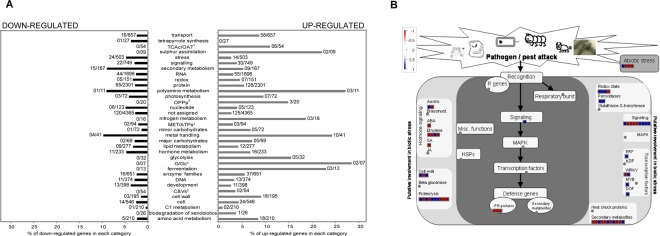
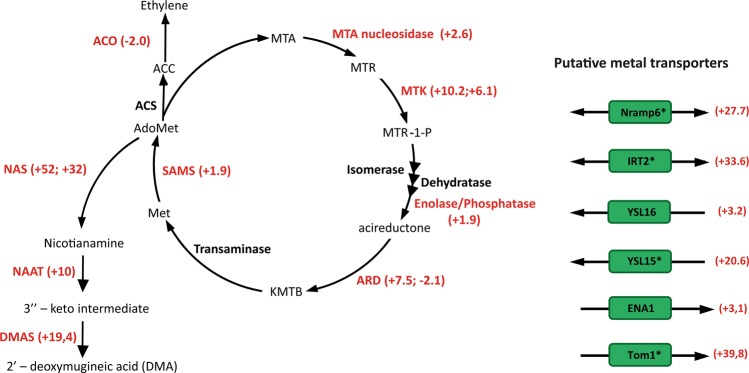
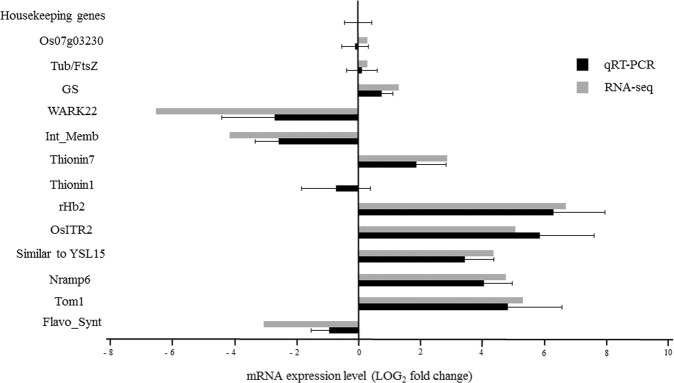
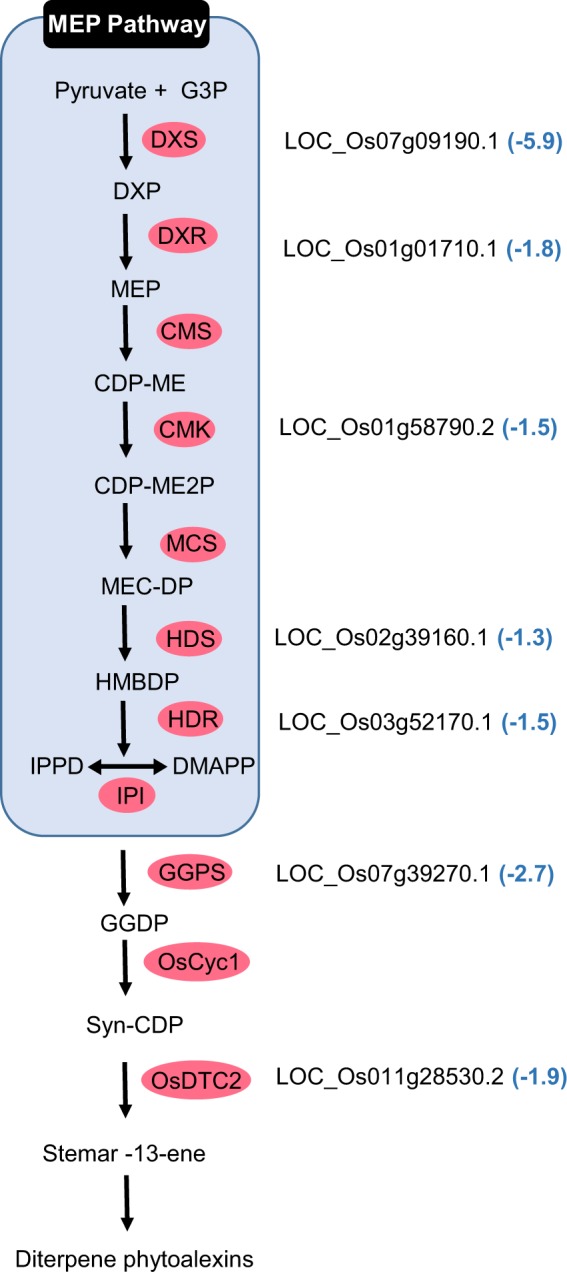
Rice is staple food of nearly half the world's population. Rice yields must therefore increase to feed ever larger populations. By colonising rice and other plants, Herbaspirillum spp. stimulate plant growth and productivity. However the molecular factors involved are largely unknown. To further explore this interaction, the transcription profiles of Nipponbare rice roots inoculated with Herbaspirillum seropedicae were determined by RNA-seq. Mapping the 104 million reads against the Oryza sativa cv. Nipponbare genome produced 65 million unique mapped reads that represented 13,840 transcripts each with at least two-times coverage. About 7.4% (1,014) genes were differentially regulated and of these 255 changed expression levels more than two times. Several of the repressed genes encoded proteins related to plant defence (e.g. a putative probenazole inducible protein), plant disease resistance as well as enzymes involved in flavonoid and isoprenoid synthesis. Genes related to the synthesis and efflux of phytosiderophores (PS) and transport of PS-iron complexes were induced by the bacteria. These data suggest that the bacterium represses the rice defence system while concomitantly activating iron uptake. Transcripts of H. seropedicae were also detected amongst which transcripts of genes involved in nitrogen fixation, cell motility and cell wall synthesis were the most expressed.
大米是世界上近一半人口的主食。因此,为了养活不断增长的人口,水稻产量必须提高。通过定殖水稻和其他植物,希瓦氏菌属能够刺激植物生长和生产力。然而,涉及的分子因素在很大程度上是未知的。为了进一步探索这种相互作用,通过 RNA-seq 确定了接种希瓦氏菌属的日本晴水稻根的转录谱。将 1.04 亿个读数映射到 Oryza sativa cv. Nipponbare 基因组上,产生了 6500 万个唯一映射的读数,每个读数至少有两倍的覆盖率,代表了 13840 个转录本。约 7.4%(1014 个)的基因被差异调控,其中 255 个基因的表达水平变化超过两倍。一些被抑制的基因编码与植物防御(例如,一种假定的丙环唑诱导蛋白)、植物抗病性以及参与类黄酮和异戊二烯合成的酶有关的蛋白质。与植物螯合肽(PS)的合成和外排以及 PS-铁复合物运输有关的基因被细菌诱导。这些数据表明,细菌抑制了水稻的防御系统,同时激活了铁的吸收。还检测到希瓦氏菌属的转录本,其中涉及固氮、细胞运动和细胞壁合成的基因的转录本表达最丰富。