Neuroscience and Neuroengineering Research Laboratory, Biomedical Engineering Department, School of Electrical Engineering, Iran University of Science and Technology, Tehran, Iran.
Department of Electrical Engineering, Sharif University of Technology, Tehran, Iran.
Front Neural Circuits. 2019 Jul 3;13:44. doi: 10.3389/fncir.2019.00044. eCollection 2019.
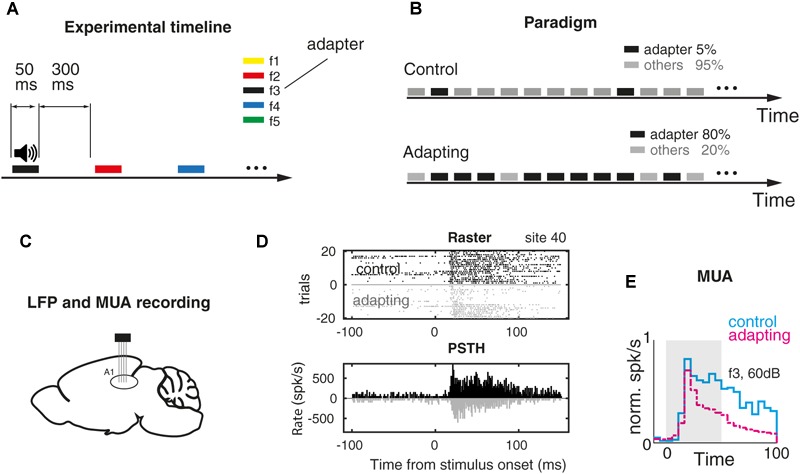
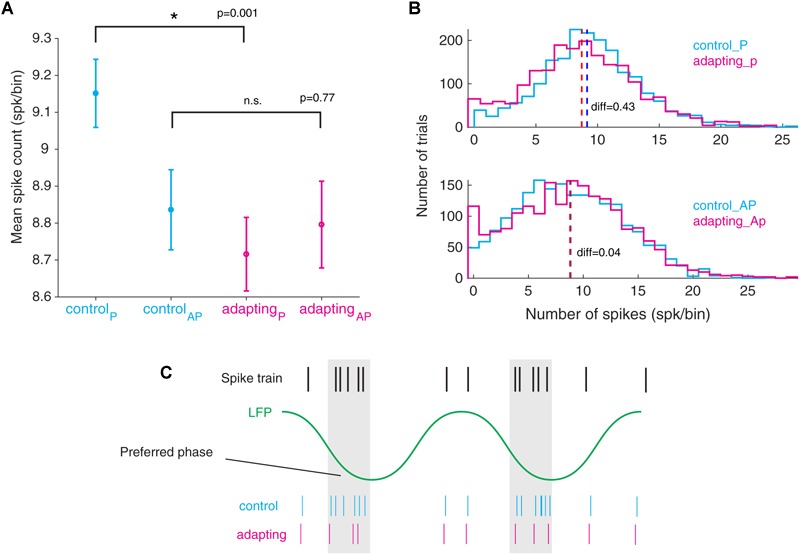
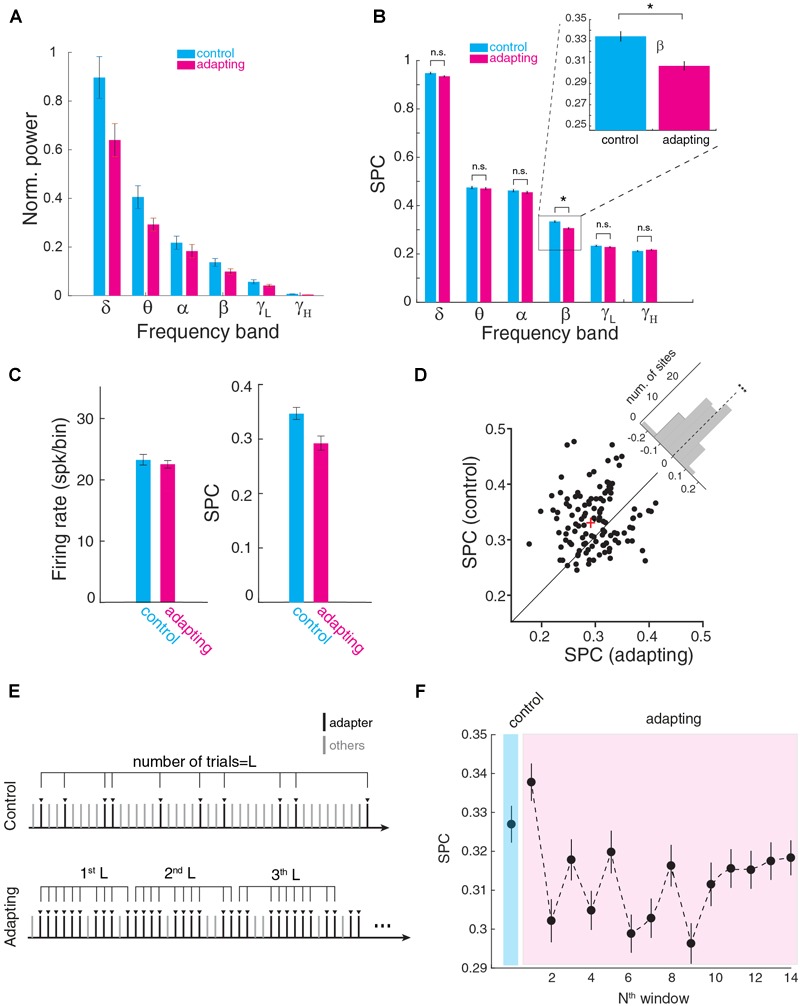
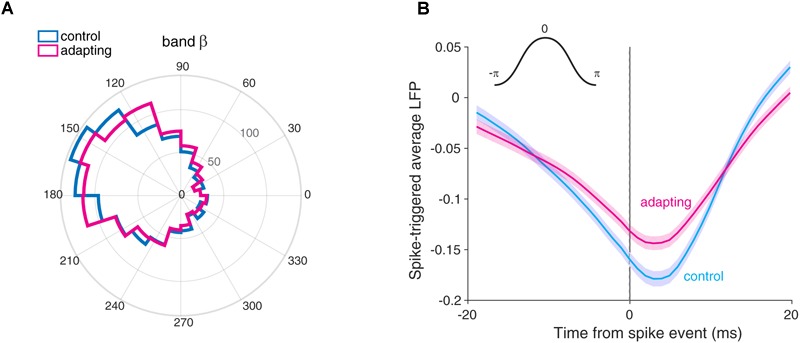
Stimulus repetition suppresses the neural activity in different sensory areas of the brain. This mechanism of so-called stimulus-specific adaptation (SSA) has been observed in both spiking activity and local field potential (LFP) responses. However, much remains to be known about the effect of SSA on the spike-LFP relation. In this study, we approached this issue by investigating the spike-phase coupling (SPC) in control and adapting paradigms. For the control paradigm, pure tones were presented in a random unbiased sequence. In the adapting paradigm, the same stimuli were presented in a random pattern but it was biased to an adapter stimulus. In fact, the adapter occupied 80% of the adapting sequence. During the tasks, LFP and multi-unit activity were recorded simultaneously from the primary auditory cortex of 15 anesthetized rats. To clarify the effect of adaptation on the relation between spike and LFP responses, the SPC of the adapter stimulus in these two paradigms was evaluated. Here, we employed phase locking value method for calculating the SPC. Our data show a strong coupling of spikes to LFP phase most prominently in beta band. This coupling was observed to decrease in the adapting condition compared to the control one. Importantly, we found that adaptation reduces spikes dominantly from the preferred phase of LFP in which spikes are more likely to be present there. As a result, the preferred phase of LFP may play a key role in coordinating neuronal spiking activity in neural adaptation mechanism. This finding is important for interpretation of the underlying neural mechanism of adaptation and also can be used in the context of the network and related connectivity models.
刺激重复抑制大脑不同感觉区域的神经活动。这种所谓的刺激特异性适应(SSA)机制在尖峰活动和局部场电位(LFP)反应中都有观察到。然而,关于 SSA 对尖峰-LFP 关系的影响,还有很多需要了解。在这项研究中,我们通过研究对照和适应范式中的尖峰相位耦合(SPC)来解决这个问题。对于对照范式,纯音以随机无偏序列呈现。在适应范式中,相同的刺激以随机模式呈现,但偏向于适应刺激。实际上,适配器占据了适应序列的 80%。在任务期间,从 15 只麻醉大鼠的初级听觉皮层同时记录 LFP 和多单位活动。为了阐明适应对尖峰和 LFP 反应之间关系的影响,评估了这两种范式中适配器刺激的 SPC。在这里,我们采用锁相值方法来计算 SPC。我们的数据显示,在 beta 波段中,尖峰与 LFP 相位的耦合最强。与对照条件相比,适应条件下的这种耦合观察到减少。重要的是,我们发现适应主要减少了 LFP 优先相位中的尖峰,而尖峰更有可能出现在那里。因此,LFP 的优先相位可能在协调神经适应机制中的神经元尖峰活动中发挥关键作用。这一发现对于解释适应的潜在神经机制很重要,也可以在网络和相关连接模型的背景下使用。