Shelby Megan L, He Wei, Dang Amanda T, Kuhl Tonya L, Coleman Matthew A
Lawrence Livermore National Laboratory, Livermore, CA, United States.
University of California at Davis, Davis, CA, United States.
Front Pharmacol. 2019 Jul 3;10:744. doi: 10.3389/fphar.2019.00744. eCollection 2019.
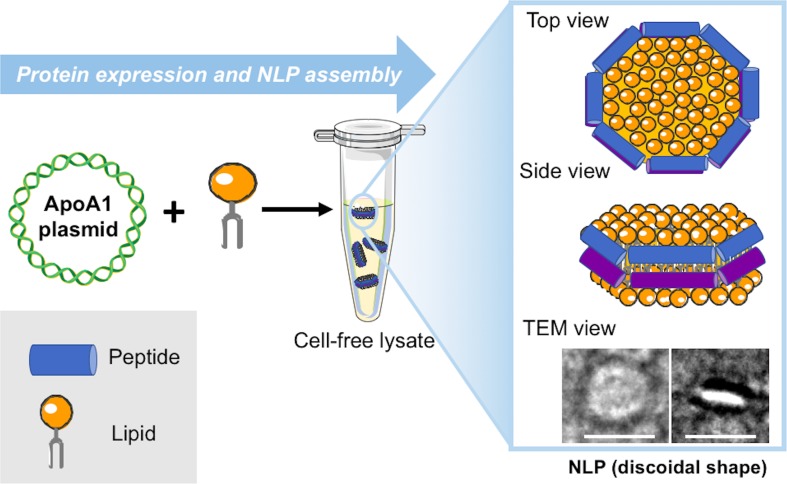
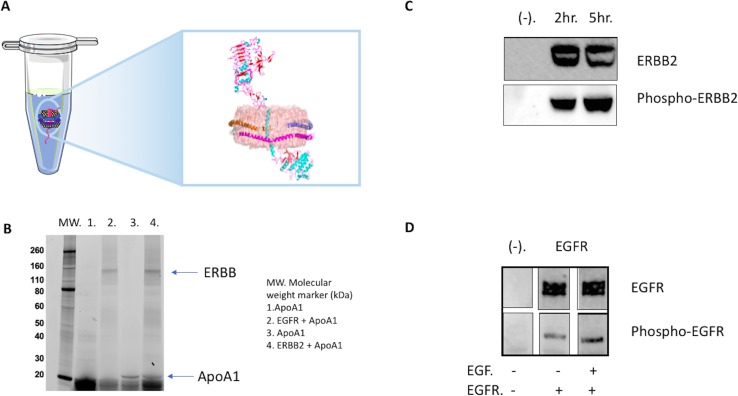
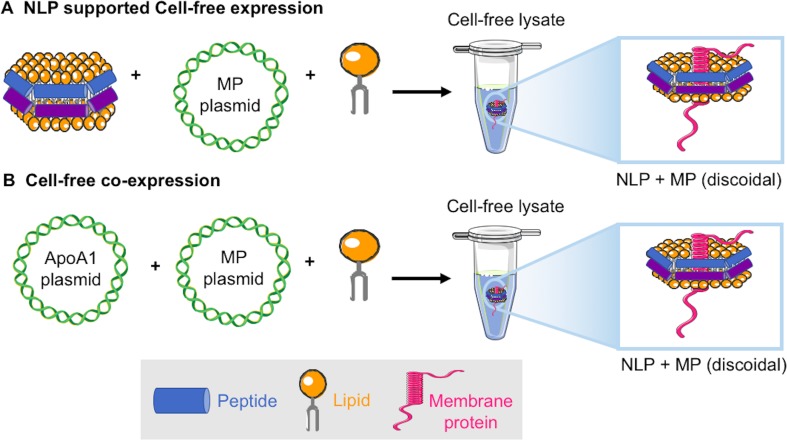
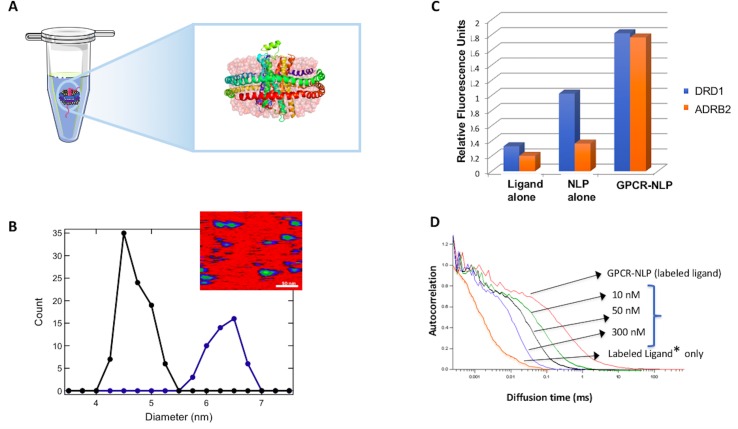
Membranes proteins make up more than 60% of current drug targets and account for approximately 30% or more of the cellular proteome. Access to this important class of proteins has been difficult due to their inherent insolubility and tendency to aggregate in aqueous solutions. Understanding membrane protein structure and function demands novel means of membrane protein production that preserve both their native conformational state as well as function. Over the last decade, cell-free expression systems have emerged as an important complement to cell-based expression of membrane proteins due to their simple and customizable experimental parameters. One approach to overcome the solubility and stability limitations of purified membrane proteins is to support them in stable, native-like states within nanolipoprotein particles (NLPs), aka nanodiscs. This has become common practice to facilitate biochemical and biophysical characterization of proteins of interest. NLP technology can be easily coupled with cell-free systems to achieve functional membrane protein production for this purpose. Our approach involves utilizing cell-free expression systems in the presence of NLPs or using co-translation techniques to perform one-pot expression and self-assembly of membrane protein/NLP complexes. We describe how cell-free reactions can be modified to render control over nanoparticle size and monodispersity in support of membrane protein production. These modifications have been exploited to facilitate co-expression of full-length functional membrane proteins such as G-protein-coupled receptors (GPCRs) and receptor tyrosine kinases (RTKs). In particular, we summarize the state of the art in NLP-assisted cell-free coexpression of these important classes of membrane proteins as well as evaluate the advances in and prospects for this technology that will drive drug discovery against these targets. We conclude with a prospective on the use of NLPs to produce as well as deliver functional mammalian membrane-bound proteins for a range of applications.
膜蛋白构成了目前超过60%的药物靶点,约占细胞蛋白质组的30%或更多。由于其固有的不溶性以及在水溶液中聚集的倾向,研究这类重要的蛋白质一直颇具难度。了解膜蛋白的结构和功能需要新的膜蛋白生产方法,以保持其天然构象状态和功能。在过去十年中,无细胞表达系统因其简单且可定制的实验参数,已成为基于细胞的膜蛋白表达的重要补充。克服纯化膜蛋白溶解度和稳定性限制的一种方法是将它们稳定地维持在纳米脂蛋白颗粒(NLPs)(即纳米圆盘)内的天然状态。这已成为促进对感兴趣蛋白质进行生化和生物物理表征的常用方法。NLP技术可以很容易地与无细胞系统相结合,以实现功能性膜蛋白的生产。我们的方法包括在NLPs存在的情况下利用无细胞表达系统,或使用共翻译技术进行膜蛋白/NLP复合物的一锅法表达和自组装。我们描述了如何修改无细胞反应以控制纳米颗粒的大小和单分散性,以支持膜蛋白的生产。这些修改已被用于促进全长功能性膜蛋白的共表达,如G蛋白偶联受体(GPCRs)和受体酪氨酸激酶(RTKs)。特别是,我们总结了在NLP辅助的无细胞共表达这些重要膜蛋白类别方面的技术现状,并评估了该技术的进展和前景,这些将推动针对这些靶点的药物发现。我们最后展望了使用NLPs生产和递送功能性哺乳动物膜结合蛋白在一系列应用中的前景。