Burn Erin, Conneely Maev, Leverton Monica, Giacco Domenico
Unit for Social and Community Psychiatry (WHO Collaborating Centre for Mental Health Service Development), Queen Mary University of London, London, United Kingdom.
Division of Psychiatry, University College London, London, United Kingdom.
Front Psychiatry. 2019 Jul 4;10:433. doi: 10.3389/fpsyt.2019.00433. eCollection 2019.
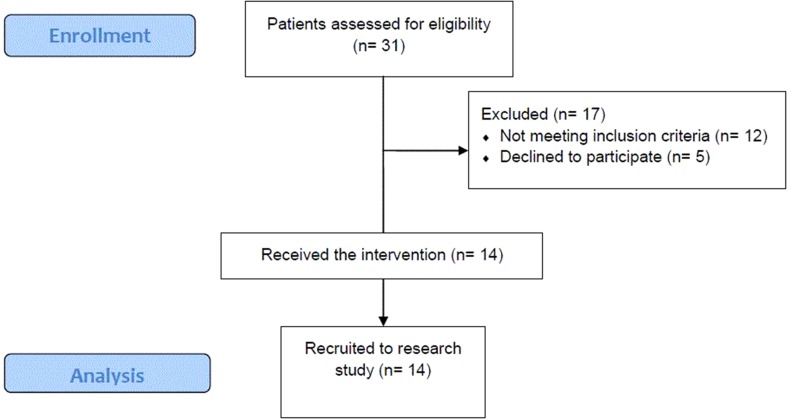
People who receive involuntary treatment are some of the most vulnerable in psychiatric services. They are more likely to have poorer social and clinical outcomes and to be disillusioned with and disengaged from care. Research indicates that patients' experience in the first week of involuntary treatment is a critical period: a better experience of care in the first week predicts better quality of life and reduced readmission 1 year later. Patients have identified involvement in clinical decisions as key to improving their experience of care. The aim of this study was to test the feasibility and acceptability of an intervention to facilitate involvement in decision making for involuntary inpatients called OPeNS (Options, Preferences, Negotiate, and Summarise). This was a mixed method study. The OPeNS intervention was developed based on previous research carried out by a multidisciplinary team. Clinicians were trained to deliver it to involuntary inpatients. Feasibility indices (rates of participation in the intervention and time required to deliver it) were collected. Patients ( = 14) and clinicians ( = 5) provided qualitative data on their experience of the intervention in semi-structured interviews which were analysed using thematic analysis. The OPeNS intervention was found to be acceptable by both patients and clinicians and feasible to conduct within the first week of involuntary treatment. Patients' and clinicians' experiences of the intervention fall into two themes: 'Enabling a different dynamic' and 'Clashing with usual practices and priorities'. The OPeNS intervention provides a structure that can be used by clinicians across disciplines to facilitate involving involuntary patients in decision making. Although challenges related to changing usual practices were identified, the intervention was received positively and was feasible to conduct in the first week of involuntary treatment.
接受非自愿治疗的人是精神科服务中最脆弱的群体之一。他们更有可能出现较差的社会和临床结果,对护理感到失望并脱离护理。研究表明,患者在非自愿治疗第一周的体验是一个关键时期:第一周更好的护理体验预示着一年后更好的生活质量和更低的再入院率。患者已确定参与临床决策是改善其护理体验的关键。本研究的目的是测试一种名为OPeNS(选项、偏好、协商和总结)的干预措施的可行性和可接受性,该措施旨在促进非自愿住院患者参与决策。这是一项混合方法研究。OPeNS干预措施是基于一个多学科团队之前开展的研究而制定的。临床医生接受培训,以便将其提供给非自愿住院患者。收集了可行性指标(参与干预的比率和实施干预所需的时间)。患者(n = 14)和临床医生(n = 5)在半结构化访谈中提供了关于他们对干预措施体验的定性数据,并使用主题分析进行了分析。结果发现,OPeNS干预措施为患者和临床医生所接受,并且在非自愿治疗的第一周内实施是可行的。患者和临床医生对干预措施的体验分为两个主题:“营造不同的氛围”和“与常规做法及优先事项发生冲突”。OPeNS干预措施提供了一种结构,各学科的临床医生均可使用该结构来促进非自愿患者参与决策。尽管确定了与改变常规做法相关的挑战,但该干预措施得到了积极的反馈,并且在非自愿治疗的第一周内实施是可行的。