Nyman Erika, Henricson Joakim, Ghafouri Bijar, Anderson Chris D, Kratz Gunnar
Division of Clinical Sciences, Department of Clinical and Experimental Medicine, Linköping University, Linköping, Sweden.
Department of Hand Surgery, Plastic Surgery and Burns, Linköping University, Linköping, Sweden.
Plast Reconstr Surg Glob Open. 2019 May 1;7(5):e2221. doi: 10.1097/GOX.0000000000002221. eCollection 2019 May.
Hyaluronic acid (HA), a large glycosaminoglycan involved in proliferation, migration, and tissue repair, is suggested to be an important factor for keratinocyte activation and re-epithelialization. The experimental hypothesis of this study was that HA accelerates re-epithelialization, and we aimed to investigate the effect of exogenous intradermal HA during deep dermal, incisional wound healing in vivo in humans, the primary endpoint being re-epithelialization.
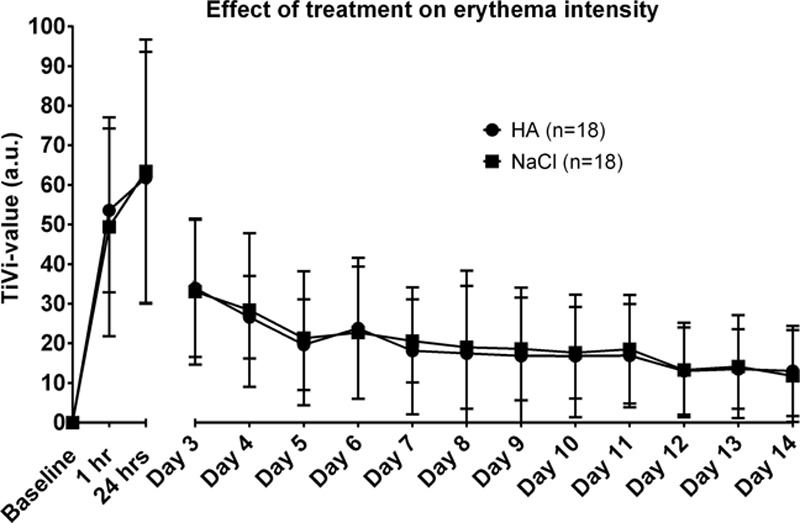
A total of 8 standardized deep dermal incisional wounds (depth 1.6 mm, width 1.8 mm) per subject were induced in 10 healthy volunteers. Two of the wound sites per subject were pretreated with injections of HA and 2 with saline solution. At 2 time points (24 hours and 14 days), 2 biopsies for each treatment group (one for histology and one for proteomics) were taken. Skin erythema was measured at 24-hour intervals for 14 days as a surrogate measurement of inflammation.
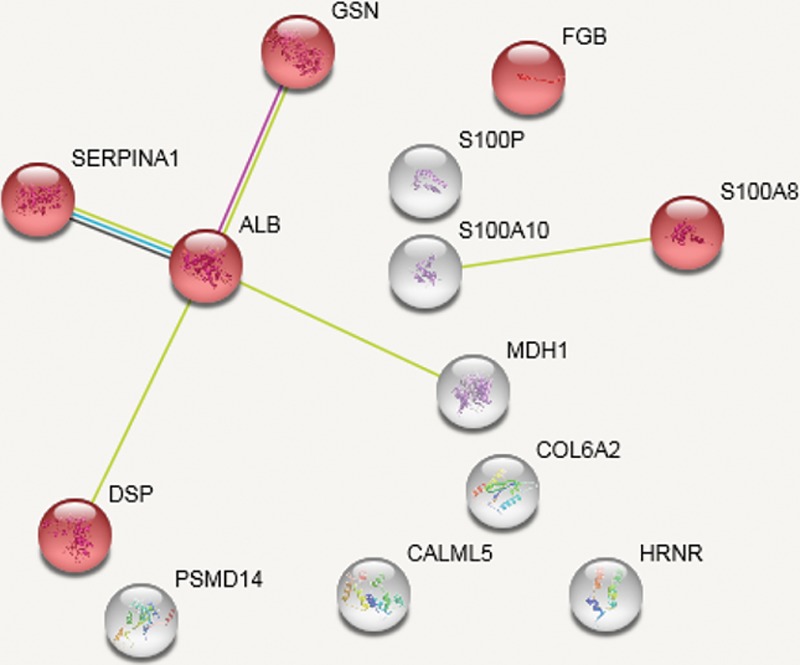
At 24 hours, 8 of 9 wounds pretreated with HA showed complete re-epithelization, whereas none of the wounds pretreated with saline had re-epithelized. Wounds pretreated with HA also showed a 10-fold regulation of 8 identified proteins involved in wound healing compared to wounds treated with saline solution. No difference in inflammation, as measured as erythema, could be seen between any of the groups.
We conclude that HA accelerates re-epithelialization and stimulates an altered protein expression in human deep dermal incisional skin wounds, but has no effect on the inflammation process as measured by erythema.
透明质酸(HA)是一种参与增殖、迁移和组织修复的大型糖胺聚糖,被认为是角质形成细胞激活和再上皮化的重要因素。本研究的实验假设是HA可加速再上皮化,我们旨在研究外源性皮内注射HA在人类真皮深层切开伤口愈合过程中的作用,主要终点是再上皮化。
在10名健康志愿者身上,每人诱导出8个标准化的真皮深层切开伤口(深度1.6毫米,宽度1.8毫米)。每个受试者的两个伤口部位用HA注射预处理,另外两个用盐溶液预处理。在两个时间点(24小时和14天),对每个治疗组进行两次活检(一次用于组织学,一次用于蛋白质组学)。在14天内每隔24小时测量一次皮肤红斑,作为炎症的替代测量指标。
在24小时时,9个用HA预处理的伤口中有8个显示完全再上皮化,而用盐溶液预处理的伤口均未再上皮化。与用盐溶液处理的伤口相比,用HA预处理的伤口在参与伤口愈合的8种已鉴定蛋白质的表达上也有10倍的调节。在任何组之间,以红斑测量的炎症没有差异。
我们得出结论,HA可加速人类真皮深层切开皮肤伤口的再上皮化并刺激蛋白质表达改变,但对以红斑测量的炎症过程没有影响。