Blumer Tanja, Fofana Isabel, Matter Matthias S, Wang Xueya, Montazeri Hesam, Calabrese Diego, Coto-Llerena Mairene, Boldanova Tujana, Nuciforo Sandro, Kancherla Venkatesh, Tornillo Luigi, Piscuoglio Salvatore, Wieland Stefan, Terracciano Luigi M, Ng Charlotte K Y, Heim Markus H
Department of Biomedicine University Hospital Basel, University of Basel Basel Switzerland.
Institute of Pathology University Hospital Basel, University of Basel Basel Switzerland.
Hepatol Commun. 2019 May 6;3(7):971-986. doi: 10.1002/hep4.1365. eCollection 2019 Jul.
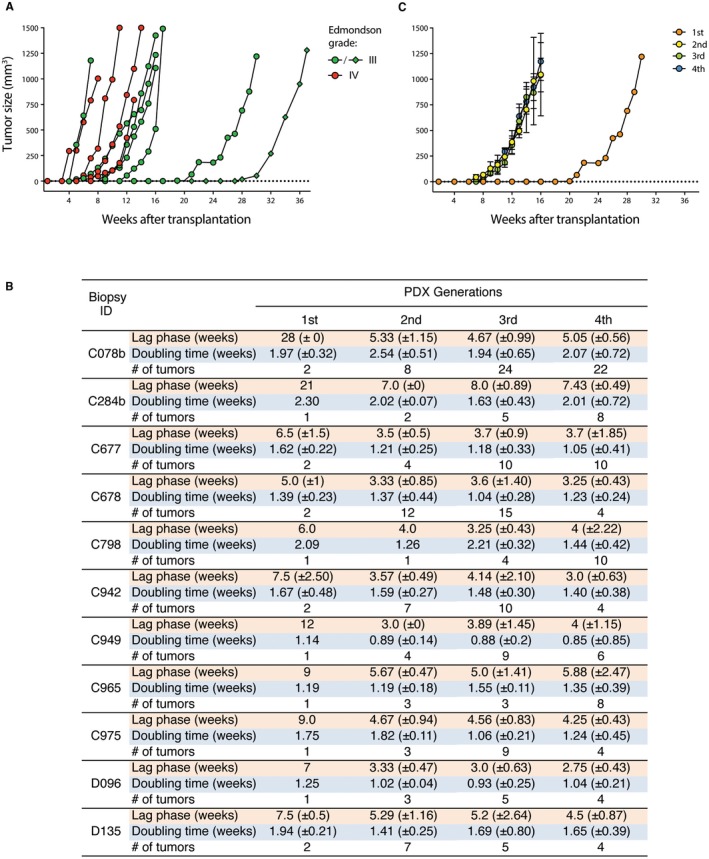
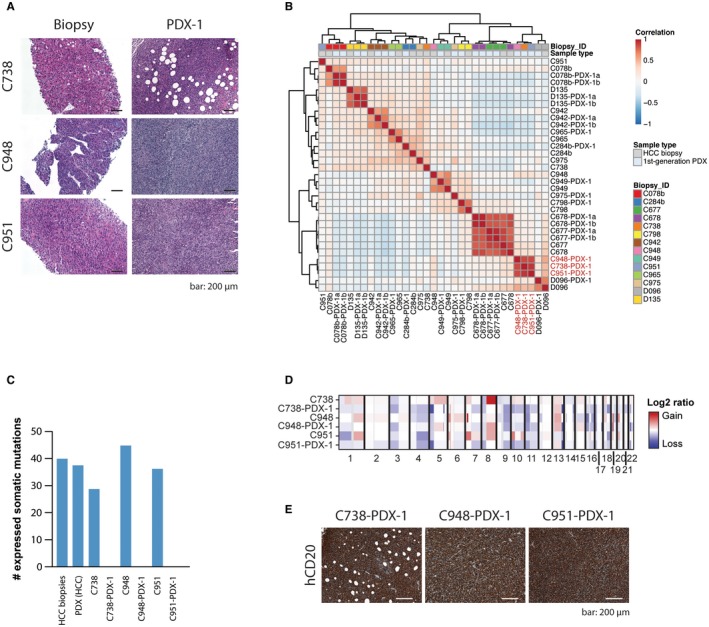
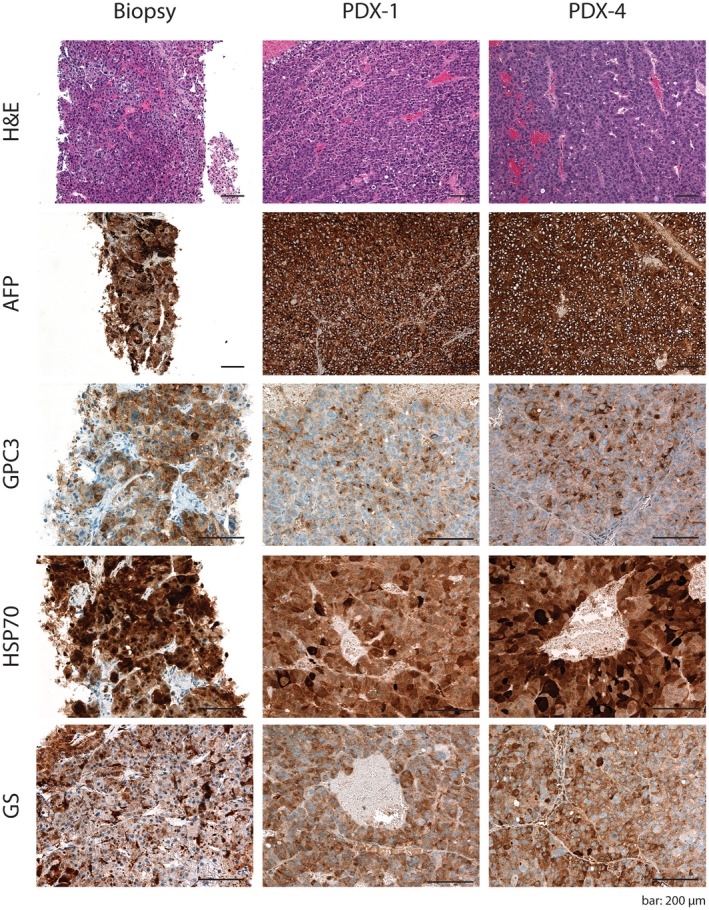
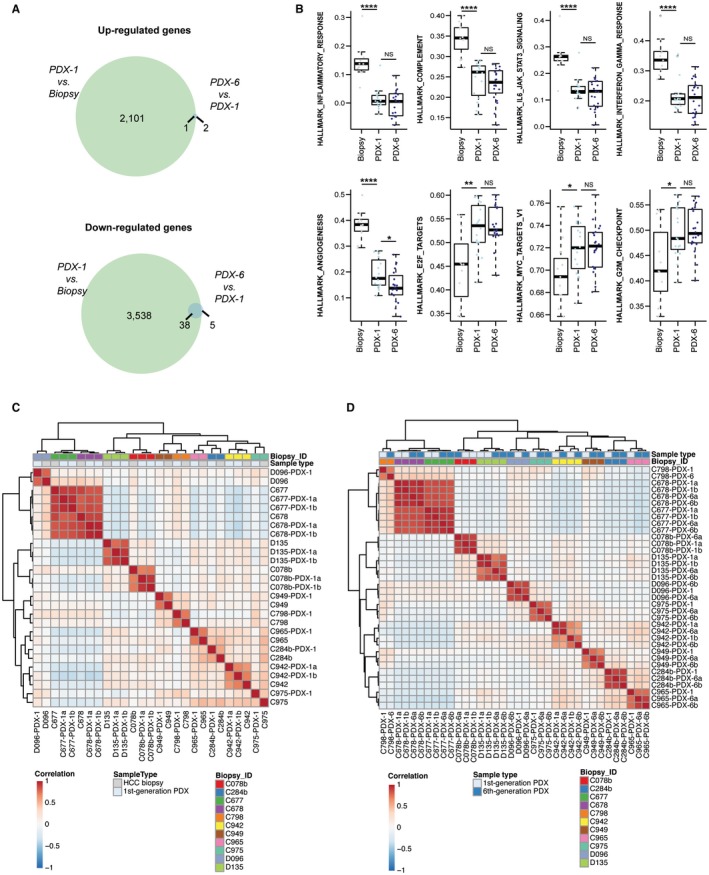
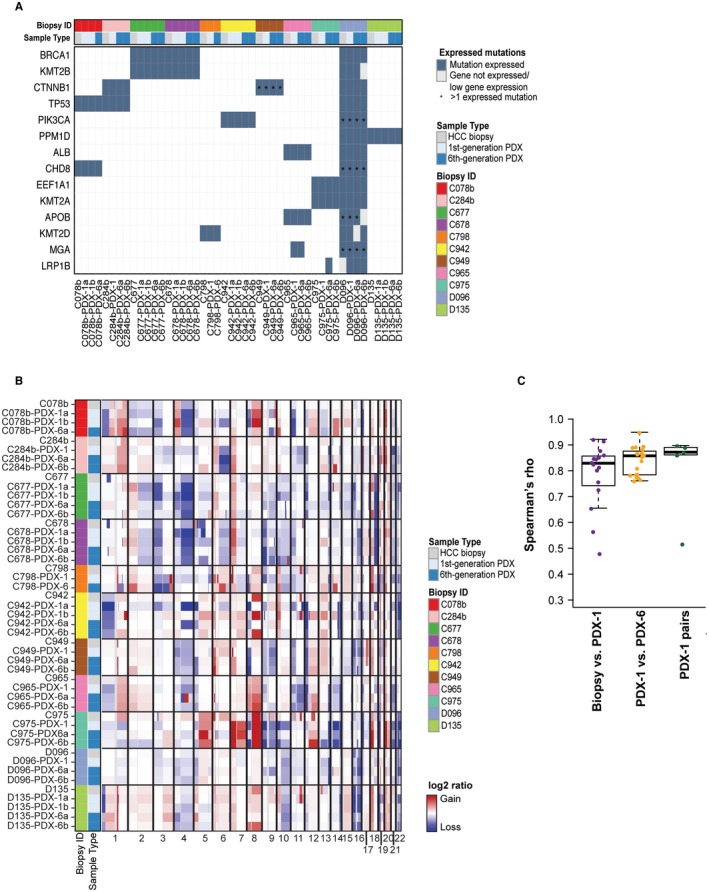
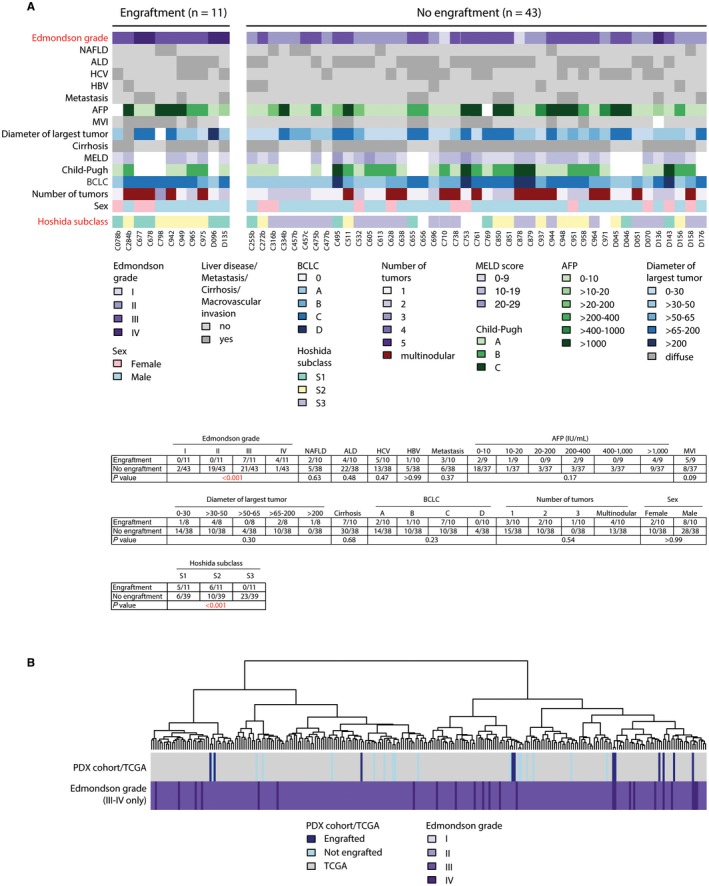
Hepatocellular carcinoma (HCC) is the second leading cause of cancer-related deaths worldwide. Treatment options for patients with advanced-stage disease are limited. A major obstacle in drug development is the lack of an model that accurately reflects the broad spectrum of human HCC. Patient-derived xenograft (PDX) tumor mouse models could overcome the limitations of cancer cell lines. PDX tumors maintain the genetic and histologic heterogeneity of the originating tumors and are used for preclinical drug development in various cancers. Controversy exists about their genetic and molecular stability through serial passaging in mice. We aimed to establish PDX models from human HCC biopsies and to characterize their histologic and molecular stability during serial passaging. A total of 54 human HCC needle biopsies that were derived from patients with various underlying liver diseases and tumor stages were transplanted subcutaneously into immunodeficient, nonobese, diabetic/severe combined immunodeficiency gamma-c mice; 11 successfully engrafted. All successfully transplanted HCCs were Edmondson grade III or IV. HCC PDX tumors retained the histopathologic, transcriptomic, and genomic characteristics of the original HCC biopsies over 6 generations of retransplantation. These characteristics included Edmondson grade, expression of tumor markers, tumor gene signature, tumor-associated mutations, and copy number alterations. PDX mouse models can be established from undifferentiated HCCs, with an overall success rate of approximately 20%. The transplanted tumors represent the entire spectrum of the molecular landscape of HCCs and preserve the characteristics of the originating tumors through serial passaging. HCC PDX models are a promising tool for preclinical personalized drug development.
肝细胞癌(HCC)是全球癌症相关死亡的第二大主要原因。晚期疾病患者的治疗选择有限。药物开发中的一个主要障碍是缺乏能够准确反映人类HCC广泛谱系的模型。患者来源的异种移植(PDX)肿瘤小鼠模型可以克服癌细胞系的局限性。PDX肿瘤保留了原发肿瘤的遗传和组织学异质性,并用于各种癌症的临床前药物开发。关于它们在小鼠中连续传代后的遗传和分子稳定性存在争议。我们旨在从人类HCC活检样本中建立PDX模型,并表征其在连续传代过程中的组织学和分子稳定性。总共54份来自患有各种潜在肝脏疾病和肿瘤分期患者的人类HCC穿刺活检样本被皮下移植到免疫缺陷、非肥胖、糖尿病/重度联合免疫缺陷γ(NOD/SCIDγ)小鼠体内;11个成功植入。所有成功移植的HCC均为Edmondson III级或IV级。HCC PDX肿瘤在6代再移植过程中保留了原始HCC活检样本的组织病理学、转录组学和基因组特征。这些特征包括Edmondson分级、肿瘤标志物表达、肿瘤基因特征、肿瘤相关突变和拷贝数改变。PDX小鼠模型可以从未分化的HCC中建立,总体成功率约为20%。移植的肿瘤代表了HCC分子景观的整个谱系,并通过连续传代保留了原发肿瘤的特征。HCC PDX模型是临床前个性化药物开发的一个有前途的工具。