College of Landscape Architecture, Nanjing Forestry University, Nanjing City, Jiangsu Province, P. R. China.
College of Architecture, Southeast University, Nanjing City, Jiangsu Province, P. R. China.
PLoS One. 2019 Jul 23;14(7):e0219979. doi: 10.1371/journal.pone.0219979. eCollection 2019.
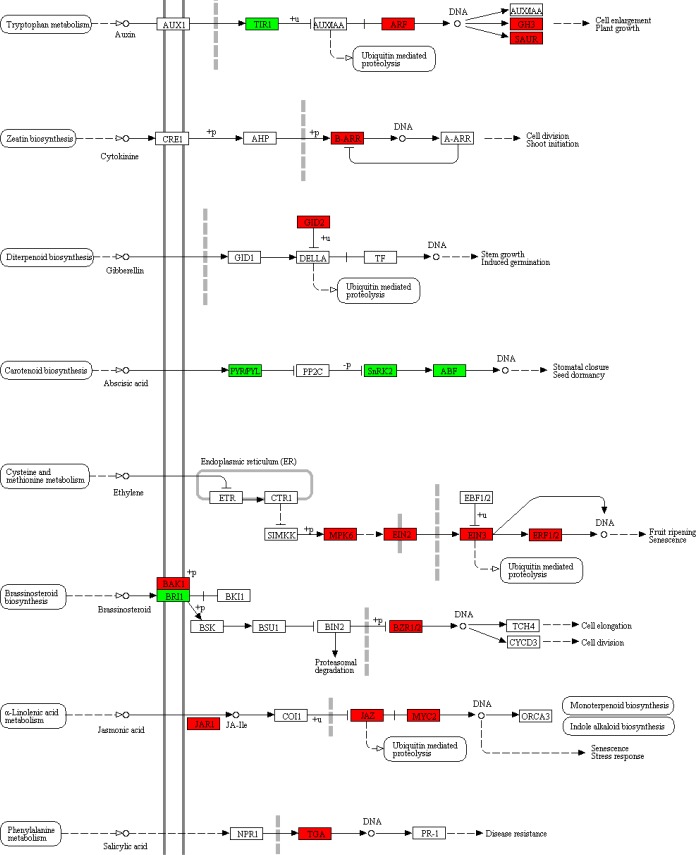
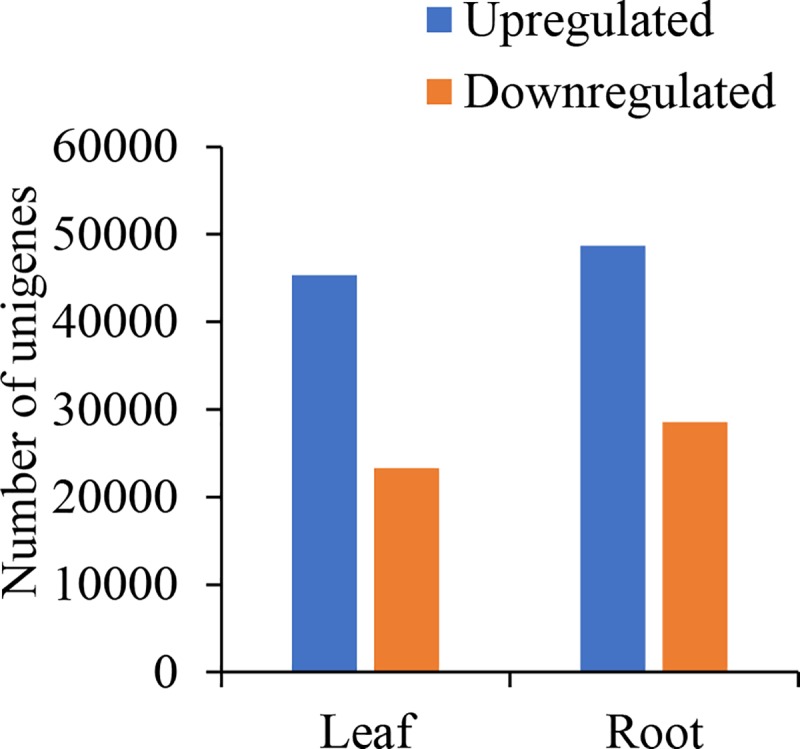
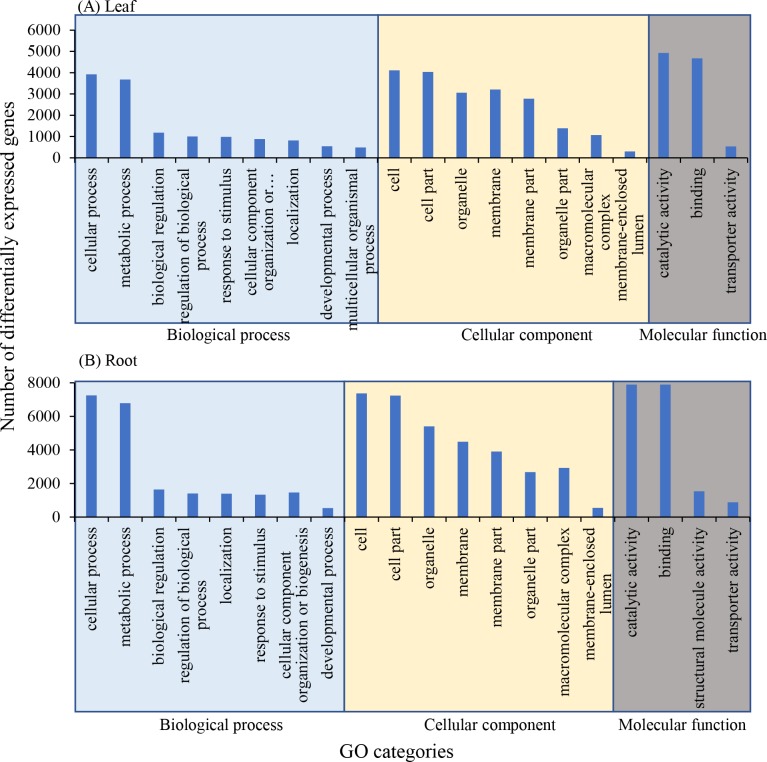
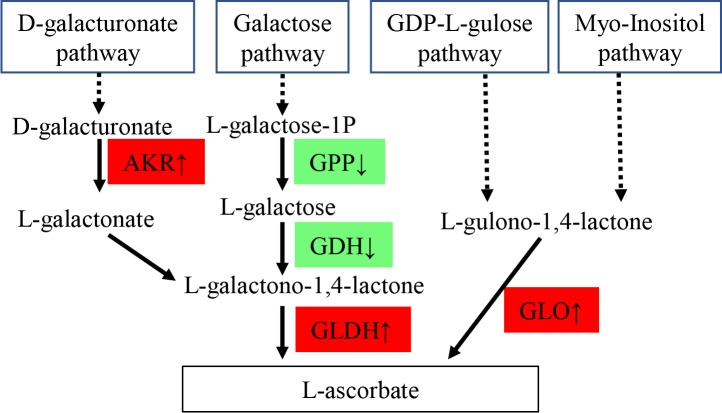
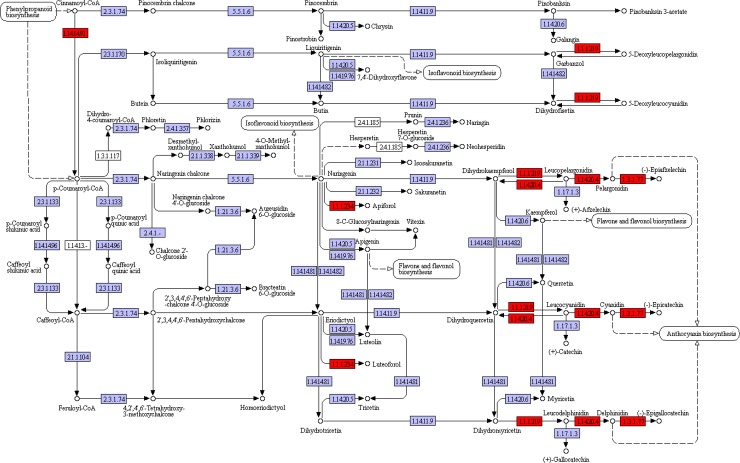
The halophyte Suaeda salsa displayed strong resistance to salinity. Up to date, molecular mechanisms underlying tolerance of S. salsa to salinity have not been well understood. In the present study, S. salsa seedlings were treated with 30‰ salinity and then leaves and roots were subjected to Illumina sequencing. Compared with the control, 68,599 and 77,250 unigenes were significantly differentially expressed in leaves and roots in saline treatment, respectively. KEGG enrichment analyses indicated that photosynthesis process, carbohydrate, lipid and amino acid metabolisms were all downregulated in saline treatment, which should inhibit growth of S. salsa. Expression levels of Na+/H+ exchanger, V-H+ ATPase, choline monooxygenase, potassium and chloride channels were upregulated in saline treatment, which could relieve reduce over-accumulation of Na+ and Cl-. Fe-SOD, glutathione, L-ascorbate and flavonoids function as antioxidants in plants. Genes in relation to them were all upregulated, suggesting that S. salsa initiated various antioxidant mechanisms to tolerate high salinity. Besides, plant hormones, especially auxin, ethylene and jasmonic acid signaling transduction pathways were all upregulated in response to saline treatment, which were important to gene regulations of ion transportation and antioxidation. These changes might comprehensively contribute to tolerance of S. salsa to salinity. Overall, the present study provided new insights to understand the mechanisms underlying tolerance to salinity in halophytes.
盐生植物盐地碱蓬表现出很强的耐盐性。迄今为止,盐地碱蓬耐受盐度的分子机制还没有被很好地理解。在本研究中,用 30‰盐度处理盐地碱蓬幼苗,然后对叶片和根进行 Illumina 测序。与对照相比,盐胁迫处理分别导致叶片和根中 68599 个和 77250 个基因显著差异表达。KEGG 富集分析表明,盐胁迫处理下光合作用、碳水化合物、脂质和氨基酸代谢均下调,这应该抑制盐地碱蓬的生长。盐胁迫处理下 Na+/H+交换器、V-H+ATP 酶、胆碱单加氧酶、钾和氯通道的表达水平上调,可缓解 Na+和 Cl-的过度积累。Fe-SOD、谷胱甘肽、L-抗坏血酸和类黄酮在植物中作为抗氧化剂发挥作用。与它们相关的基因都上调,表明盐地碱蓬启动了各种抗氧化机制来耐受高盐度。此外,植物激素,特别是生长素、乙烯和茉莉酸信号转导途径,都被上调以响应盐胁迫,这对离子转运和抗氧化基因调控很重要。这些变化可能综合促进了盐地碱蓬对盐度的耐受性。总的来说,本研究为理解盐生植物耐盐性的机制提供了新的见解。