Sun Xinwei, Simonsen Stian Christopher, Norby Truls, Chatzitakis Athanasios
Centre for Materials Science and Nanotechnology, Department of Chemistry, University of Oslo, FERMiO, Gaustadalléen 21, NO-0349 Oslo, Norway.
Membranes (Basel). 2019 Jul 11;9(7):83. doi: 10.3390/membranes9070083.
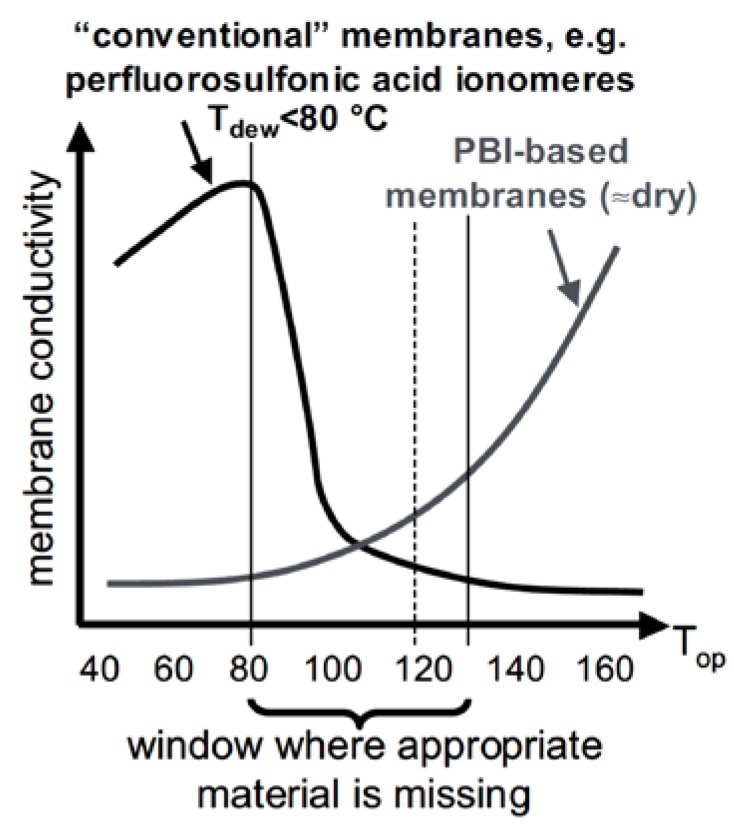
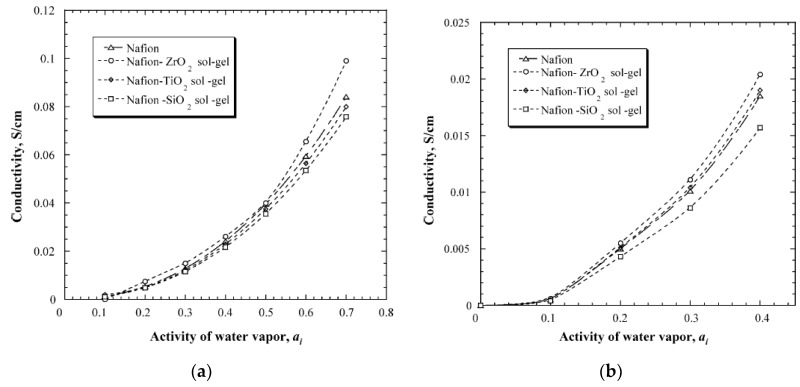
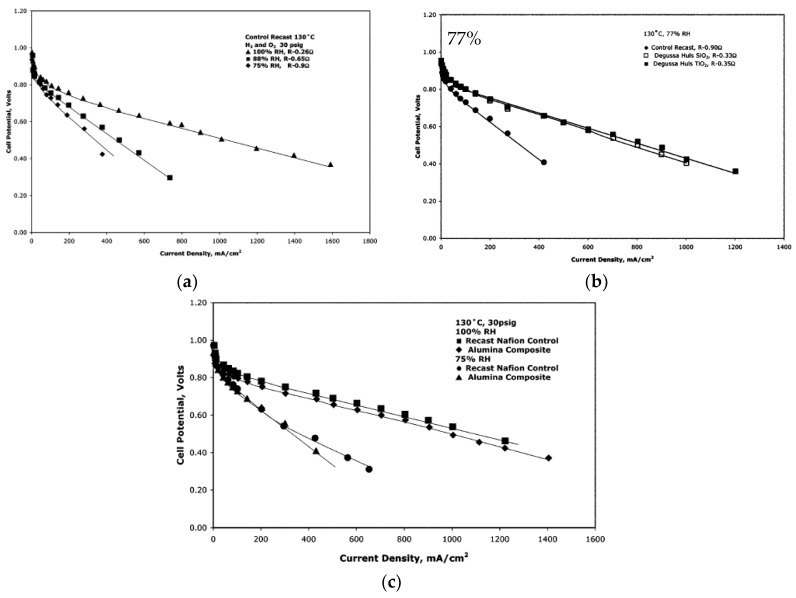
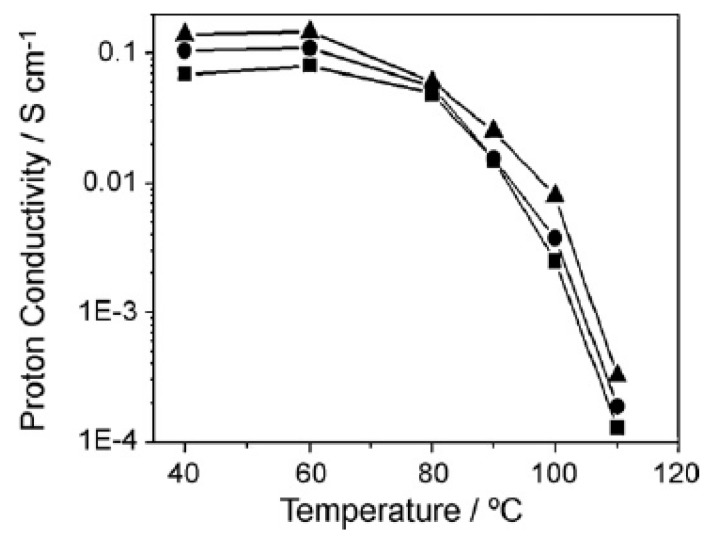
Polymer electrolyte membrane (PEM) fuel cells and electrolysers offer efficient use and production of hydrogen for emission-free transport and sustainable energy systems. Perfluorosulfonic acid (PFSA) membranes like Nafion and Aquivion are the state-of-the-art PEMs, but there is a need to increase the operating temperature to improve mass transport, avoid catalyst poisoning and electrode flooding, increase efficiency, and reduce the cost and complexity of the system. However, PSFAs-based membranes exhibit lower mechanical and chemical stability, as well as proton conductivity at lower relative humidities and temperatures above 80 °C. One approach to sustain performance is to introduce inorganic fillers and improve water retention due to their hydrophilicity. Alternatively, polymers where protons are not conducted as hydrated HO ions through liquid-like water channels as in the PSFAs, but as free protons (H) via Brønsted acid sites on the polymer backbone, can be developed. Polybenzimidazole (PBI) and sulfonated polyetheretherketone (SPEEK) are such materials, but need considerable acid doping. Different composites are being investigated to solve some of the accompanying problems and reach sufficient conductivities. Herein, we critically discuss a few representative investigations of composite PEMs and evaluate their significance. Moreover, we present advances in introducing electronic conductivity in the polymer binder in the catalyst layers.
聚合物电解质膜(PEM)燃料电池和电解槽可为无排放运输和可持续能源系统高效利用和生产氢气。像Nafion和Aquivion这样的全氟磺酸(PFSA)膜是目前最先进的PEM,但需要提高操作温度以改善传质、避免催化剂中毒和电极水淹、提高效率并降低系统成本和复杂性。然而,基于PFSA的膜在较低相对湿度和高于80°C的温度下表现出较低的机械和化学稳定性以及质子传导率。维持性能的一种方法是引入无机填料,并因其亲水性提高保水性。或者,可以开发出这样的聚合物,其中质子不像在PFSA中那样通过类似液体的水通道以水合HO离子的形式传导,而是通过聚合物主链上的布朗斯台德酸位点以自由质子(H)的形式传导。聚苯并咪唑(PBI)和磺化聚醚醚酮(SPEEK)就是这样的材料,但需要大量的酸掺杂。目前正在研究不同的复合材料以解决一些伴随问题并达到足够的传导率。在此,我们批判性地讨论了复合PEM的一些代表性研究并评估了它们的重要性。此外,我们还介绍了在催化剂层的聚合物粘合剂中引入电子传导率方面的进展。