Leibniz Institute of Vegetable and Ornamental Crops, Kühnhäuser Straße 101, 99090, Erfurt, Germany.
Present Address: Erfurt Research Centre for Horticultural Crops, Erfurt University of Applied Sciences, Kühnhäuser Straße 101, 99090, Erfurt, Germany.
BMC Genet. 2019 Jul 23;20(1):60. doi: 10.1186/s12863-019-0764-6.
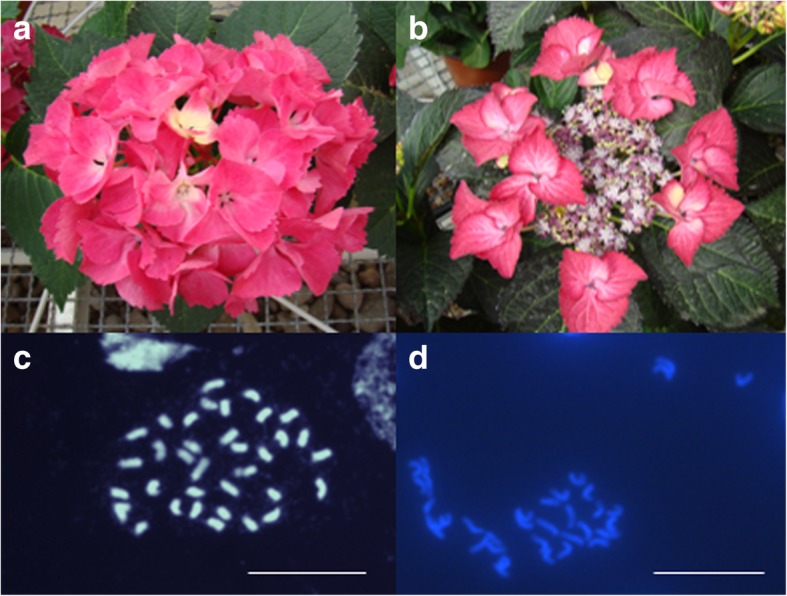
The ornamental crop Hydrangea macrophylla develops highly attractive lacecap (wild type) or mophead inflorescences. The mophead trait, which is mostly favored by consumers, is recessively inherited by the INFLORESCENCE TYPE locus (INF). If lacecap cultivars are crossed with mophead cultivars, then either 50% or all progenies develop lacecap inflorescences, depending on the zygosity at the INF locus. For most cultivars, the zygosity at the INF locus is unknown. Furthermore, the determination of the inflorescence type in offspring populations is time-consuming, because seedlings flower the first time in the 2nd year after sowing. Within this study, we aimed to develop DNA-based markers that allow to determine the zygosity at the INF locus of prospective parental plants and to predict the inflorescence phenotype of seedlings already in the non-flowering stage.
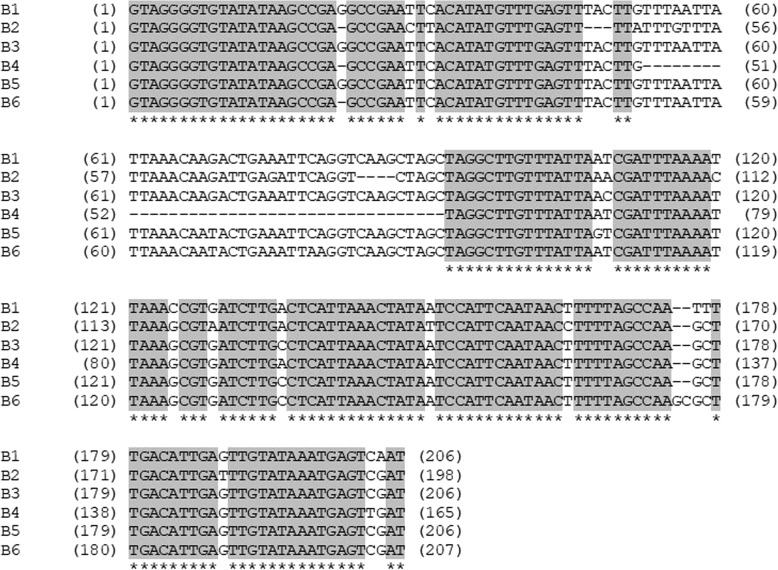
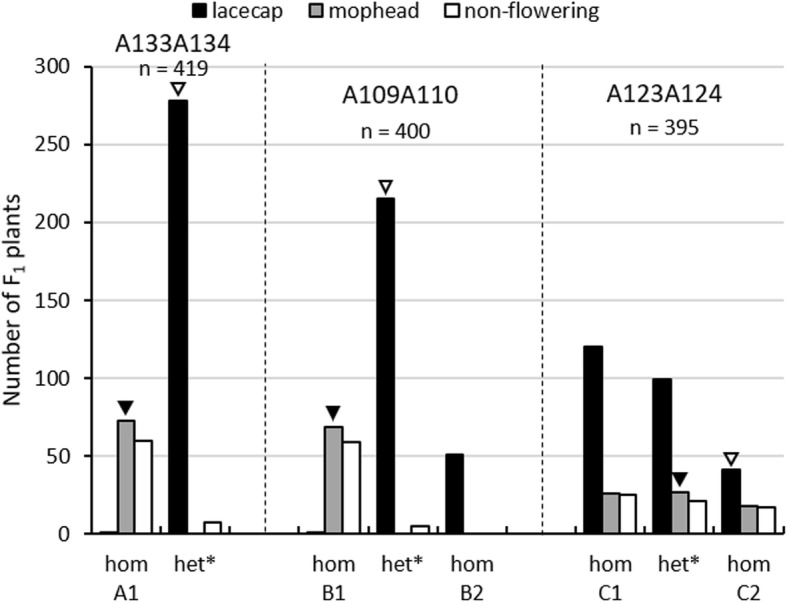
By crossing a mophead and a lacecap cultivar of H. macrophylla, we produced a pseudo-backcross F population consisting of 422 plants. These plants segregated into 279 lacecap, 73 mophead, 3 intermediate and 67 non-flowering plants, differing significantly from the expected 1:1 segregation ratio. Surprisingly, 75% of these plants were triploid, although both parents were diploid. We found that the lacecap parent produced unreduced pollen, which induced the formation of triploids. 380 randomly selected F plants were genotyped by genotyping-by-sequencing (GbS). Using a genome assembly of cultivar 'Sir Joseph Banks', we performed subsequently a bulk sequence analysis with pooled GbS data of diploid versus mophead plants. We identified directly 2 markers tightly linked with the INF locus, each of them explaining 99.7% of the inflorescence phenotype. Using a collection consisting of 56 diploid, triploid or tetraploid H. macrophylla varieties, we detected 6 sequence variants for one of these markers. Two variants were associated with the mophead phenotype. Furthermore, we found by marker analysis a co-segregation between the mophead and the non-flowering trait, which indicates a major flowering time locus next to the INF locus.
Through bulk sequence analysis of pooled GbS data from diploid and polyploid F plants, we identify rapidly tightly linked markers for the inflorescence type, a dominant-recessively inherited trait in the non-model plant species H. macrophylla.
观赏作物绣球花(Hydrangea macrophylla)形成极具吸引力的重瓣(野生型)或球状花序。消费者大多喜欢球状花序的特征,该特征由花序类型(INF)基因座上的隐性等位基因控制。如果重瓣品种与球状品种杂交,则后代中要么有 50%表现为重瓣花序,要么全部表现为重瓣花序,这取决于 INF 基因座的杂合性。对于大多数品种来说,其 INF 基因座的杂合性未知。此外,由于实生苗在播种后第二年才首次开花,因此需要花费大量时间来确定后代群体中的花序类型。在本研究中,我们旨在开发基于 DNA 的标记物,以确定潜在亲本植物 INF 基因座的杂合性,并在非开花阶段预测实生苗的花序表型。
通过重瓣品种和球状品种的杂交,我们产生了一个由 422 株植物组成的拟回交 F 群体。这些植物分离出 279 株重瓣、73 株球状、3 株中间型和 67 株未开花植物,与预期的 1:1 分离比显著不同。令人惊讶的是,尽管双亲均为二倍体,但其中 75%的植物为三倍体。我们发现重瓣亲本产生了未减数的花粉,这诱导了三倍体的形成。随机选择 380 株 F 植物进行基因分型测序(GbS)。使用栽培品种“Sir Joseph Banks”的基因组组装,我们随后对二倍体与球状品种的 pooled GbS 数据进行了批量序列分析。我们直接鉴定了与 INF 基因座紧密连锁的 2 个标记,每个标记解释了 99.7%的花序表型。使用包含 56 个二倍体、三倍体或四倍体绣球花品种的集合,我们检测到其中一个标记的 6 个序列变异。其中两个变异与球状花序表型相关。此外,我们通过标记分析发现,球状花序和不开花性状存在共分离,这表明在非模式植物绣球花中,存在一个与 INF 基因座相邻的主要开花时间基因座。
通过对二倍体和多倍体 F 植物 pooled GbS 数据进行批量序列分析,我们在绣球花这一非模式植物物种中,快速鉴定到与花序类型紧密连锁的显性-隐性遗传标记,该标记是一个由 INF 基因座控制的性状。