Weill Institute for Cell and Molecular Biology and Department of Molecular Biology and Genetics, Cornell University, Ithaca, NY.
University of Cambridge, Cambridge Institute for Medical Research, Addenbrookes Hospital, Cambridge, UK.
J Cell Biol. 2019 Sep 2;218(9):2876-2886. doi: 10.1083/jcb.201901019. Epub 2019 Jul 23.
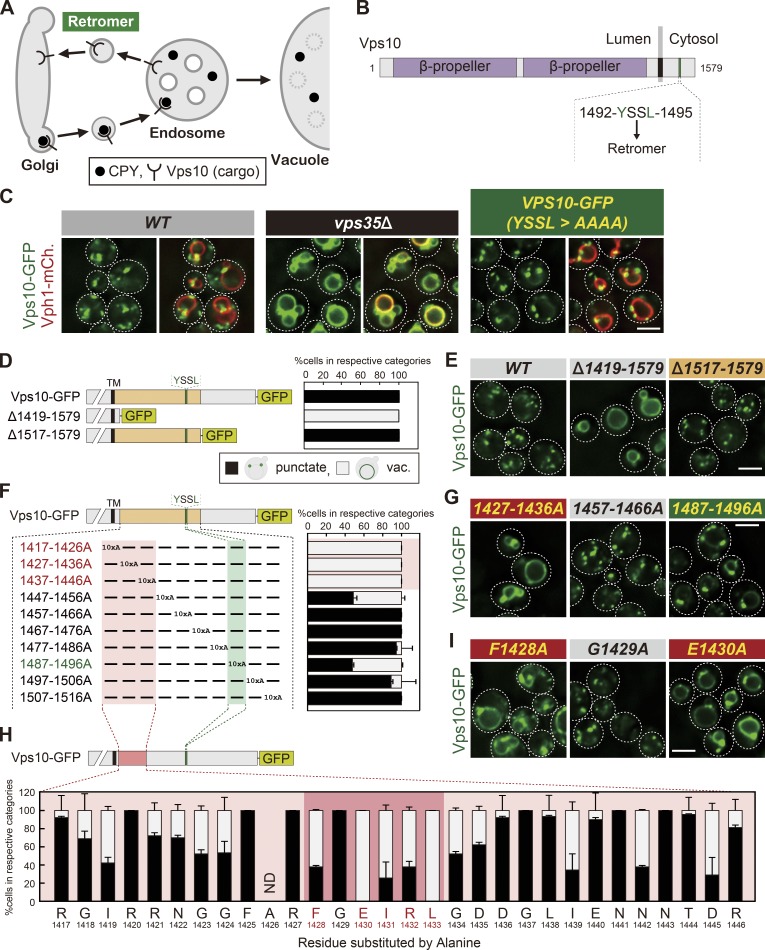
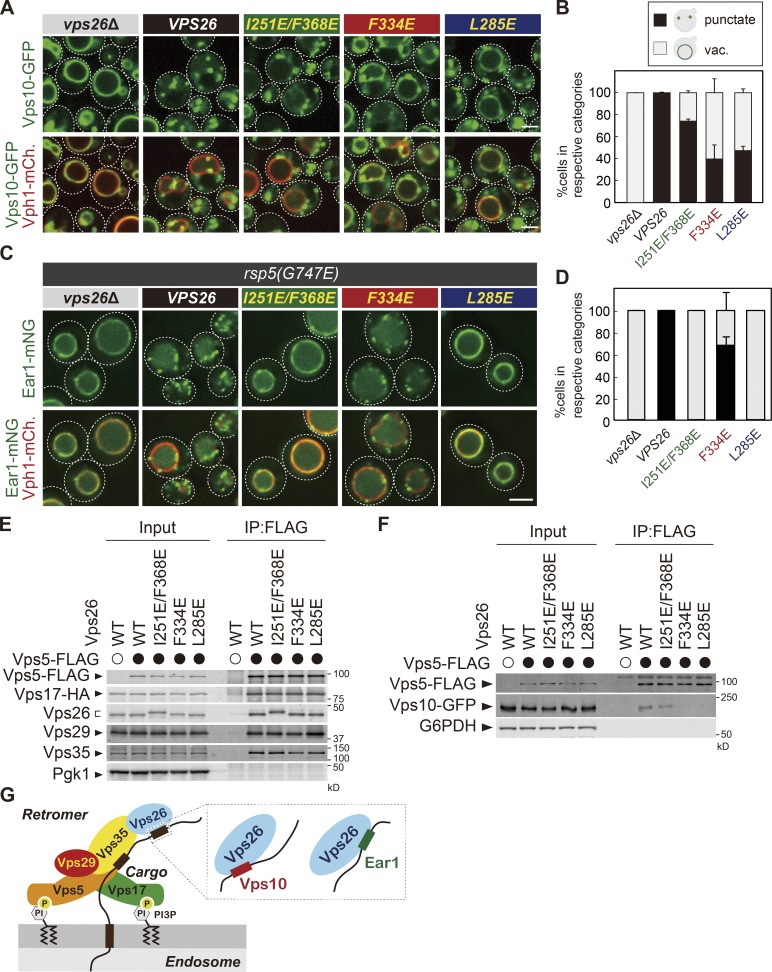
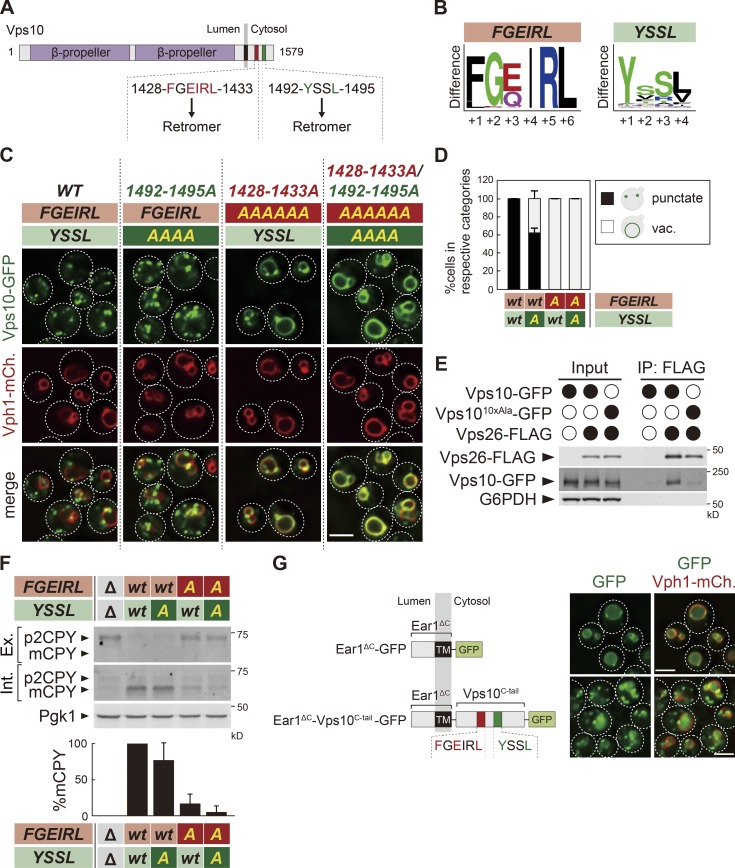
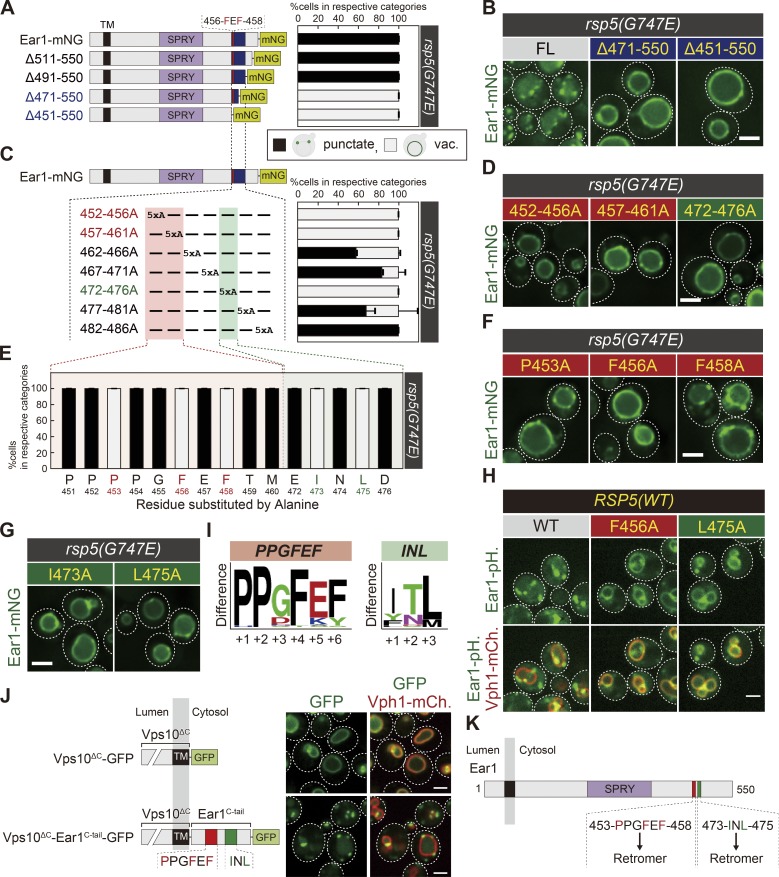
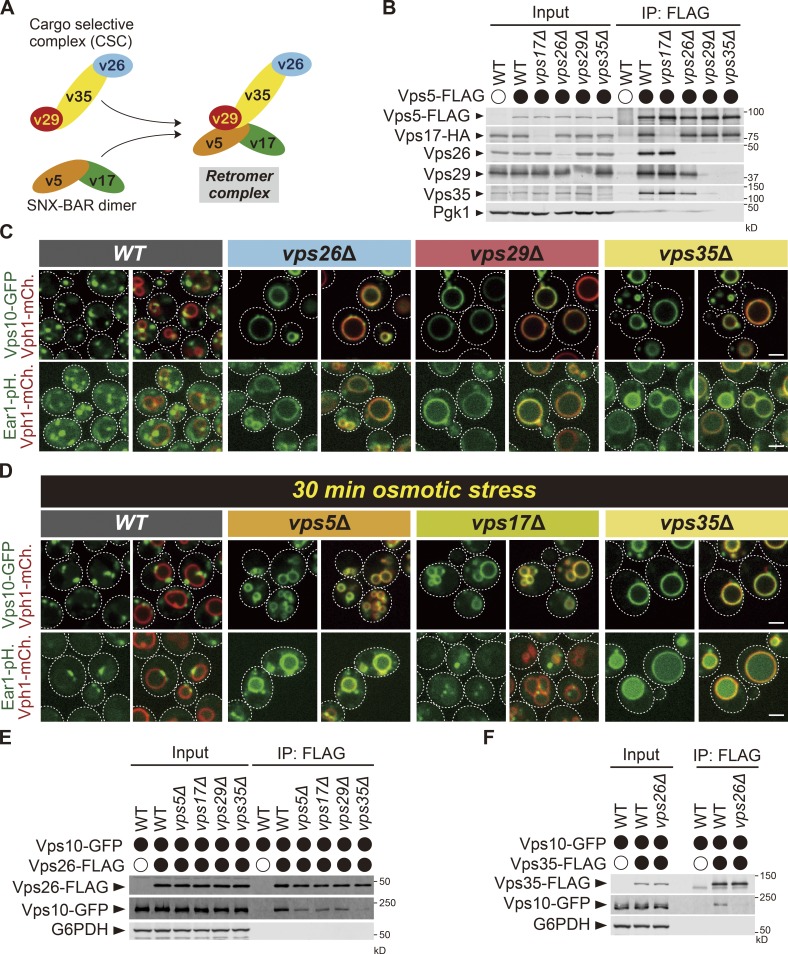
Retromer is an evolutionarily conserved protein complex, which sorts functionally diverse membrane proteins into recycling tubules/vesicles from the endosome. Many of the identified cargos possess a recycling signal sequence defined as ØX[L/M/V], where Ø is F/Y/W. However, this sequence is present in almost all proteins encoded in the genome. Also, several identified recycling sequences do not follow this rule. How then does retromer precisely select its cargos? Here, we reveal that an additional motif is also required for cargo retrieval. The two distinct motifs form a bipartite recycling signal recognized by the retromer subunits, Vps26 and Vps35. Strikingly, Vps26 utilizes different binding sites depending on the cargo, allowing retromer to recycle different membrane proteins. Thus, retromer interacts with cargos in a more complex manner than previously thought, which facilitates precise cargo recognition.
回转体(retromer)是一种进化上保守的蛋白复合物,它将功能多样的膜蛋白从内体分拣到再循环小管/小泡中。许多已鉴定的货物都具有再循环信号序列,定义为ØX[L/M/V],其中Ø 是 F/Y/W。然而,这个序列几乎存在于基因组编码的所有蛋白质中。此外,一些已鉴定的再循环序列并不遵循这一规则。那么,回转体如何精确选择其货物呢?在这里,我们揭示了货物回收还需要另一个基序。这两个不同的基序形成一个由 retromer 亚基 Vps26 和 Vps35 识别的二分再循环信号。引人注目的是,Vps26 根据货物利用不同的结合位点,使 retromer 能够再循环不同的膜蛋白。因此,retromer 与货物的相互作用比之前认为的更加复杂,这有助于精确的货物识别。