Bernasconi Rachele, Stat Michael, Koenders Annette, Paparini Andrea, Bunce Michael, Huggett Megan J
Centre for Marine Ecosystems Research, Edith Cowan University, Joondalup, WA, Australia.
Centre for Ecosystem Management, School of Science, Edith Cowan University, Joondalup, WA, Australia.
Front Microbiol. 2019 Jul 9;10:1529. doi: 10.3389/fmicb.2019.01529. eCollection 2019.
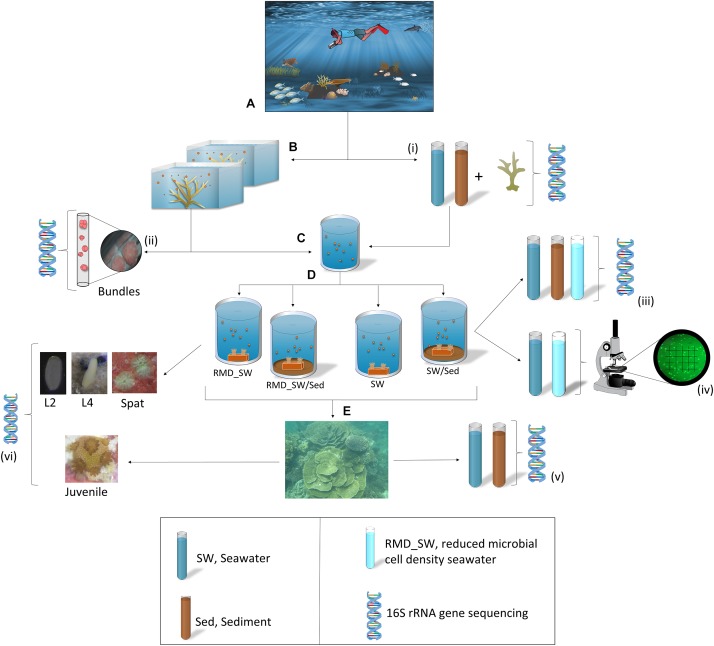
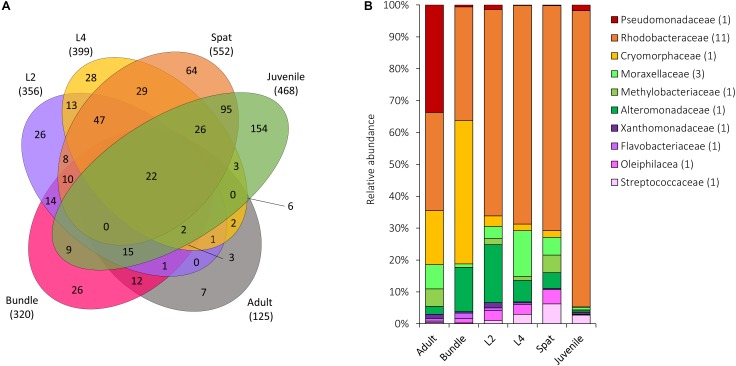
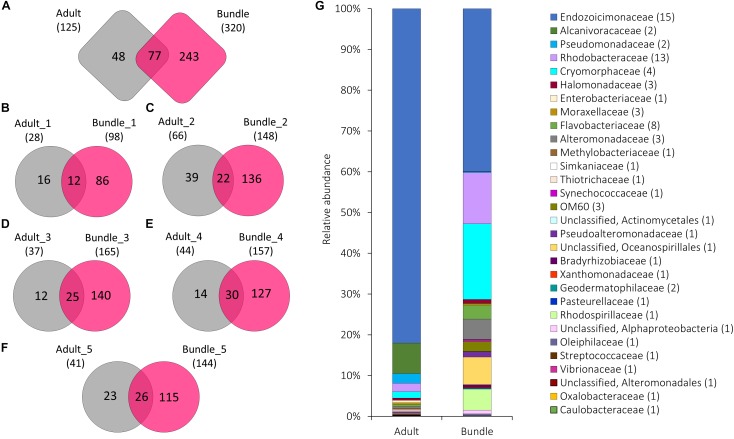
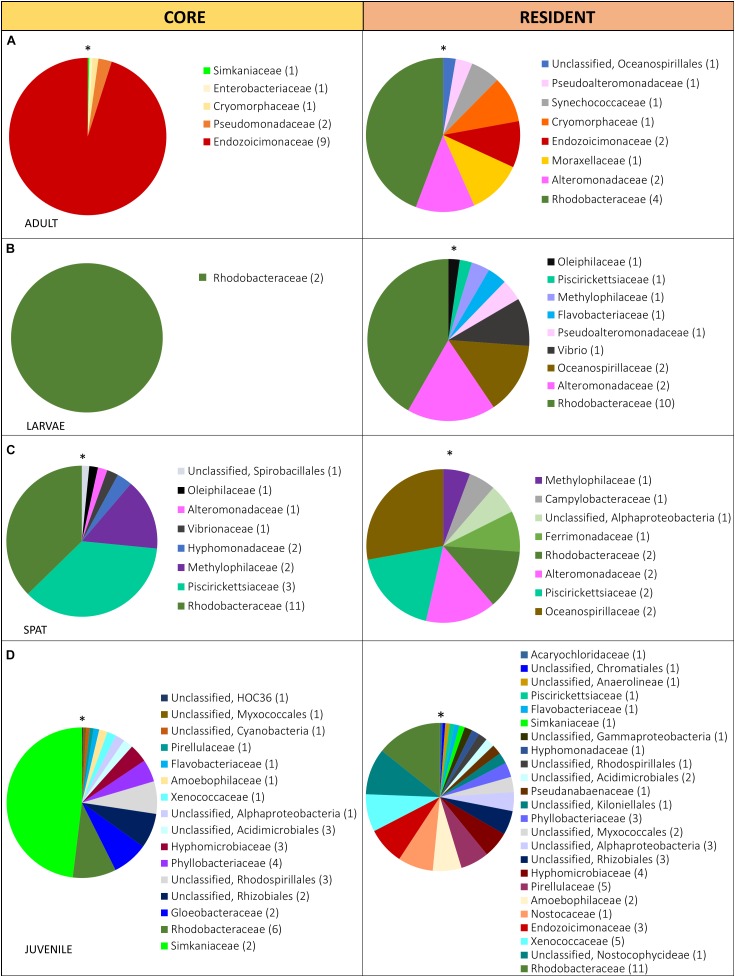
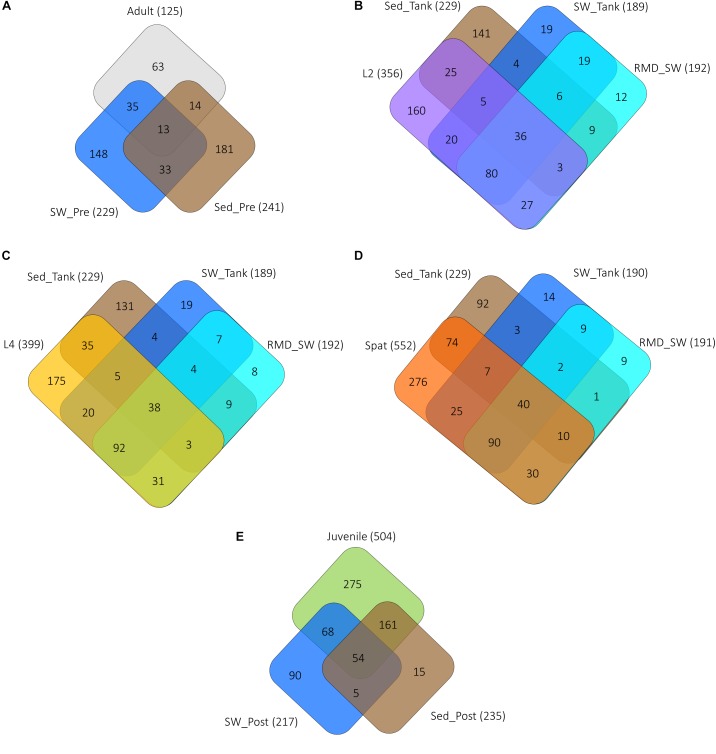
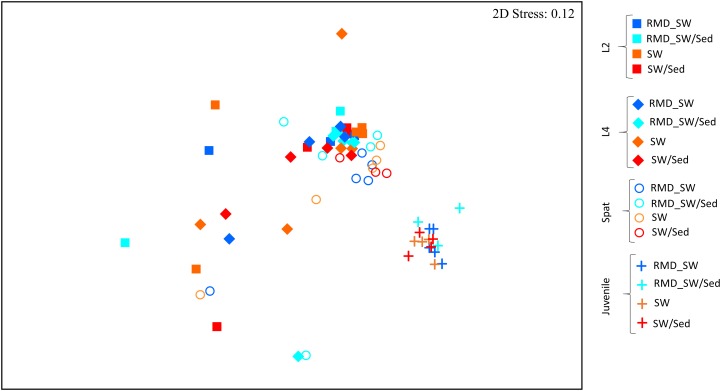
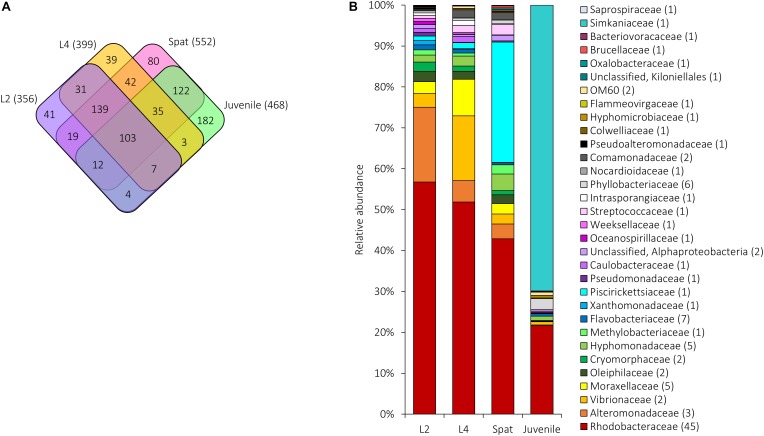
Bacterial communities are fundamental symbionts of corals. However, the process by which bacterial communities are acquired across the life history of corals, particularly in larval and early juvenile stages, is still poorly characterized. Here, transfer of bacteria of the Scleractinian coral from adults to spawned egg-sperm bundles was analyzed, as well as acquisition across early developmental stages (larvae and newly settled spat), and 6-month-old juveniles. Larvae were reared under manipulated environmental conditions to determine the source (maternal, seawater, or sediment) of bacteria likely to establish symbiotic relationships with the host using amplicon sequencing of the 16S rRNA gene. Maternal colonies directly transferred bacteria from the families Rhodobacteraceae, Cryomorphaceae, and Endozoicimonaceae to egg-sperm bundles. Furthermore, significant differences in the microbial community structure were identified across generations, yet the structure of the coral bacterial community across early life history stages was not impacted by different environmental rearing conditions. These data indicate that the uptake and structure of bacterial communities is developmentally, rather than environmentally, regulated. Both maternal coral colonies and ubiquitous bacteria found across environmental substrates represent a potential source of symbionts important in establishing the coral microbiome. Uniquely, we report the presence of variation with ontogeny of both the core and resident bacterial communities, supporting the hypothesis that microbial communities are likely to play specific roles within the distinct life history stages of the coral host.
细菌群落是珊瑚的基本共生体。然而,珊瑚在整个生命历程中获取细菌群落的过程,尤其是在幼体和幼龄早期阶段,仍未得到充分描述。在此,分析了石珊瑚从成体向排出的精卵束的细菌转移情况,以及在早期发育阶段(幼体和新附着的幼体)和6个月大的幼体中的细菌获取情况。在可控环境条件下饲养幼体,通过对16S rRNA基因进行扩增子测序,以确定可能与宿主建立共生关系的细菌来源(母体、海水或沉积物)。母体群体直接将红杆菌科、低温形态菌科和内共生单胞菌科的细菌转移到精卵束中。此外,还发现不同世代的微生物群落结构存在显著差异,但珊瑚细菌群落在早期生命历程阶段的结构并未受到不同环境饲养条件的影响。这些数据表明,细菌群落的摄取和结构是由发育调控的,而非环境调控。母体珊瑚群体和环境基质中普遍存在的细菌都是在建立珊瑚微生物组中起重要作用的共生体潜在来源。独特的是,我们报告了核心细菌群落和常驻细菌群落的个体发育均存在差异,这支持了微生物群落在珊瑚宿主不同生命历程阶段可能发挥特定作用的假说。