Romdhane Sana, Spor Aymé, Busset Hugues, Falchetto Laurent, Martin Juliette, Bizouard Florian, Bru David, Breuil Marie-Christine, Philippot Laurent, Cordeau Stéphane
Université Bourgogne Franche-Comté, INRA, AgroSup Dijon, Agroécologie, Dijon, France.
INRA, UE115 Domaine Expérimental d'Epoisses, Dijon, France.
Front Microbiol. 2019 Jul 9;10:1618. doi: 10.3389/fmicb.2019.01618. eCollection 2019.
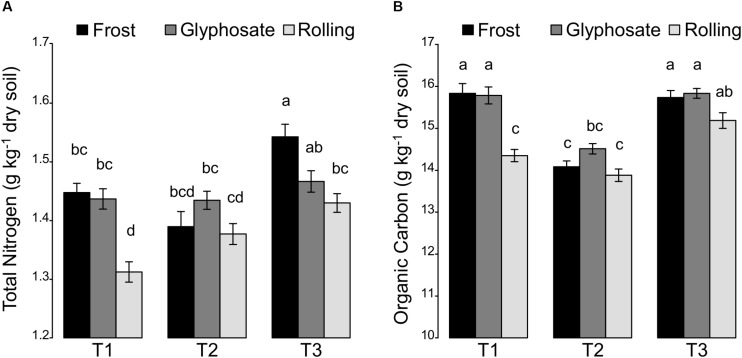
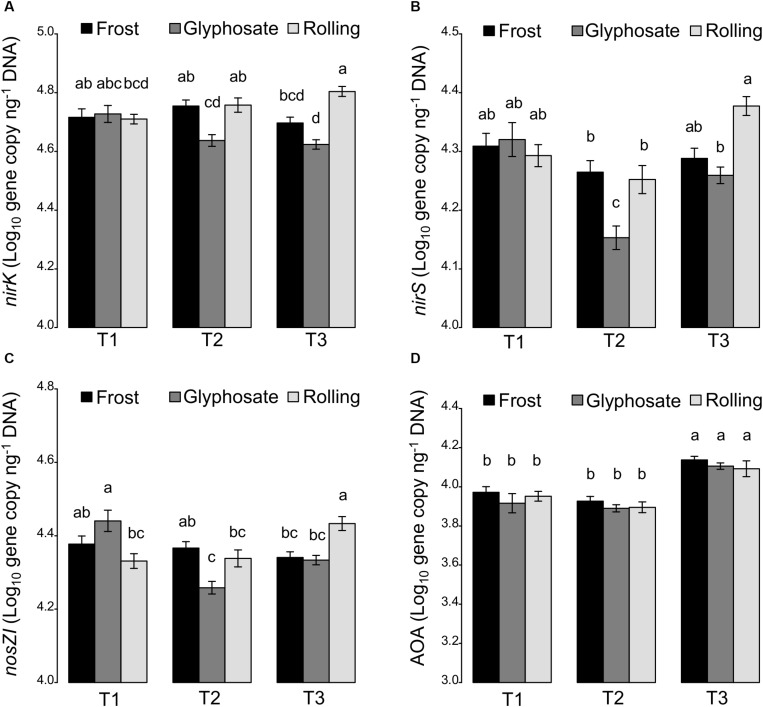
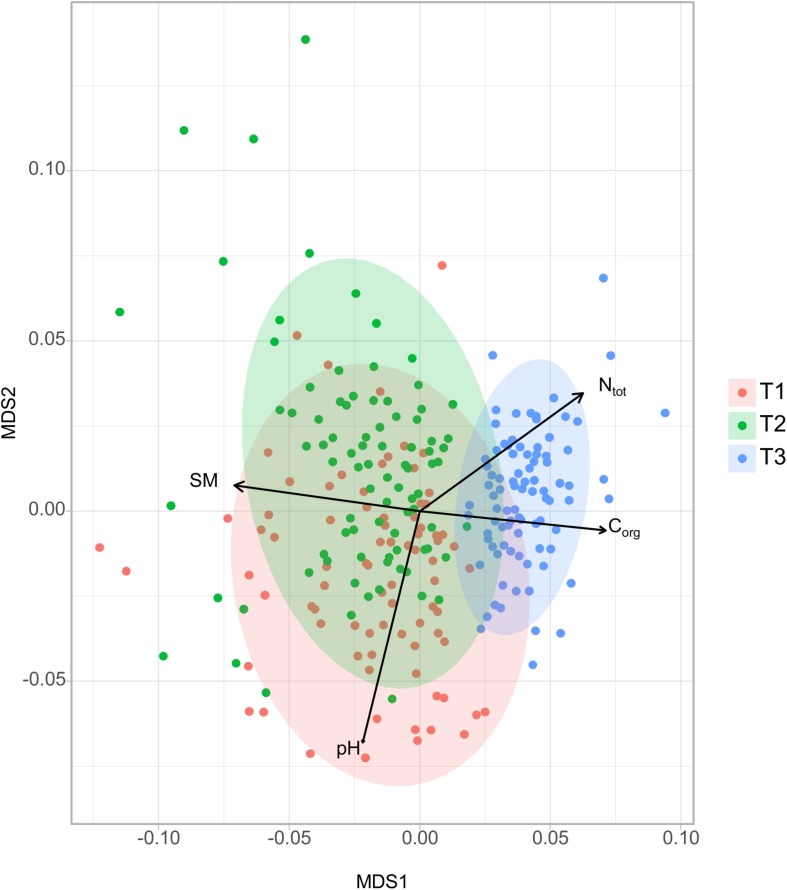
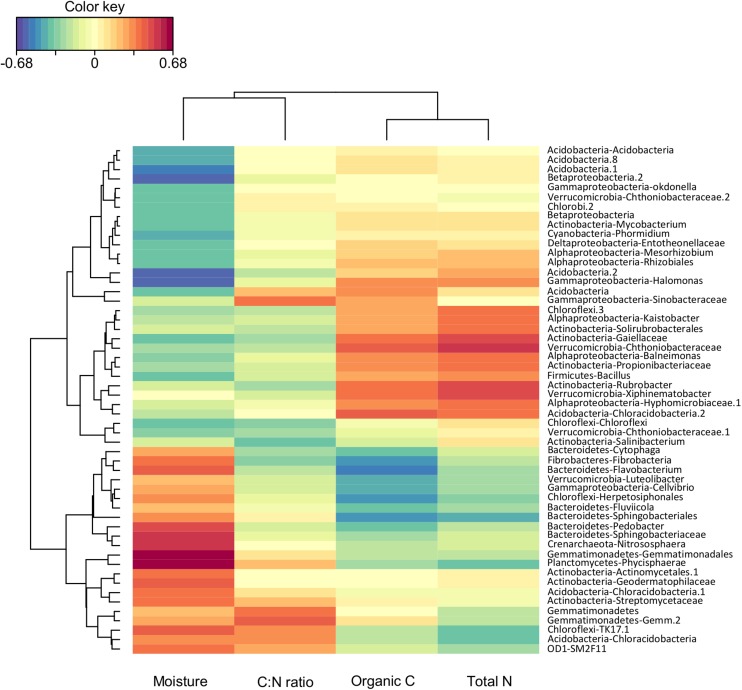
Cover cropping plays a key role in the maintenance of arable soil health and the enhancement of agroecosystem services. However, our understanding of how cover crop management impacts soil microbial communities and how these interactions might affect soil nutrient cycling is still limited. Here, we studied the impact of four cover crop mixtures varying in species richness and functional diversity, three cover crop termination strategies (i.e., frost, rolling, and glyphosate) and two levels of irrigation at the cover crop sowing on soil nitrogen and carbon dynamics, soil microbial diversity, and structure as well as the abundance of total bacteria, archaea, and -cycling microbial guilds. We found that total nitrogen and soil organic carbon were higher when cover crops were killed by frost compared to rolling and glyphosate termination treatments, while cover crop biomass was positively correlated to soil carbon and C:N ratio. Modifications of soil properties due to cover crop management rather than the composition of cover crop mixtures were related to changes in the abundance of ammonia oxidizers and denitrifiers, while there was no effect on the total bacterial abundance. Unraveling the underlying processes by which cover crop management shapes soil physico-chemical properties and bacterial communities is of importance to help selecting optimized agricultural practices for sustainable farming systems.
覆盖作物种植在维持耕地土壤健康和增强农业生态系统服务方面发挥着关键作用。然而,我们对覆盖作物管理如何影响土壤微生物群落以及这些相互作用如何影响土壤养分循环的理解仍然有限。在此,我们研究了四种物种丰富度和功能多样性不同的覆盖作物混合物、三种覆盖作物终止策略(即霜冻、碾压和草甘膦)以及覆盖作物播种时两种灌溉水平对土壤氮和碳动态、土壤微生物多样性和结构以及总细菌、古菌和参与碳循环的微生物类群丰度的影响。我们发现,与碾压和草甘膦终止处理相比,当覆盖作物因霜冻致死时,总氮和土壤有机碳含量更高,而覆盖作物生物量与土壤碳和碳氮比呈正相关。由于覆盖作物管理而非覆盖作物混合物组成导致的土壤性质变化与氨氧化菌和反硝化菌丰度的变化有关,而对总细菌丰度没有影响。揭示覆盖作物管理塑造土壤物理化学性质和细菌群落的潜在过程,对于帮助选择可持续农业系统的优化农业实践至关重要。