Department of Biochemistry, Army College of Medical Sciences, Brar Square, Delhi Cantt., New Delhi, 110010, India.
J Mol Model. 2019 Jul 23;25(8):240. doi: 10.1007/s00894-019-4133-1.
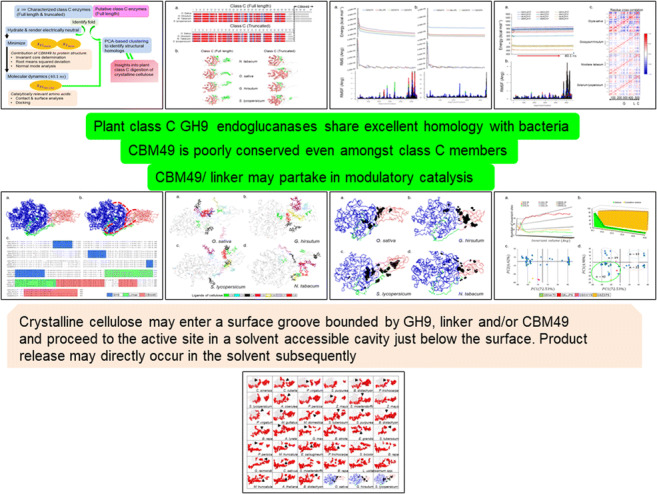
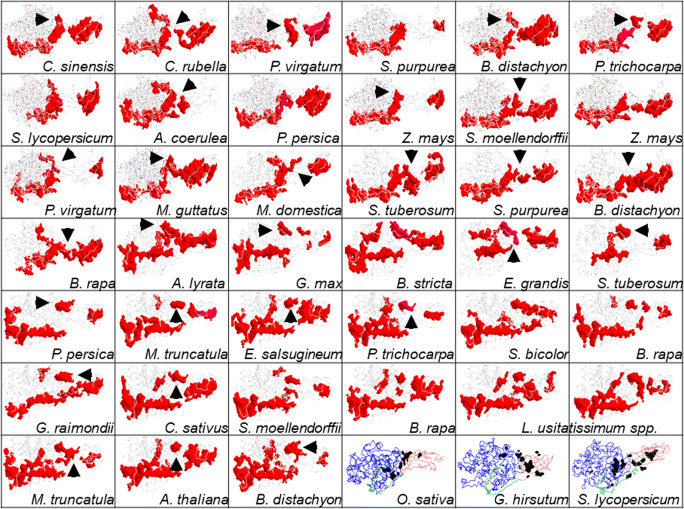
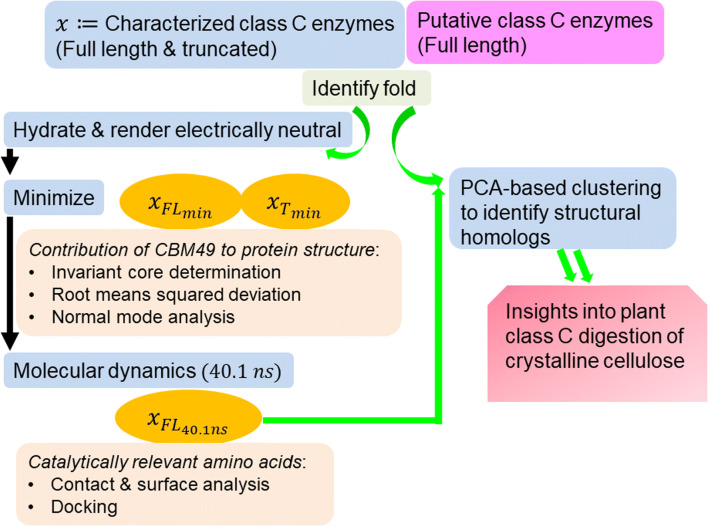
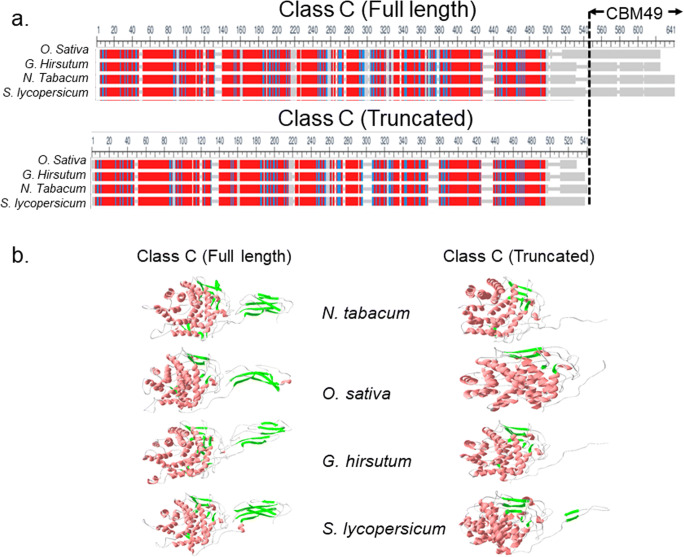
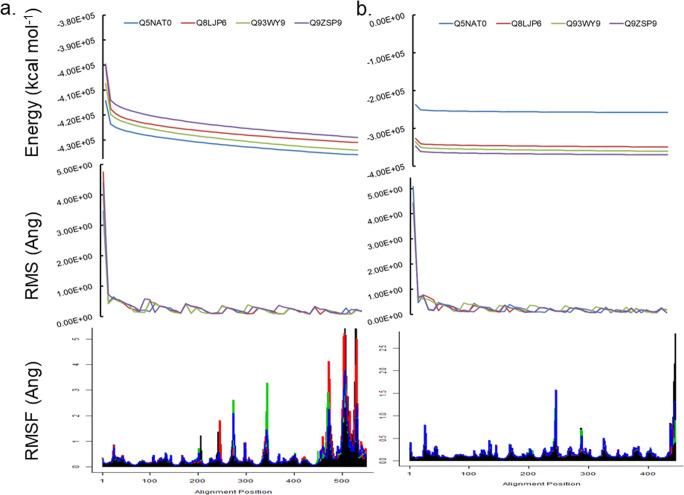
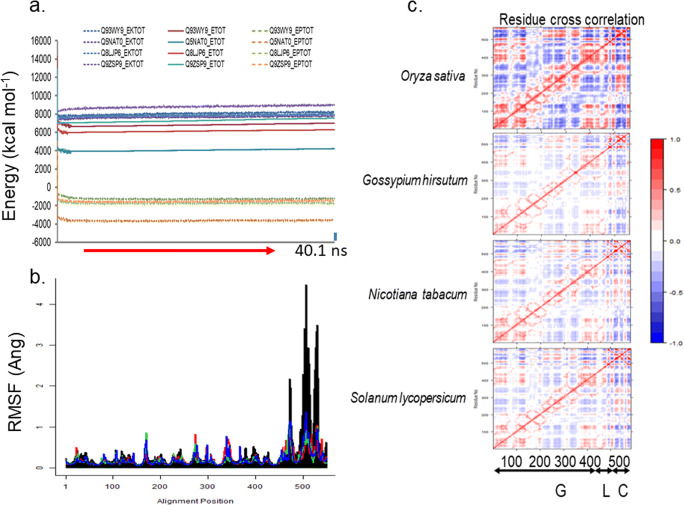
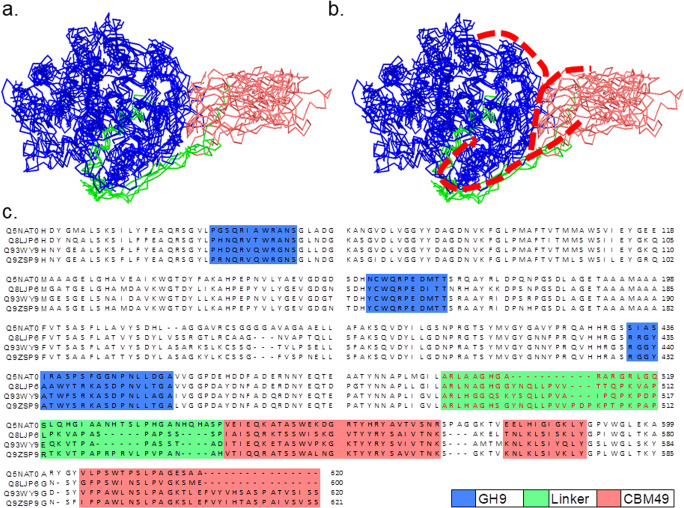
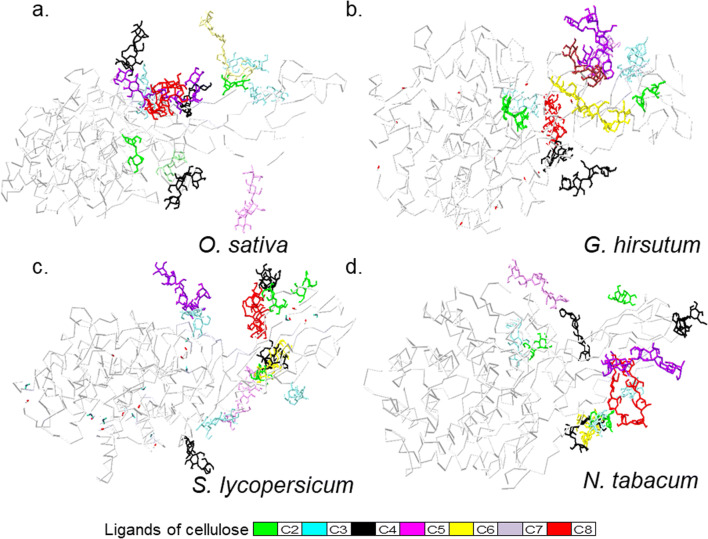
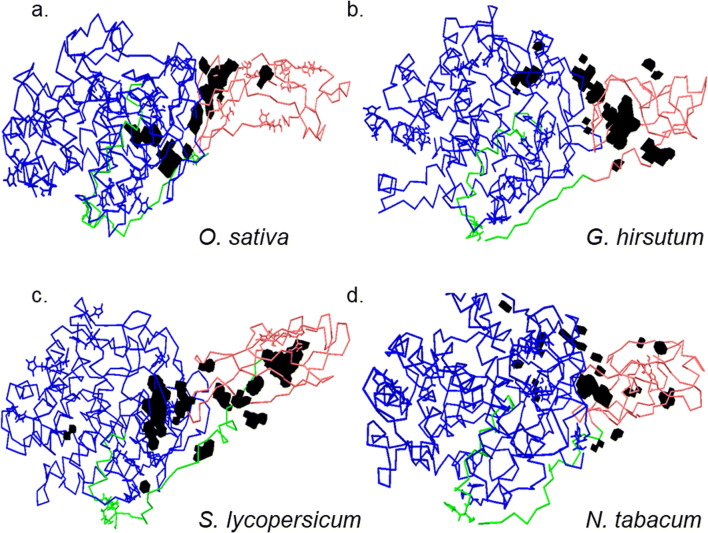
Biofuels such as γ-valerolactone, bioethanol, and biodiesel are derived from potentially fermentable cellulose and vegetable oils. Plant class C GH9 endoglucanases are CBM49-encompassing hydrolases that cleave the β (1 → 4) glycosidic linkage of contiguous D-glucopyranose residues of crystalline cellulose. Here, I analyse 3D-homology models of characterised and putative class C enzymes to glean insights into the contribution of the GH9, linker, and CBM49 to the mechanism(s) of crystalline cellulose digestion. Crystalline cellulose may be accommodated in a surface groove which is imperfectly bounded by the GH9_CBM49, GH9_linker, and linker_CBM49 surfaces and thence digested in a solvent accessible subsurface cavity. The physical dimensions and distortions thereof, of the groove, are mediated in part by the bulky side chains of aromatic amino acids that comprise it and may also result in a strained geometry of the bound cellulose polymer. These data along with an almost complete absence of measurable cavities, along with poorly conserved, hydrophobic, and heterogeneous amino acid composition, increased atomic motion of the CBM49_linker junction, and docking experiements with ligands of lower degrees of polymerization suggests a modulatory rather than direct role for CBM49 in catalysis. Crystalline cellulose is the de facto substrate for CBM-containing plant and non-plant GH9 enzymes, a finding supported by exceptional sequence- and structural-homology. However, despite the implied similarity in general acid-base catalysis of crystalline cellulose, this study also highlights qualitative differences in substrate binding and glycosidic bond cleavage amongst class C members. Results presented may aid the development of novel plant-based GH9 endoglucanases that could extract and utilise potential fermentable carbohydrates from biomass. Graphical Abstract Crystalline cellulose digestion by plant class C GH9 endoglucanases - an in silico assessment of function.
生物燃料,如γ-戊内酯、生物乙醇和生物柴油,是由潜在可发酵的纤维素和植物油衍生而来的。植物 C 类 GH9 内切葡聚糖酶是包含 CBM49 的碳水化合物结合模块的水解酶,可切割结晶纤维素中连续 D-吡喃葡萄糖残基的β(1→4)糖苷键。在这里,我分析了已鉴定和假定的 C 类酶的 3D 同源建模,以深入了解 GH9、接头和 CBM49 对结晶纤维素消化机制的贡献。结晶纤维素可能被容纳在一个表面凹槽中,该凹槽由 GH9_CBM49、GH9_linker 和 linker_CBM49 表面不完全限定,然后在可及的亚表面腔中进行消化。凹槽的物理尺寸及其变形部分由构成凹槽的芳香族氨基酸的庞大侧链介导,并且还可能导致结合的纤维素聚合物的应变几何形状。这些数据以及几乎完全不存在可测量的腔,以及较差的保守性、疏水性和异质性的氨基酸组成、CBM49_linker 连接点的原子运动增加,以及与聚合度较低的配体的对接实验表明,CBM49 在催化中起调节作用而不是直接作用。结晶纤维素是含有 CBM 的植物和非植物 GH9 酶的实际底物,这一发现得到了异常的序列和结构同源性的支持。然而,尽管在结晶纤维素的一般酸碱催化中存在暗示的相似性,但本研究也强调了 C 类成员在底物结合和糖苷键裂解方面的定性差异。所提出的结果可能有助于开发新型基于植物的 GH9 内切葡聚糖酶,这些酶可以从生物质中提取和利用潜在可发酵的碳水化合物。