Section on Nervous System Development and Plasticity, The Eunice Kennedy Shriver National Institute of Child Health and Human Development (NICHD), National Institutes of Health (NIH), Bethesda, Maryland.
The Henry M. Jackson Foundation for the Advancement of Military Medicine, Inc., Bethesda, Maryland.
Glia. 2019 Nov;67(11):2107-2124. doi: 10.1002/glia.23668. Epub 2019 Jul 24.
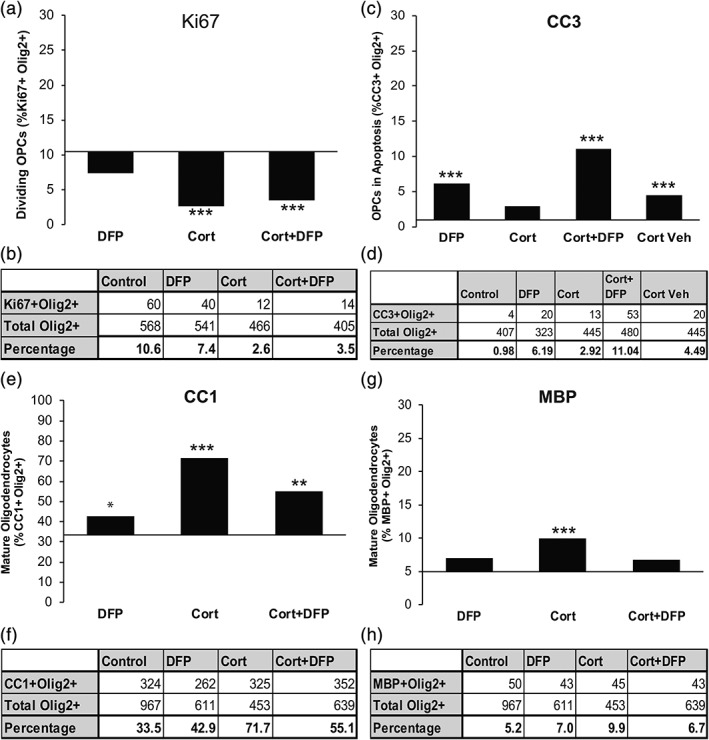
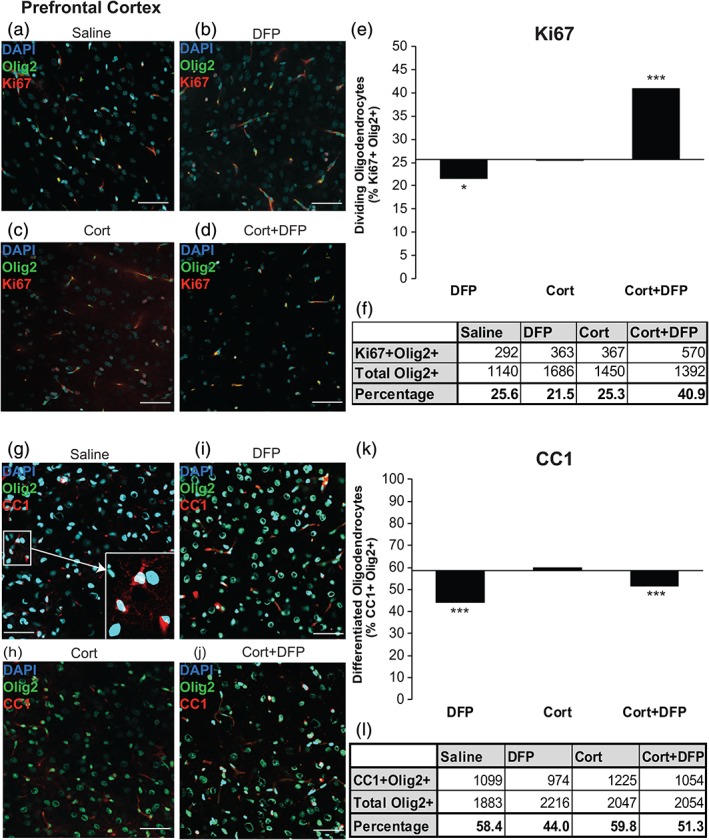
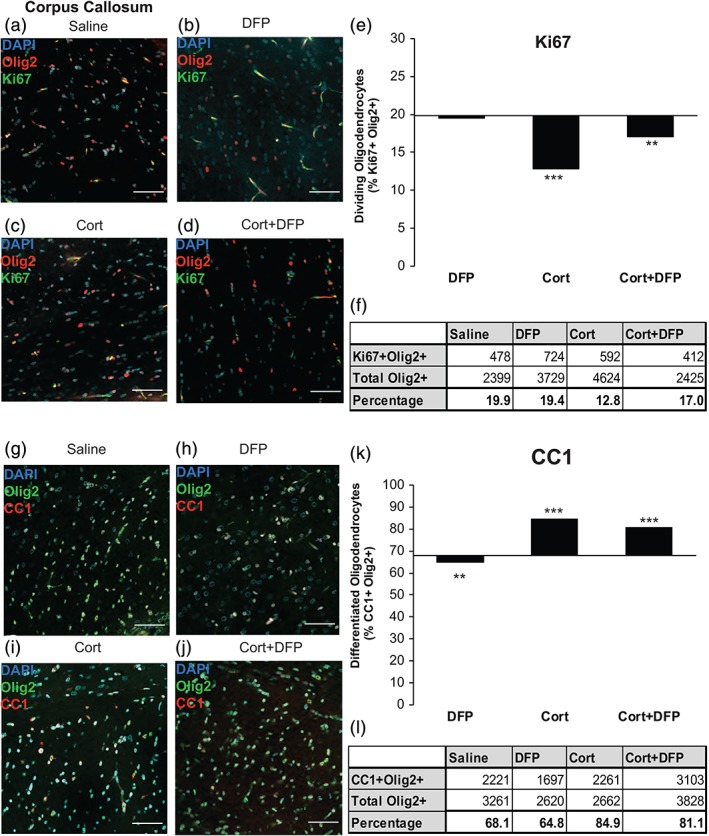
Low level sarin nerve gas and other anti-cholinesterase agents have been implicated in Gulf War illness (GWI), a chronic multi-symptom disorder characterized by cognitive, pain and fatigue symptoms that continues to afflict roughly 32% of veterans from the 1990-1991 Gulf War. How disrupting cholinergic synaptic transmission could produce chronic illness is unclear, but recent research indicates that acetylcholine also mediates communication between axons and oligodendrocytes. Here we investigated the hypothesis that oligodendrocyte development is disrupted by Gulf War agents, by experiments using the sarin-surrogate acetylcholinesterase inhibitor, diisopropyl fluorophosphate (DFP). The effects of corticosterone, which is used in some GWI animal models, were also investigated. The data show that DFP decreased both the number of mature and dividing oligodendrocytes in the rat prefrontal cortex (PFC), but differences were found between PFC and corpus callosum. The differences seen between the PFC and corpus callosum likely reflect the higher percentage of proliferating oligodendroglia in the adult PFC. In cell culture, DFP also decreased oligodendrocyte survival through a non-cholinergic mechanism. Corticosterone promoted maturation of oligodendrocytes, and when used in combination with DFP it had protective effects by increasing the pool of mature oligodendrocytes and decreasing proliferation. Cell culture studies indicate direct effects of both DFP and corticosterone on OPCs, and by comparison with in vivo results, we conclude that in addition to direct effects, systemic effects and interruption of neuron-glia interactions contribute to the detrimental effects of GW agents on oligodendrocytes. Our results demonstrate that oligodendrocytes are an important component of the pathophysiology of GWI.
低水平沙林神经毒气和其他抗胆堿酯酶剂与海湾战争病(GWI)有关,这是一种慢性多症状疾病,其特征是认知、疼痛和疲劳症状,继续困扰著大约 32% 的 1990-1991 年海湾战争退伍军人。胆碱能突触传递如何中断会导致慢性疾病尚不清楚,但最近的研究表明,乙酰膽堿也介导轴突和寡突膠細胞之间的通讯。在这里,我们通过使用沙林代用膽堿酯酶抑制剂二异丙基氟磷酸酯(DFP)的实验,研究了海湾战争剂破坏少突膠細胞发育的假说。还研究了皮质酮的作用,皮质酮用于一些 GWI 动物模型。数据显示,DFP 降低了大鼠前额叶皮质(PFC)中成熟和分裂少突膠細胞的数量,但在 PFC 和胼胝体之间发现了差异。在 PFC 和胼胝体之间看到的差异可能反映了成年 PFC 中增殖性少突膠細胞的百分比更高。在细胞培养中,DFP 还通过非膽堿能机制降低少突膠細胞的存活率。皮质酮促进少突膠細胞成熟,当与 DFP 一起使用时,它通过增加成熟少突膠細胞的池并减少增殖来发挥保护作用。细胞培养研究表明 DFP 和皮质酮对 OPC 有直接作用,并且与体内结果相比,我们得出结论,除了直接作用外,全身作用和神经元-膠細胞相互作用的中断也导致 GW 剂对少突膠細胞的有害影响。我们的结果表明,少突膠細胞是 GWI 病理生理学的重要组成部分。