Research Project Leaders, Forestry Sciences Laboratory, USDA Forest Service, Southern Research Station, Research Triangle Park, North Carolina, United States of America.
PLoS One. 2019 Jul 24;14(7):e0219242. doi: 10.1371/journal.pone.0219242. eCollection 2019.
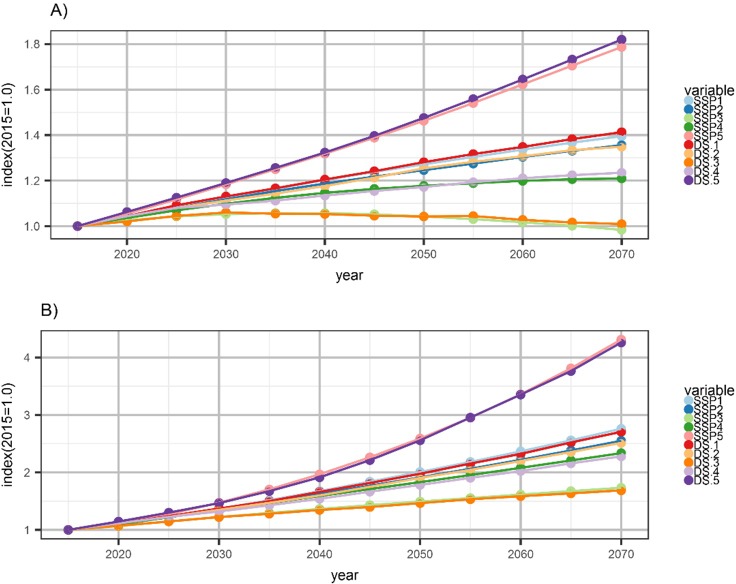
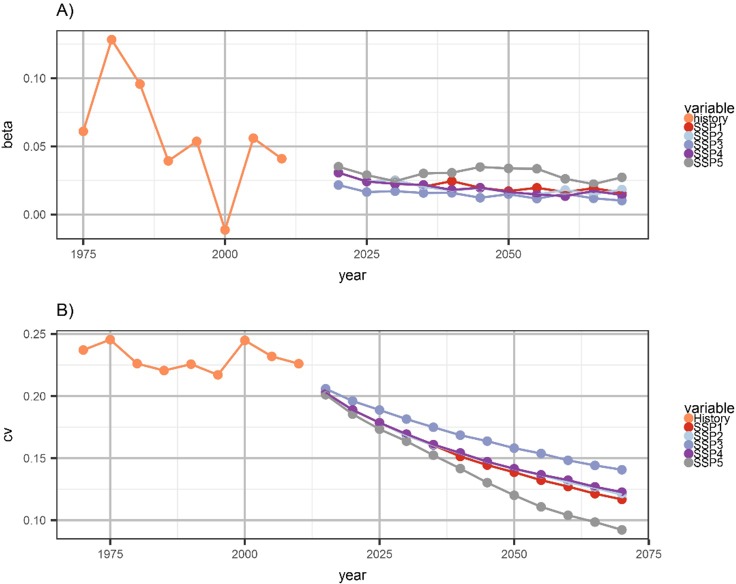
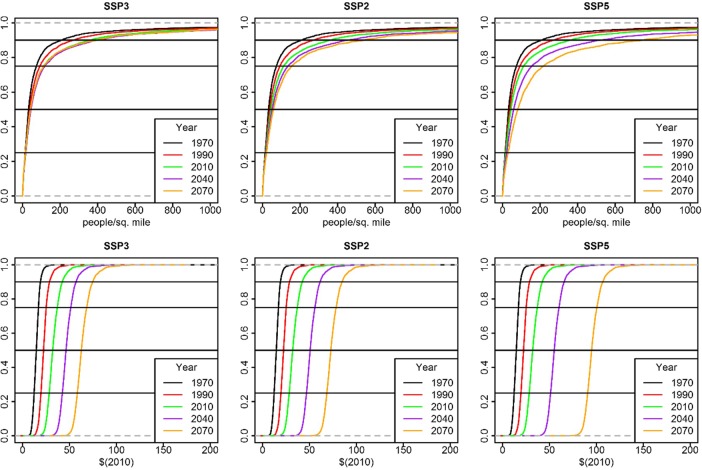
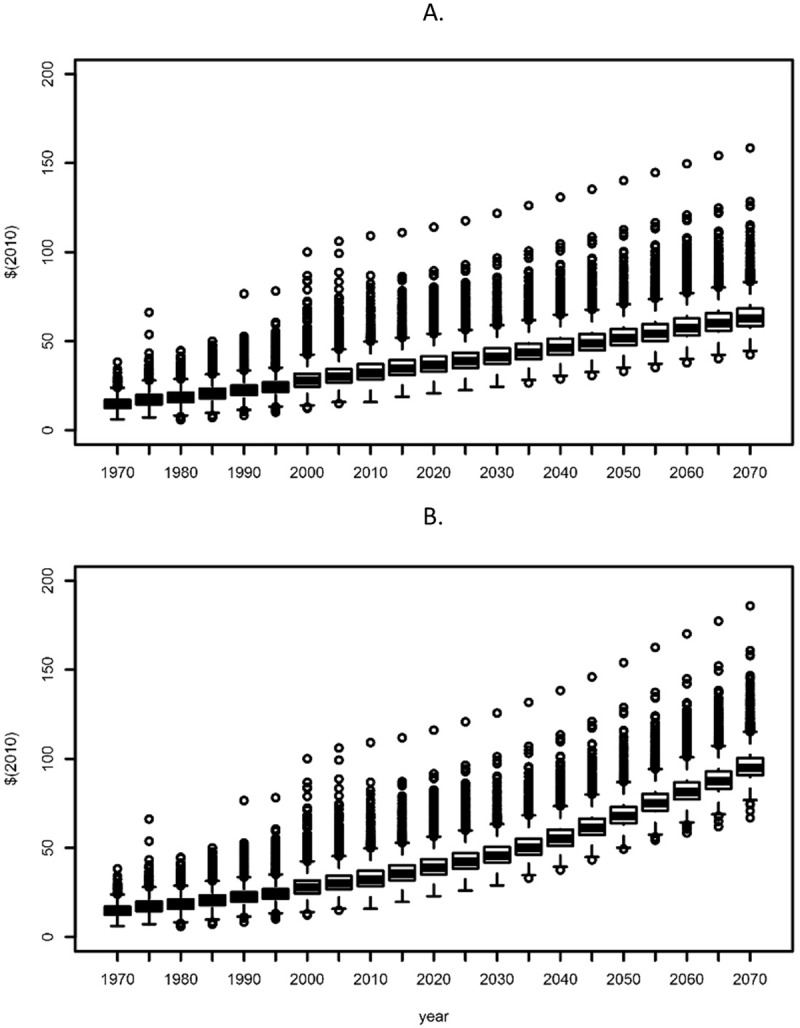
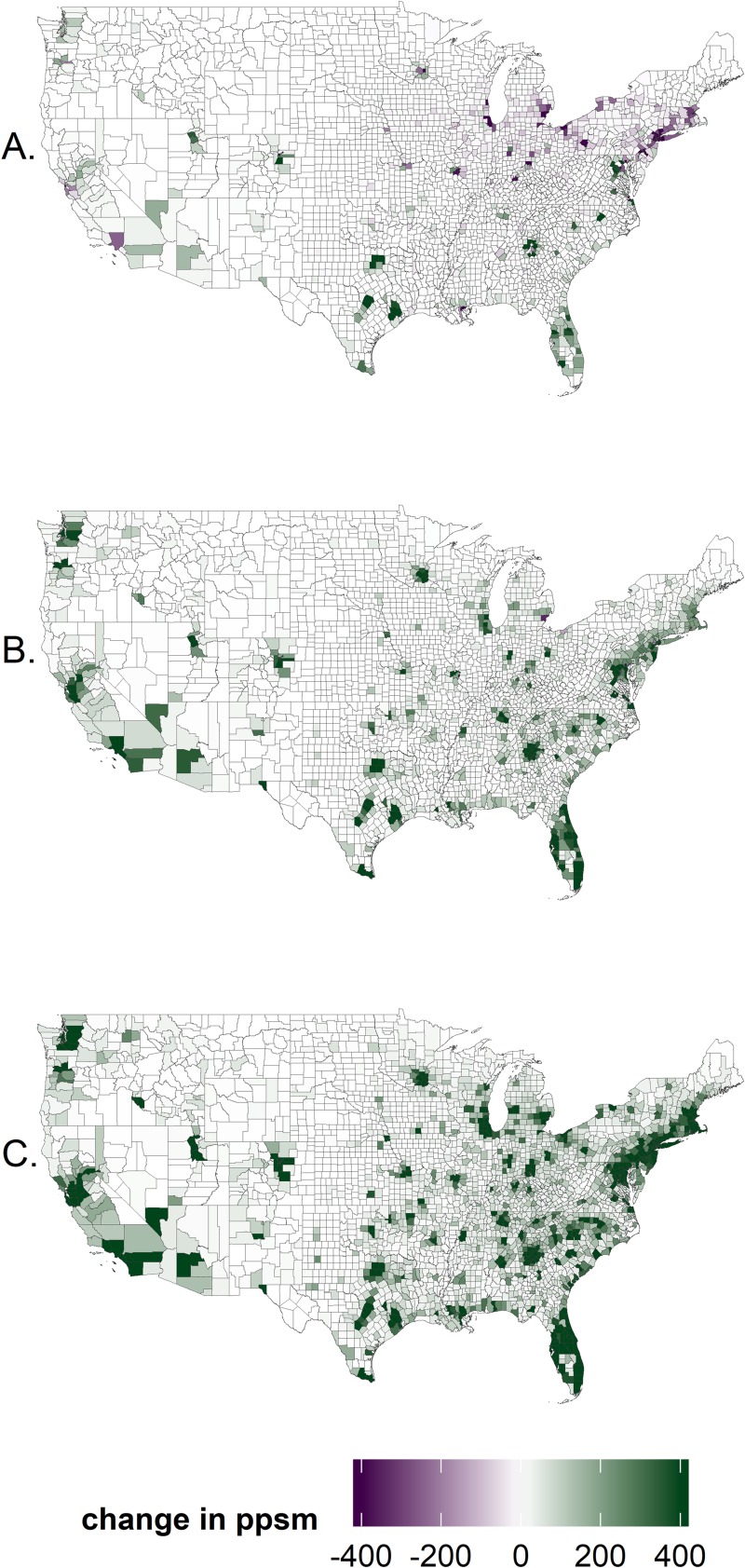
Downscaled climate projections need to be linked to downscaled projections of population and economic growth to fully develop implications for land, natural resources, and ecosystems for future scenarios. We develop an empirical spatiotemporal approach for jointly projecting population and income at the county scale in the United States that is consistent with neoclassical economic growth theory and overlapping labor markets and that accounts for labor migration and spatial spillovers. Downscaled projections generated for the five Shared Socioeconomic Pathways used to support global scenario analysis generally show growth focused around relatively few centers especially in the southeast and western regions, with some areas in the Midwest and northeast experiencing population declines. Results are consistent with economic growth theory and with historical trends in population change and convergence of per capita personal income across US counties.
需要将缩小规模的气候预测与人口和经济增长的缩小规模预测联系起来,以充分了解未来情景下对土地、自然资源和生态系统的影响。我们开发了一种经验性的时空方法,用于在美国县级范围内联合预测人口和收入,该方法符合新古典经济增长理论和重叠的劳动力市场,并考虑到劳动力迁移和空间溢出。为支持全球情景分析而生成的五个共享社会经济途径的缩小规模预测通常显示出以相对较少的中心为重点的增长,特别是在东南部和西部地区,中西部和东北部的一些地区人口下降。结果与经济增长理论以及美国各县人口变化和人均个人收入趋同的历史趋势一致。