Division of Cardiology Department of Medicine Johns Hopkins University School of Medicine Baltimore MD.
Department of Biomedical Engineering Johns Hopkins University School of Medicine Baltimore MD.
J Am Heart Assoc. 2019 Aug 6;8(15):e012351. doi: 10.1161/JAHA.119.012351. Epub 2019 Jul 25.
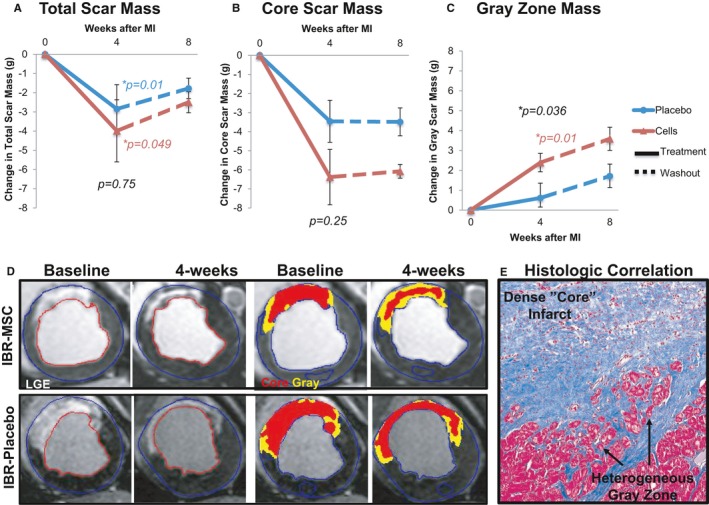
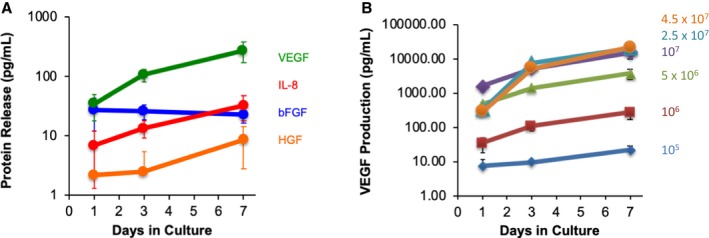
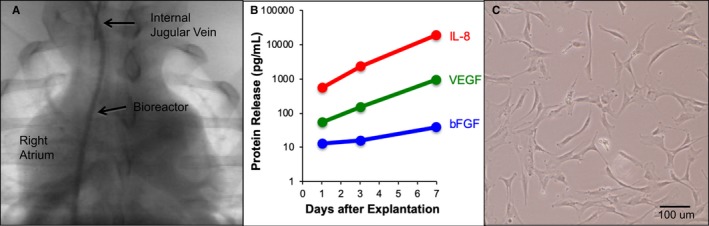
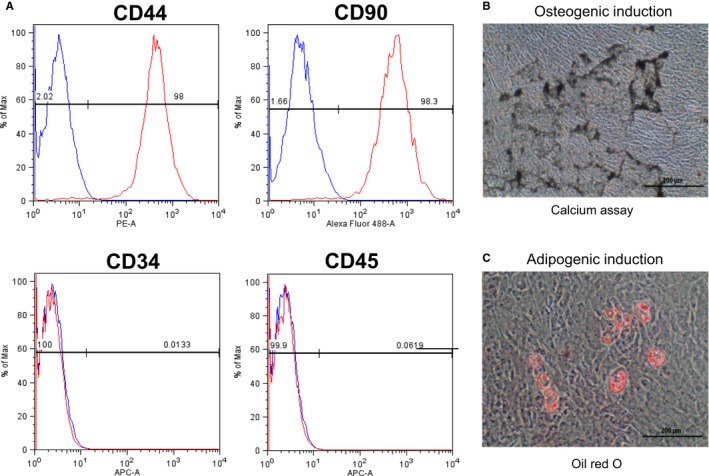
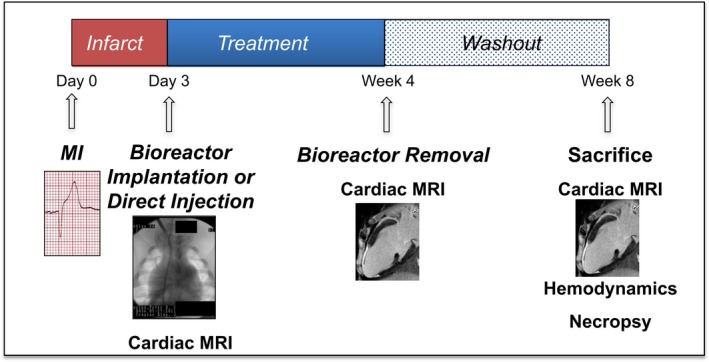
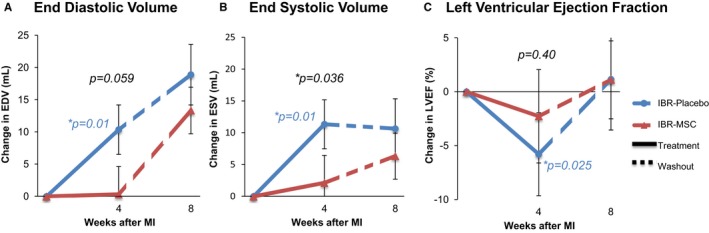
Background Prevention of adverse remodeling after myocardial infarction (MI) is an important goal of stem cell therapy. Clinical trial results vary, however, and poor cell retention and survival after delivery likely limit the opportunity to exert beneficial effects. To overcome these limitations, we built an implantable intravascular bioreactor (IBR) designed to protect contained cells from washout, dilution, and immune attack while allowing sustained release of beneficial paracrine factors. Methods and Results IBRs were constructed using semipermeable membrane adhered to a clinical-grade catheter shaft. Mesenchymal stem cell (MSC) viability in and paracrine factor release from IBRs were assessed in vitro and IBR biocompatibility and immune protection confirmed in vivo. In a porcine anterior MI model, IBRs containing 25 million allogeneic MSCs (IBR-MSCs) were compared with IBRs containing media alone (IBR-Placebo; n=8 per group) with adverse remodeling assessed by magnetic resonance imaging. Four weeks after MI, IBR-MSCs had no significant change in end-diastolic volume (+0.33±4.32 mL; P=0.89), end-systolic volume (+2.14±4.13 mL; P=0.21), and left ventricular ejection fraction (-2.27±2.94; P=0.33) while IBR-Placebo had significant increases in end-diastolic volume (+10.37±3.84 mL; P=0.01) and ESV (+11.35±2.88 mL; P=0.01), and a significant decrease in left ventricular ejection fraction (-5.78±1.70; P=0.025). Eight weeks after MI, adherent pericarditis was present in 0 of 8 IBR-MSCs versus 4 of 8 IBR-Placebo (P=0.02), suggesting an anti-inflammatory effect. In a separate study, 25 million allogeneic pig MSCs directly injected in the peri-infarct zone 3 days after MI (n=6) showed no significant benefit in adverse remodeling at 4 weeks compared with IBR-MSCs. Conclusions MSCs deployed inside an implantable, removable, and potentially rechargeable bioreactor in a large animal model remain viable, are immunoprotected, and attenuate adverse remodeling 4 weeks after MI.
心肌梗死后(MI)预防不良重构是干细胞治疗的一个重要目标。然而,临床试验结果各异,并且在输送后细胞保留和存活不良可能限制发挥有益作用的机会。为了克服这些限制,我们构建了一种可植入的血管内生物反应器(IBR),旨在保护包含的细胞免受冲洗、稀释和免疫攻击,同时允许持续释放有益的旁分泌因子。
IBR 是通过将半透膜粘附在临床级导管轴上来构建的。在体外评估了 IBR 中骨髓间充质干细胞(MSC)的活力和旁分泌因子的释放,并用体内实验证实了 IBR 的生物相容性和免疫保护。在猪的前壁 MI 模型中,将含有 2500 万个同种异体 MSC 的 IBR(IBR-MSCs)与含有培养基的 IBR(IBR-Placebo;每组 8 只)进行比较,通过磁共振成像评估不良重构。MI 后 4 周,IBR-MSCs 的舒张末期容积(EDV;+0.33±4.32 mL;P=0.89)、收缩末期容积(ESV;+2.14±4.13 mL;P=0.21)和左心室射血分数(LVEF;-2.27±2.94;P=0.33)没有显著变化,而 IBR-Placebo 的 EDV(+10.37±3.84 mL;P=0.01)和 ESV(+11.35±2.88 mL;P=0.01)有显著增加,LVEF 有显著降低(-5.78±1.70;P=0.025)。MI 后 8 周,8 只 IBR-MSCs 中无 1 只出现粘连性心包炎,而 8 只 IBR-Placebo 中有 4 只出现粘连性心包炎(P=0.02),提示具有抗炎作用。在另一项研究中,在 MI 后 3 天直接将 2500 万个同种异体猪 MSC 注射到梗死区周围,与 IBR-MSCs 相比,在 4 周时对不良重构没有显著益处。
在大型动物模型中,可植入、可移除和可充电的生物反应器中植入的 MSC 保持活力,具有免疫保护作用,并在 MI 后 4 周减轻不良重构。