Department of Hematology and Hematopoietic Cell Transplantation, City of Hope National Medical Center, Duarte, California.
Hematologic Malignancies and Stem Cell Transplantation Institute, City of Hope National Medical Center, Duarte, California.
Cancer Discov. 2019 Oct;9(10):1422-1437. doi: 10.1158/2159-8290.CD-18-1259. Epub 2019 Jul 24.
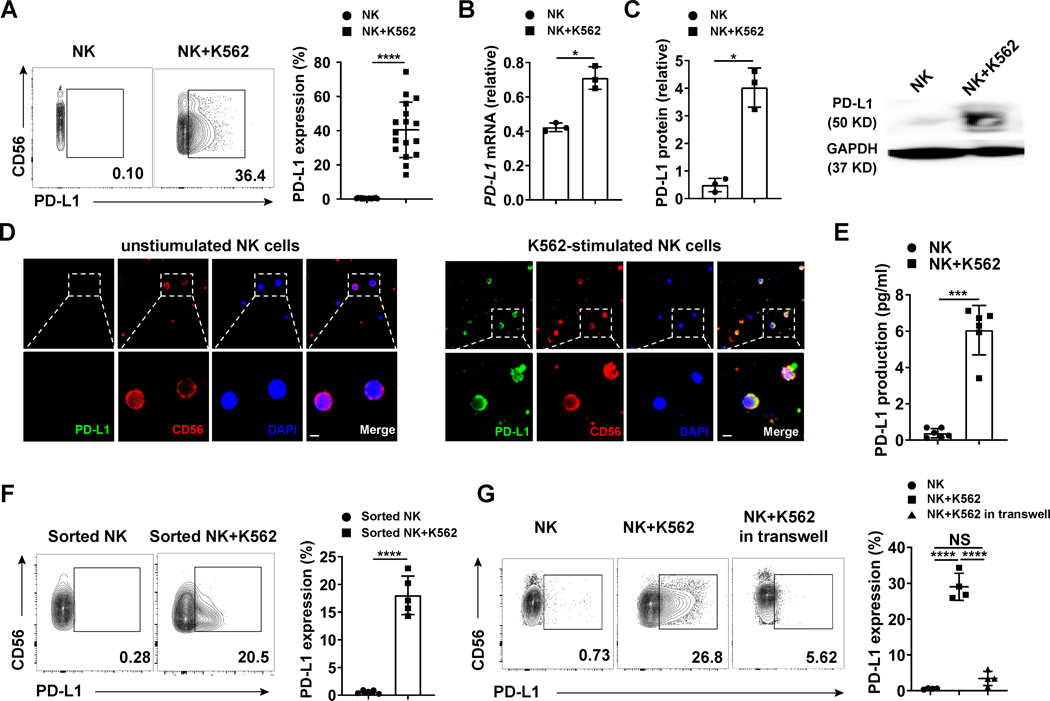
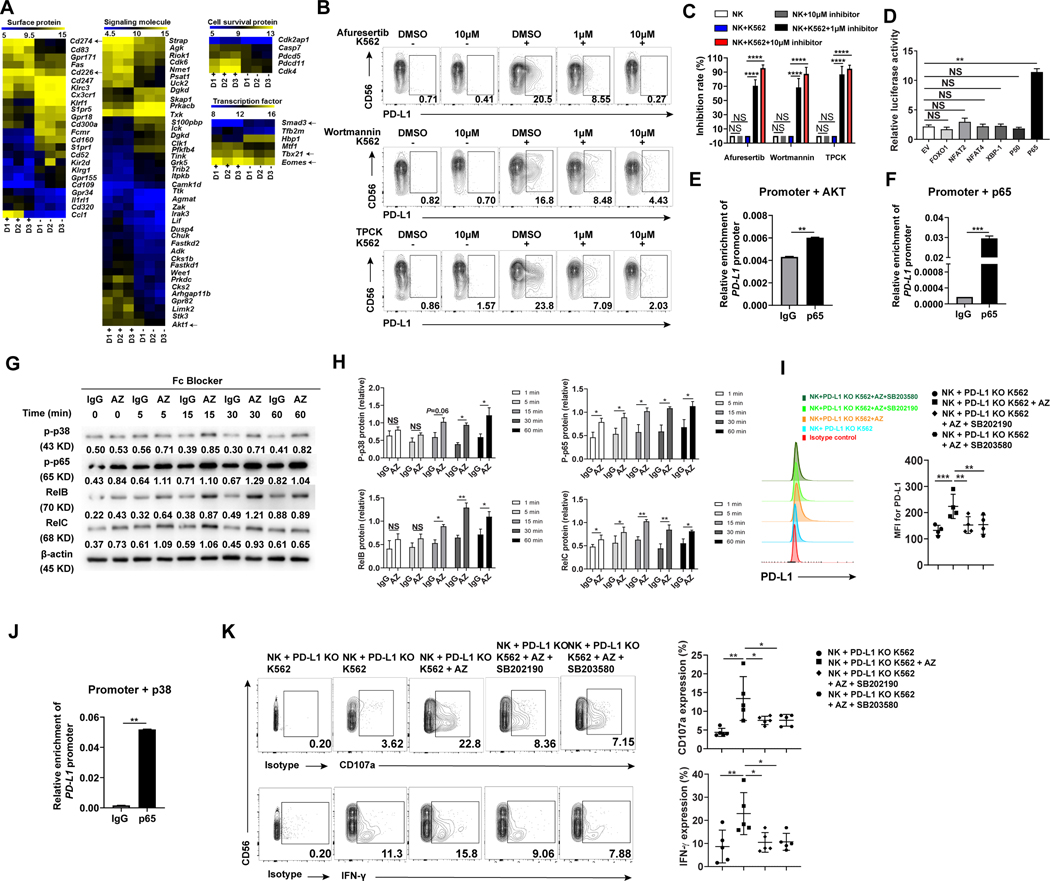
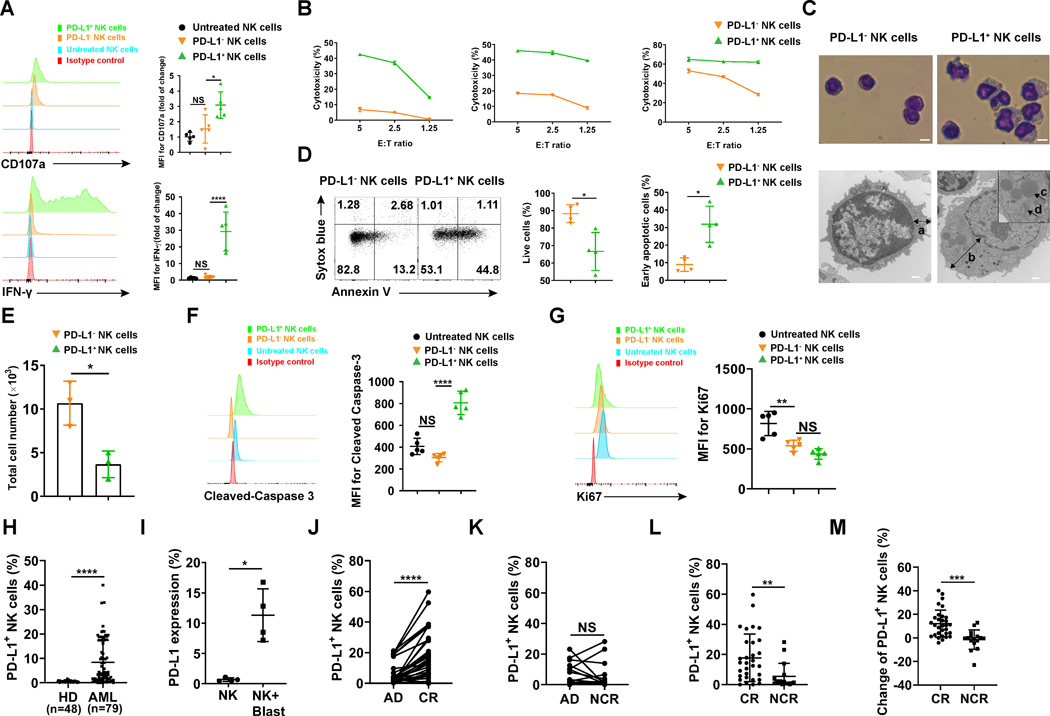
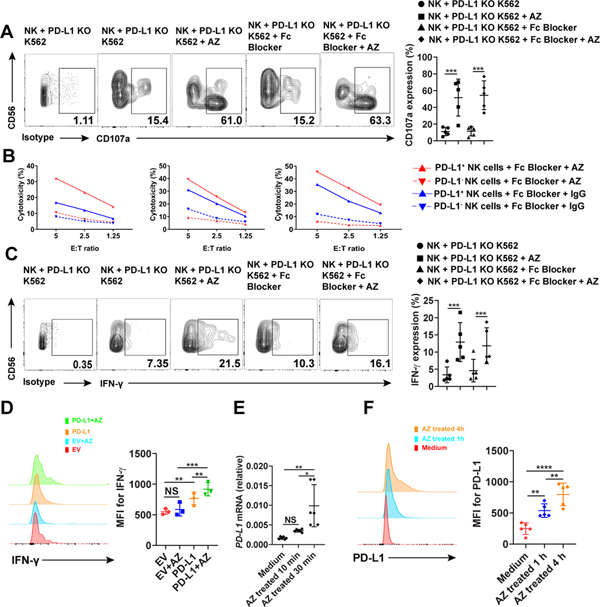
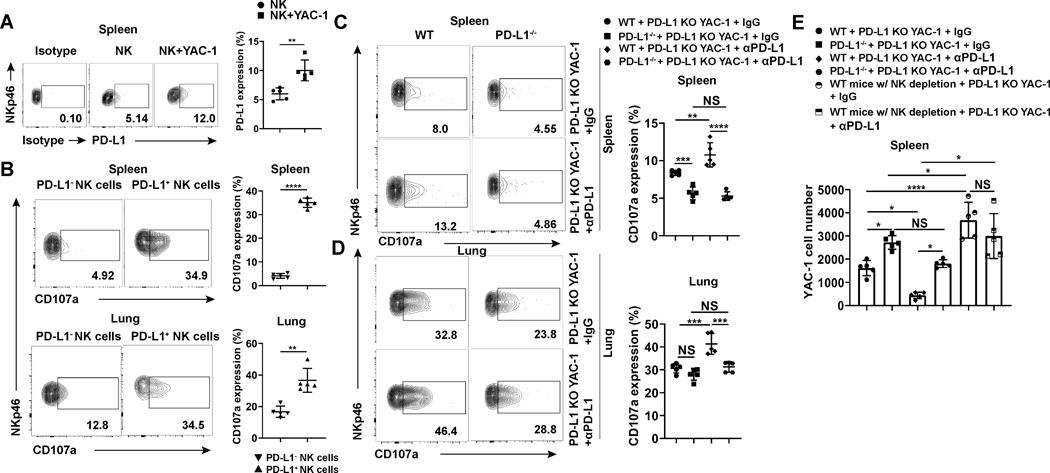
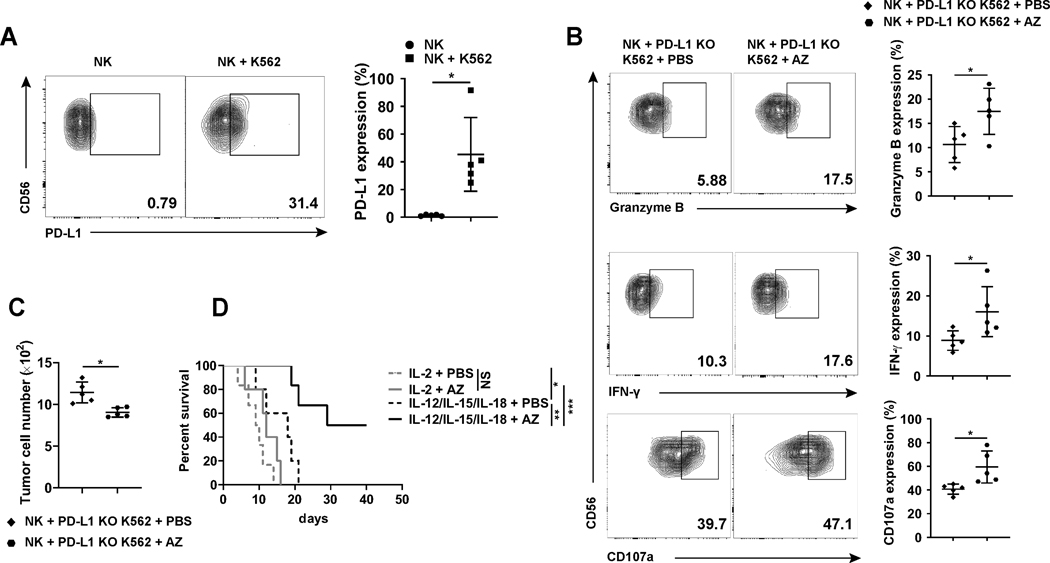
Blockade of PD-L1 expression on tumor cells via anti-PD-L1 monoclonal antibody (mAb) has shown great promise for successful cancer treatment by overcoming T-cell exhaustion; however, the function of PD-L1 on natural killer (NK) cells and the effects of anti-PD-L1 mAb on PD-L1 NK cells remain unknown. Moreover, patients with PD-L1 tumors can respond favorably to anti-PD-L1 mAb therapy for unclear reasons. Here, we show that some tumors can induce PD-L1 on NK cells via AKT signaling, resulting in enhanced NK-cell function and preventing cell exhaustion. Anti-PD-L1 mAb directly acts on PD-L1 NK cells against PD-L1 tumors via a p38 pathway. Combination therapy with anti-PD-L1 mAb and NK cell-activating cytokines significantly improves the therapeutic efficacy of human NK cells against PD-L1 human leukemia when compared with monotherapy. Our discovery of a PD-1-independent mechanism of antitumor efficacy via the activation of PD-L1 NK cells with anti-PD-L1 mAb offers new insights into NK-cell activation and provides a potential explanation as to why some patients lacking PD-L1 expression on tumor cells still respond to anti-PD-L1 mAb therapy. SIGNIFICANCE: Targeting PD-L1 expressed on PD-L1 tumors with anti-PD-L1 mAb successfully overcomes T-cell exhaustion to control cancer, yet patients with PD-L1 tumors can respond to anti-PD-L1 mAb. Here, we show that anti-PD-L1 mAb activates PD-L1 NK cells to control growth of PD-L1 tumors , and does so independent of PD-1..
通过抗 PD-L1 单克隆抗体(mAb)阻断肿瘤细胞上的 PD-L1 表达,通过克服 T 细胞衰竭,为成功治疗癌症带来了巨大希望;然而,PD-L1 对自然杀伤(NK)细胞的功能以及抗 PD-L1 mAb 对 PD-L1 NK 细胞的影响仍不清楚。此外,PD-L1 肿瘤患者可以对抗 PD-L1 mAb 治疗有良好的反应,但原因尚不清楚。在这里,我们表明,一些肿瘤可以通过 AKT 信号诱导 NK 细胞上的 PD-L1,从而增强 NK 细胞的功能并防止细胞衰竭。抗 PD-L1 mAb 通过 p38 途径直接作用于 PD-L1NK 细胞以对抗 PD-L1 肿瘤。与单药治疗相比,抗 PD-L1 mAb 与 NK 细胞激活细胞因子联合治疗可显著提高人 NK 细胞对 PD-L1 人白血病的治疗效果。我们发现,通过抗 PD-L1 mAb 激活 PD-L1NK 细胞的 PD-1 独立抗肿瘤功效机制,为 NK 细胞激活提供了新的见解,并为为什么一些缺乏肿瘤细胞 PD-L1 表达的患者仍对抗 PD-L1 mAb 治疗有反应提供了潜在的解释。意义:用抗 PD-L1 mAb 靶向 PD-L1 肿瘤上的 PD-L1 成功克服了 T 细胞衰竭,从而控制了癌症,但 PD-L1 肿瘤患者可以对抗 PD-L1 mAb 做出反应。在这里,我们表明,抗 PD-L1 mAb 激活 PD-L1NK 细胞来控制 PD-L1 肿瘤的生长,并且独立于 PD-1 发挥作用。